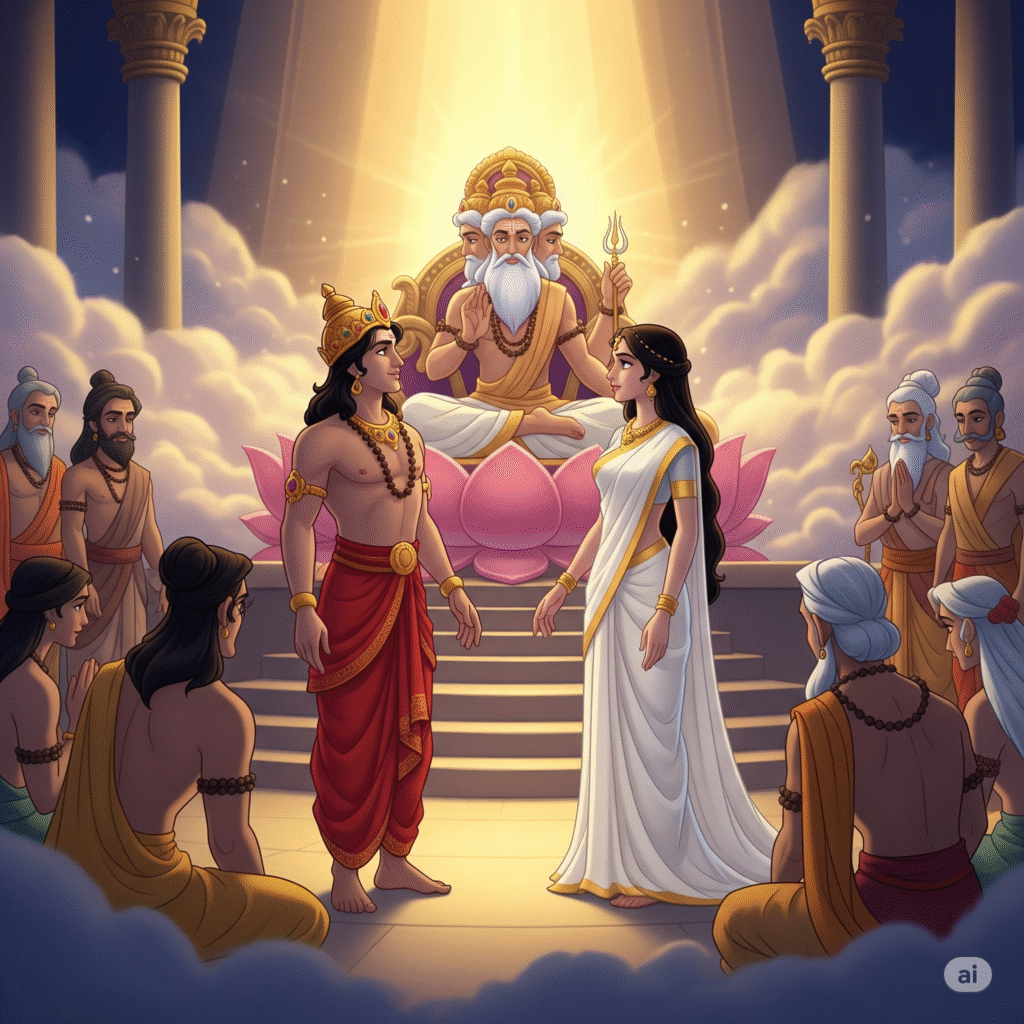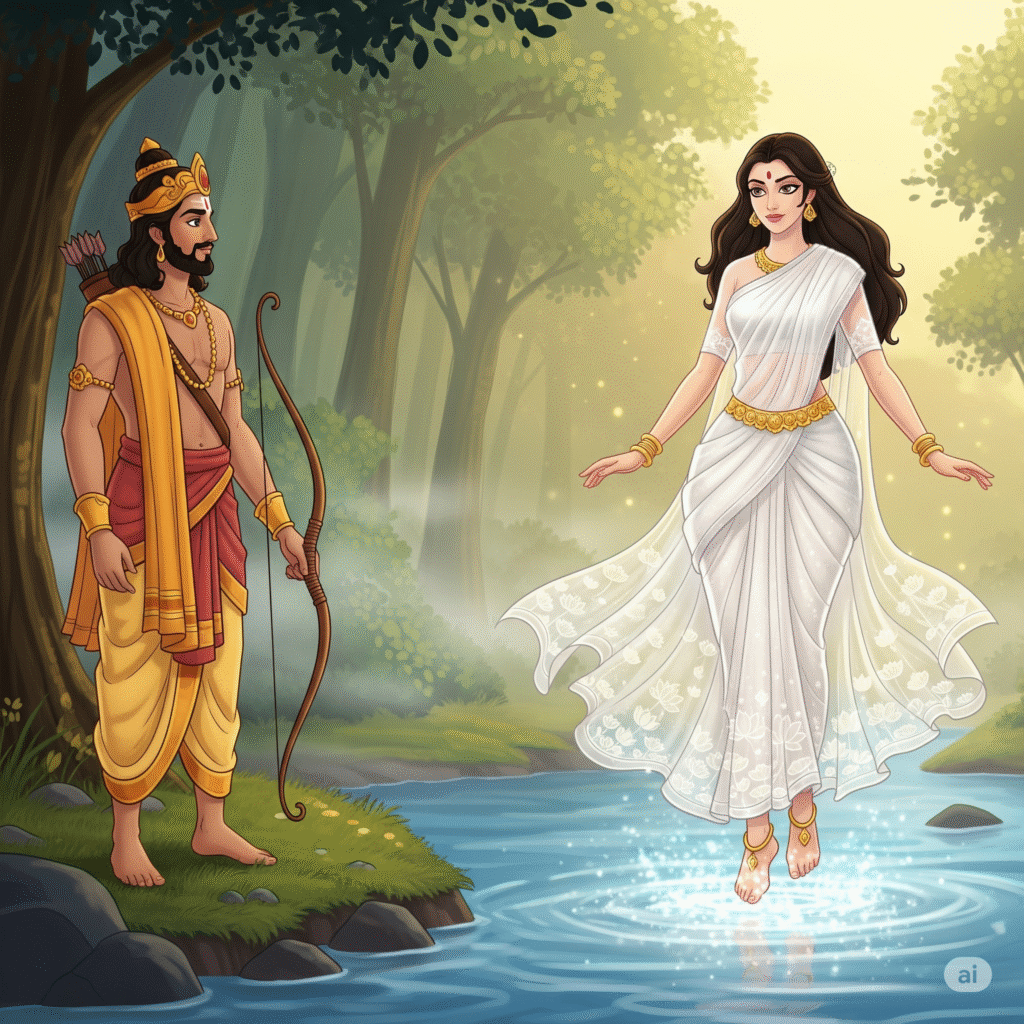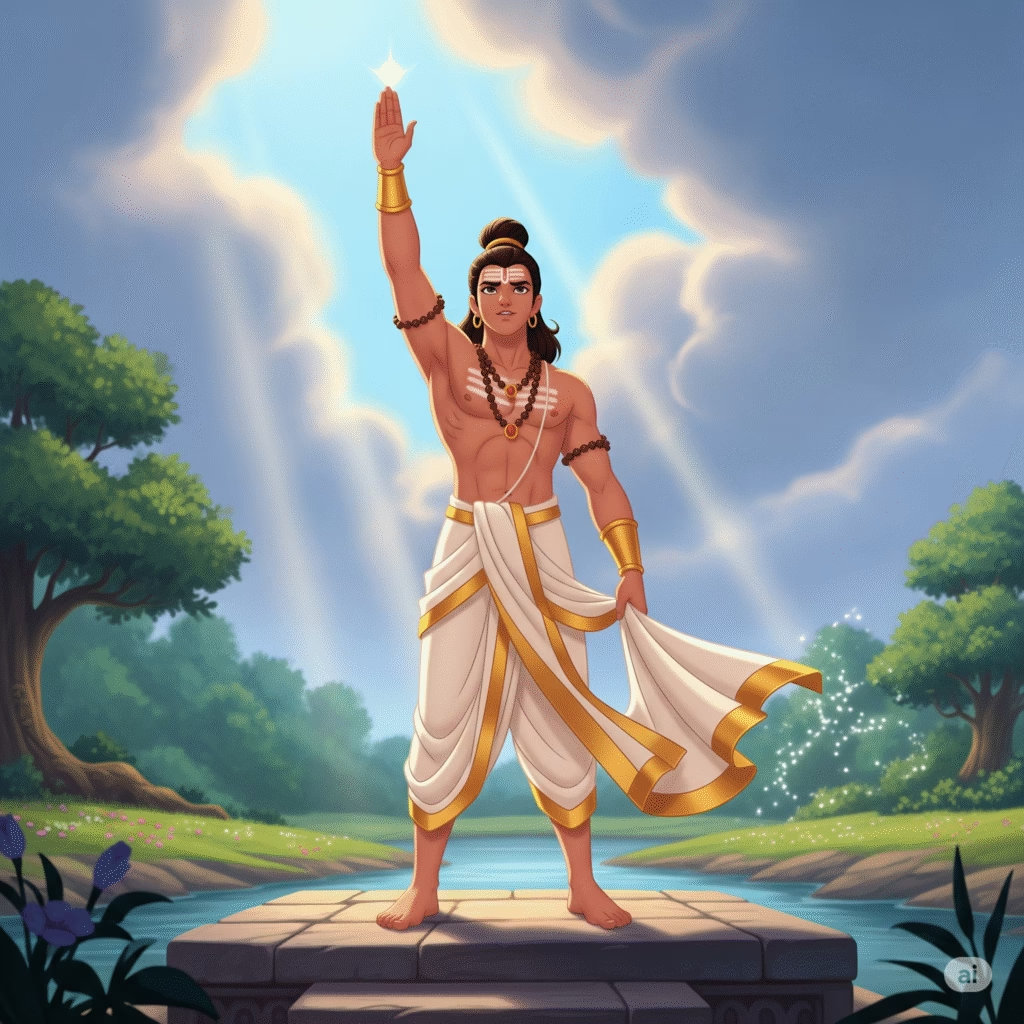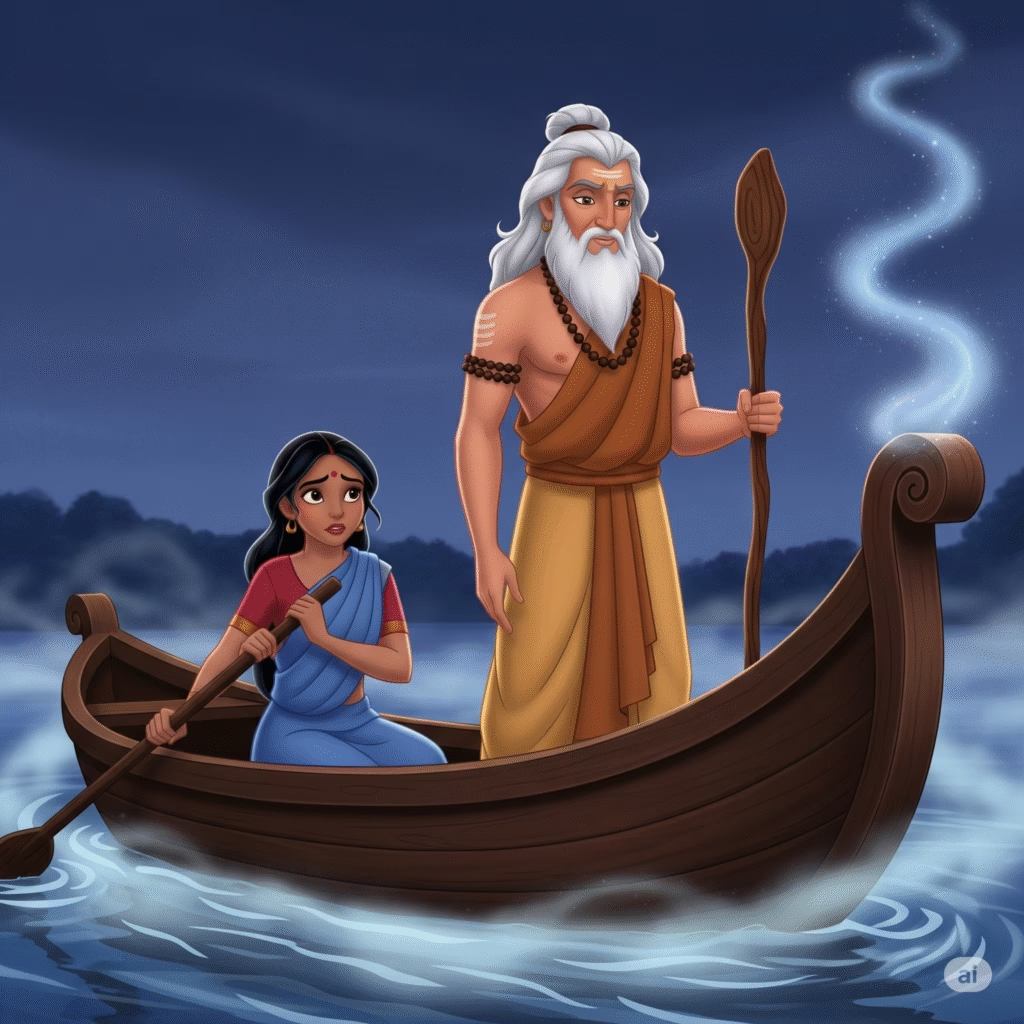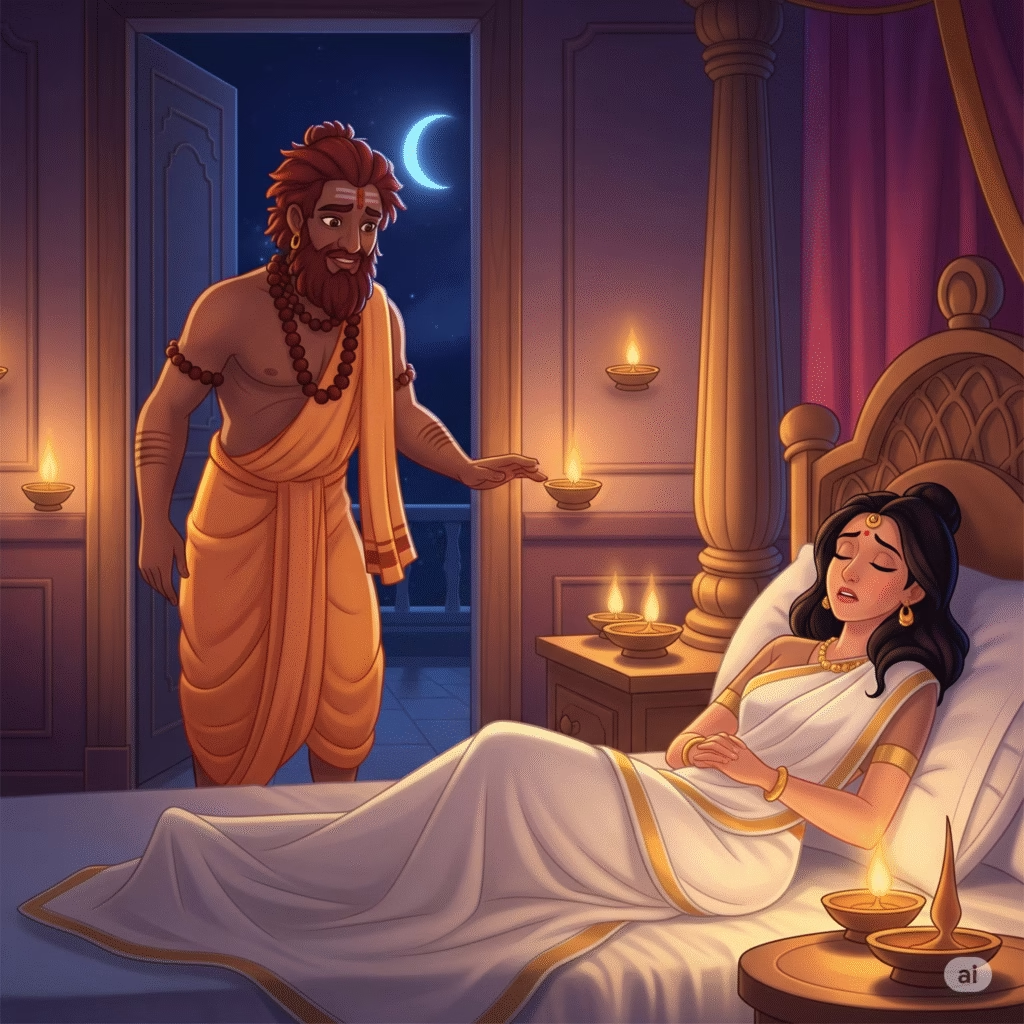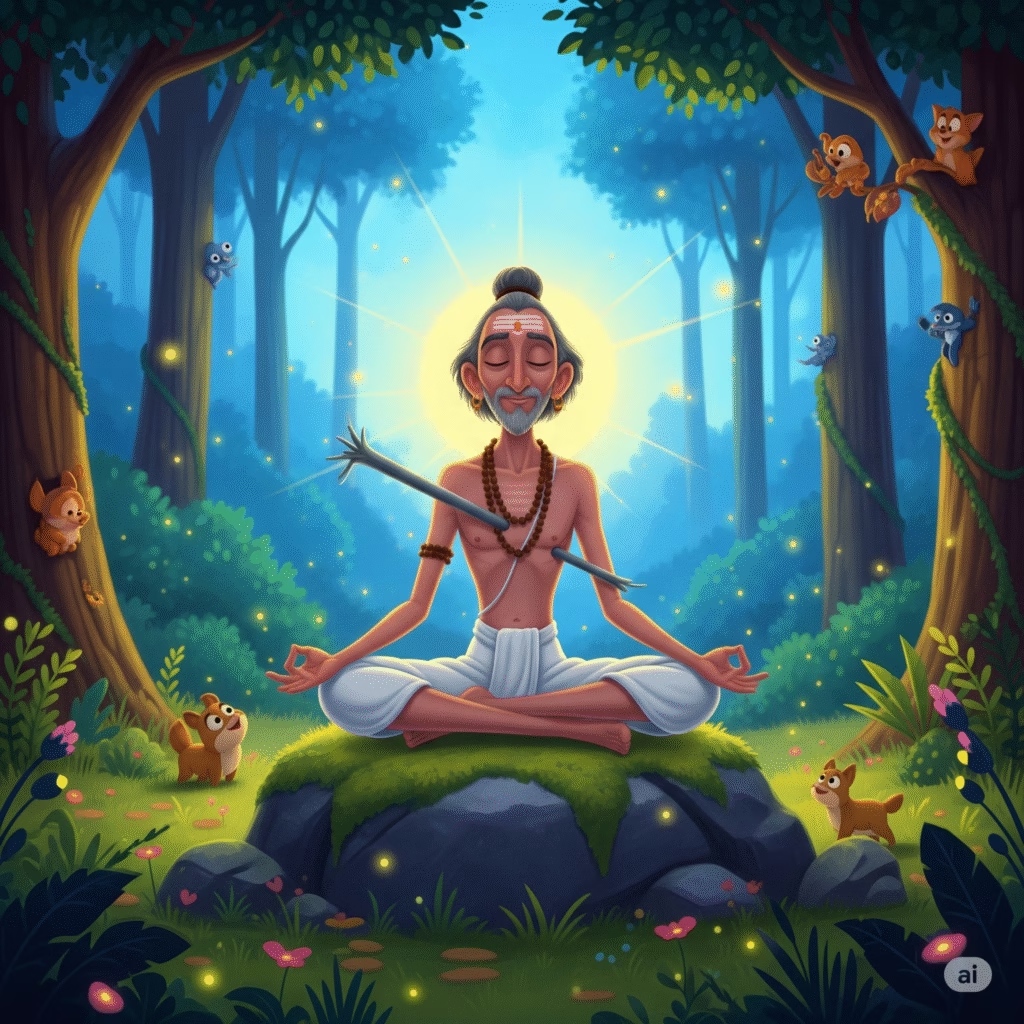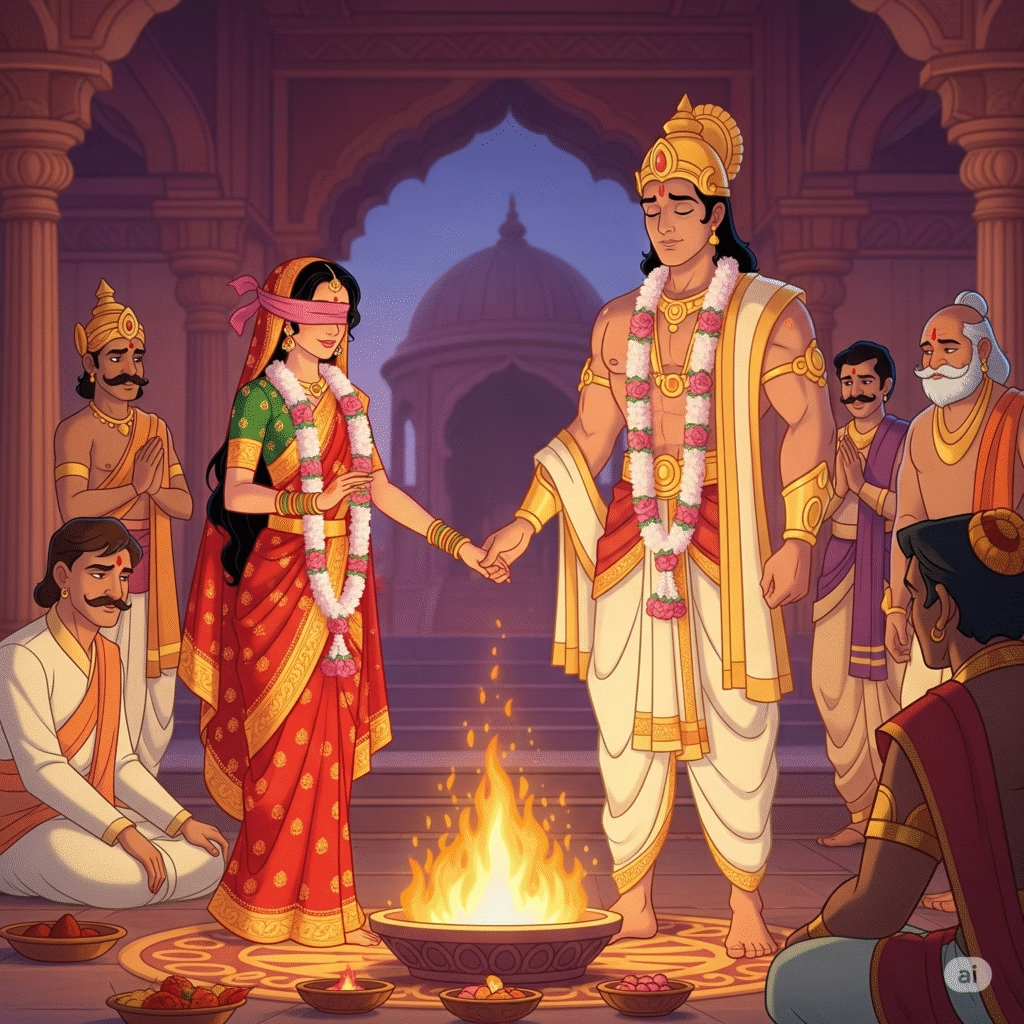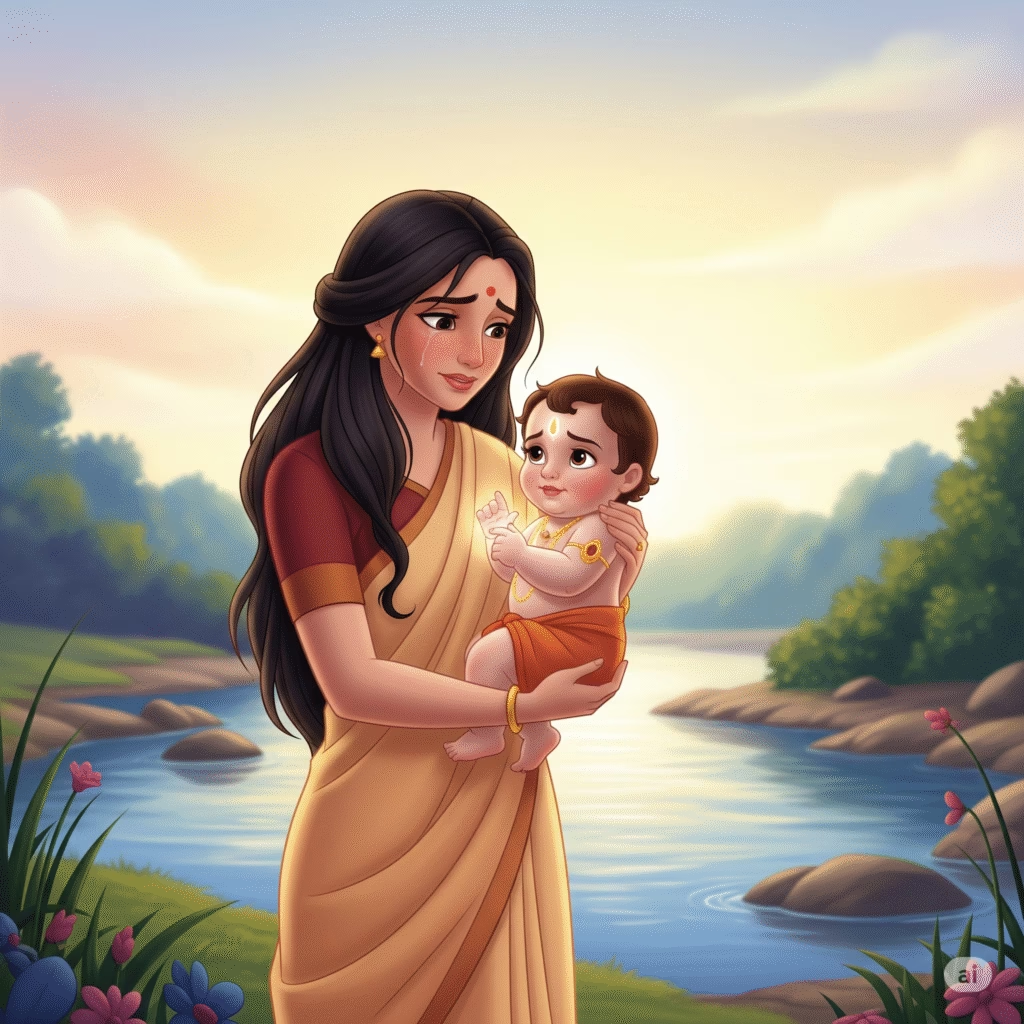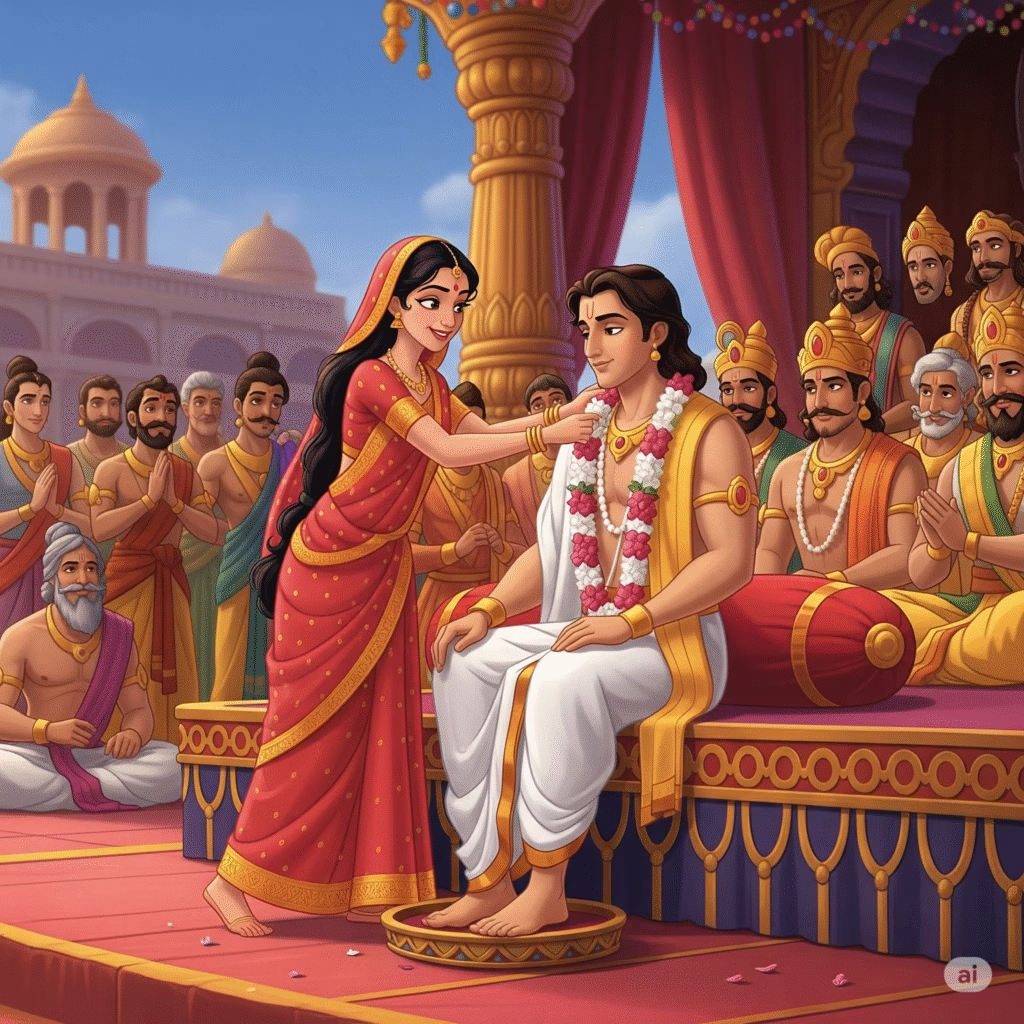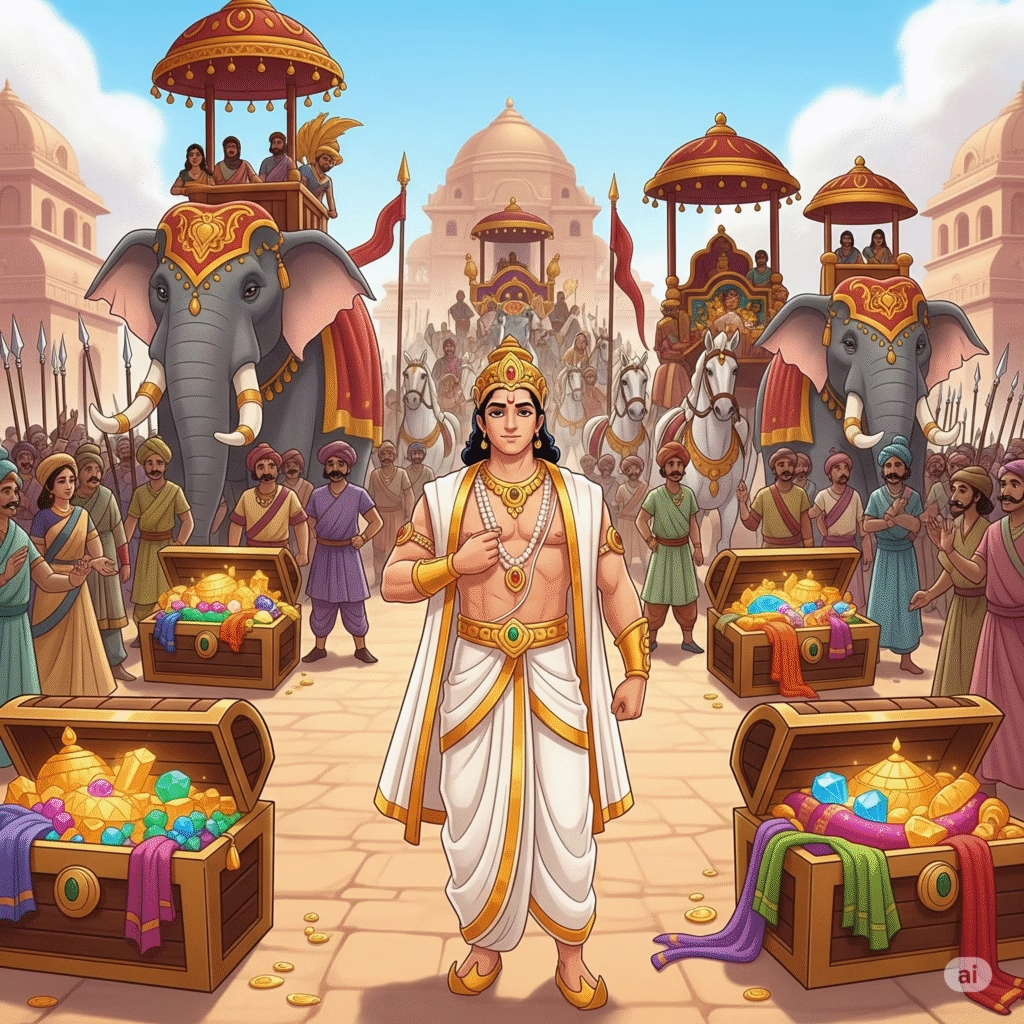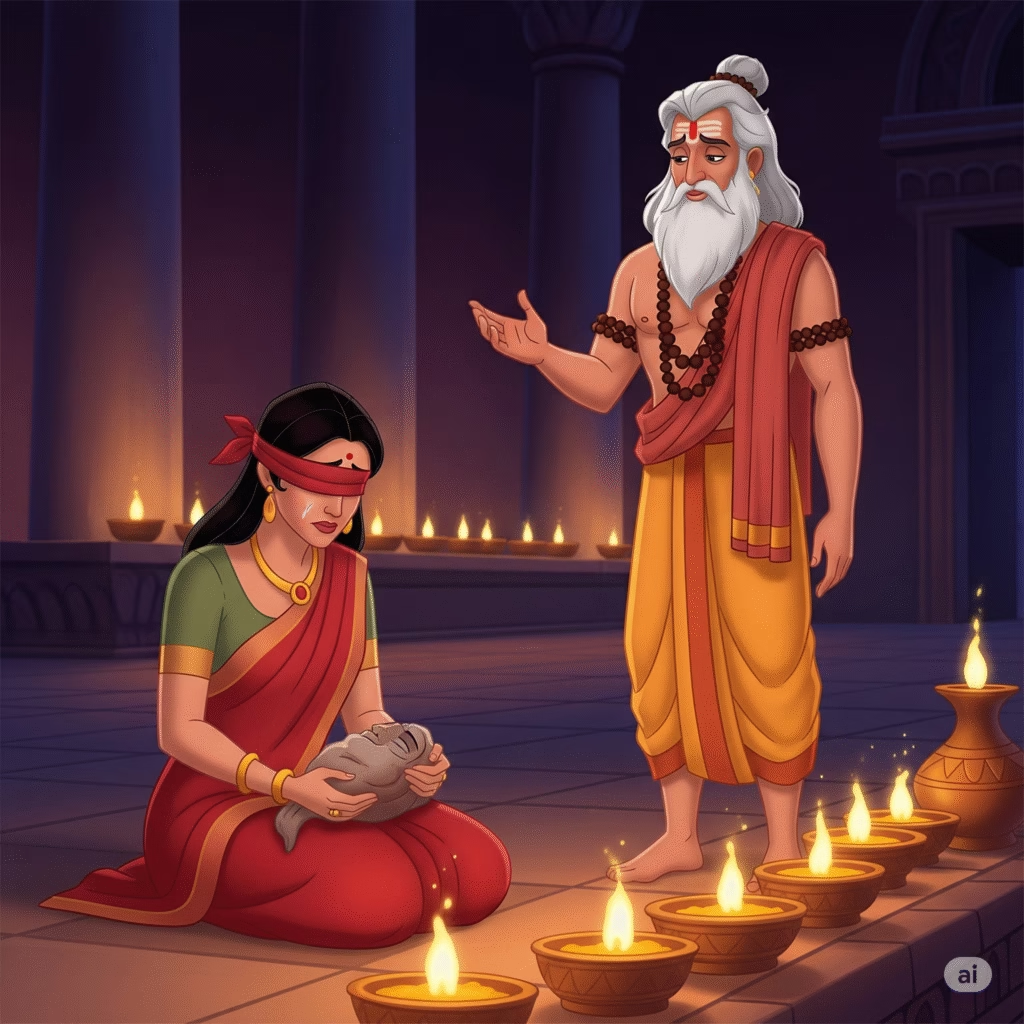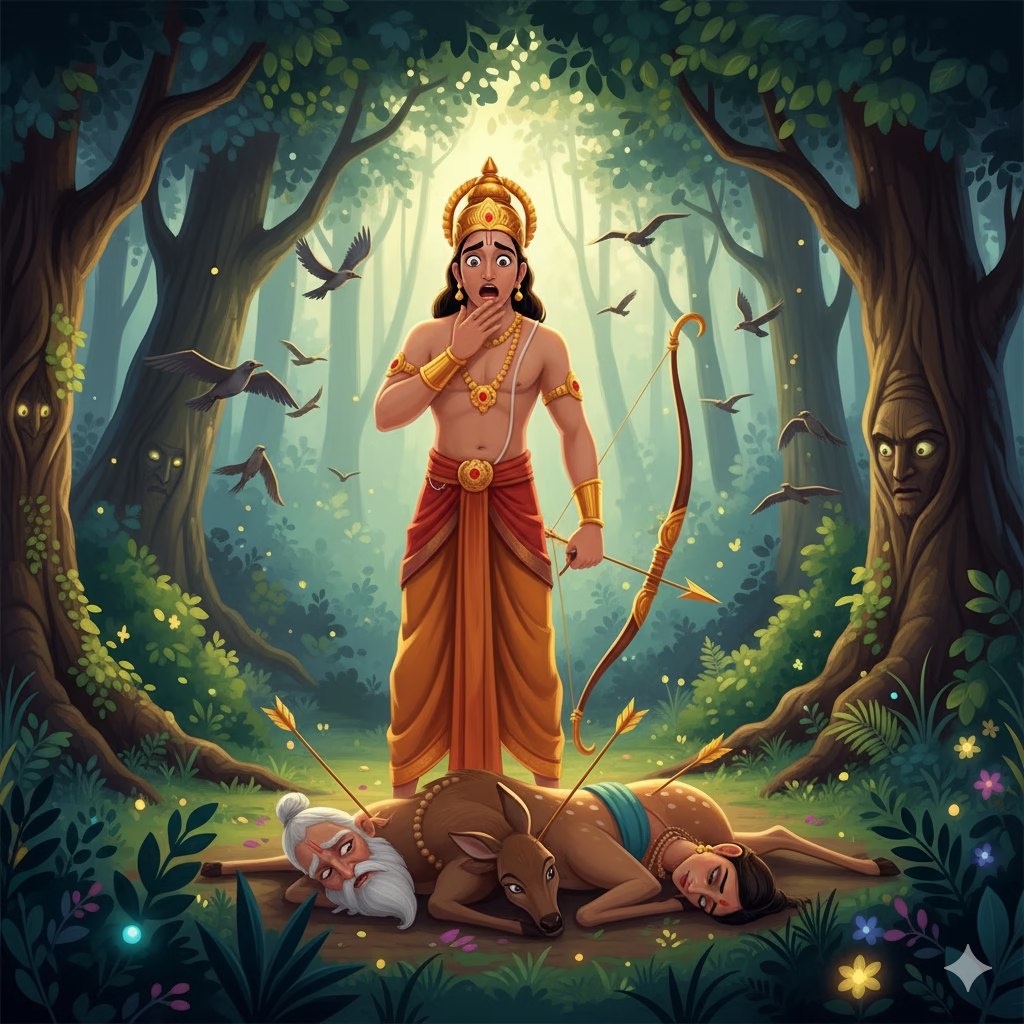
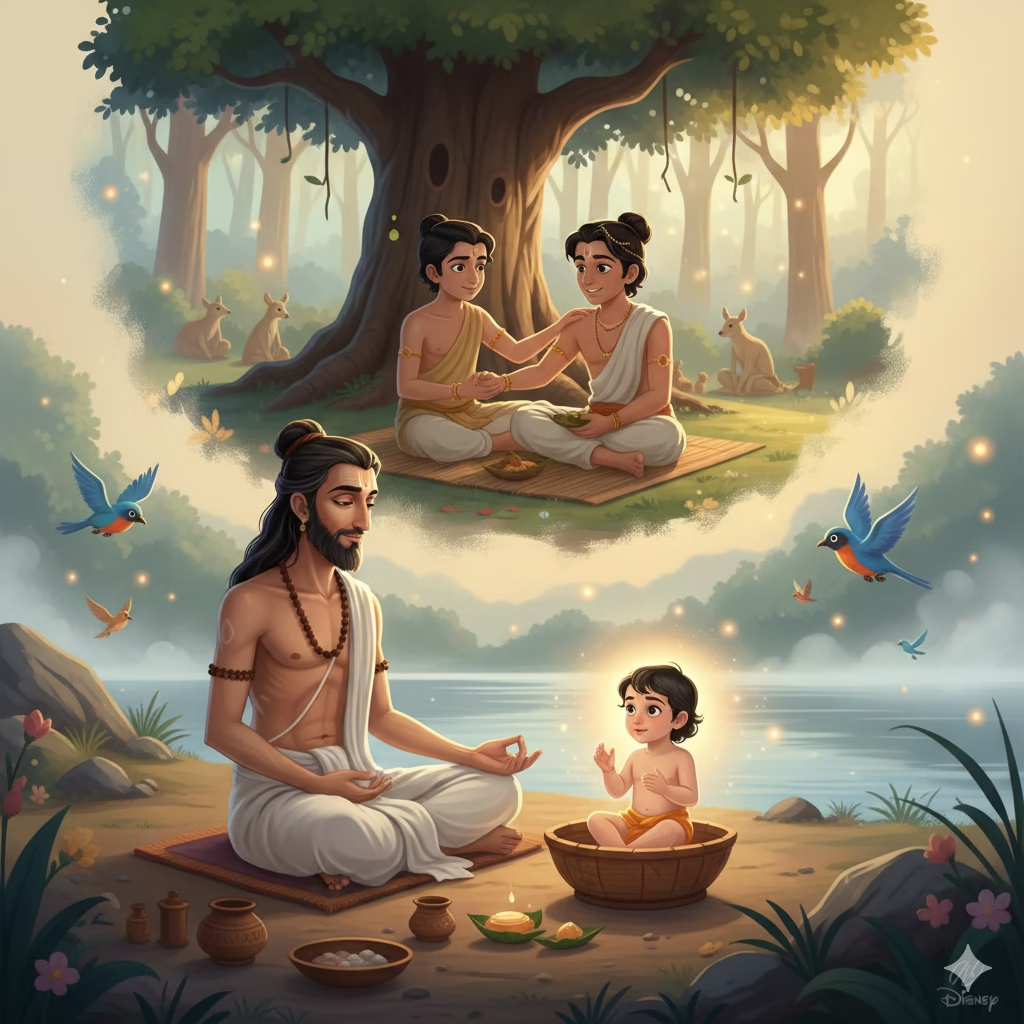
The banks of the Ganga at Gangadwar were not merely a scenic landscape; they were a laboratory of the soul. Here lived Maharishi Bharadwaj, a man whose skin had become like the bark of ancient trees through centuries of penance. One morning, the cosmic order shifted. As the sage prepared for his morning oblations, the celestial nymph Ghritachi emerged from the river. The sunlight caught the water droplets on her skin, and for a heartbeat, the ascetic’s iron resolve melted. It was an accident of nature—a moment where the divine and the primal collided. The sage’s essence was captured in a Drona (a ritual vessel). From that wooden womb, a child emerged. He was not born of a mother’s labor but of a father’s spiritual intensity. They named him Drona.
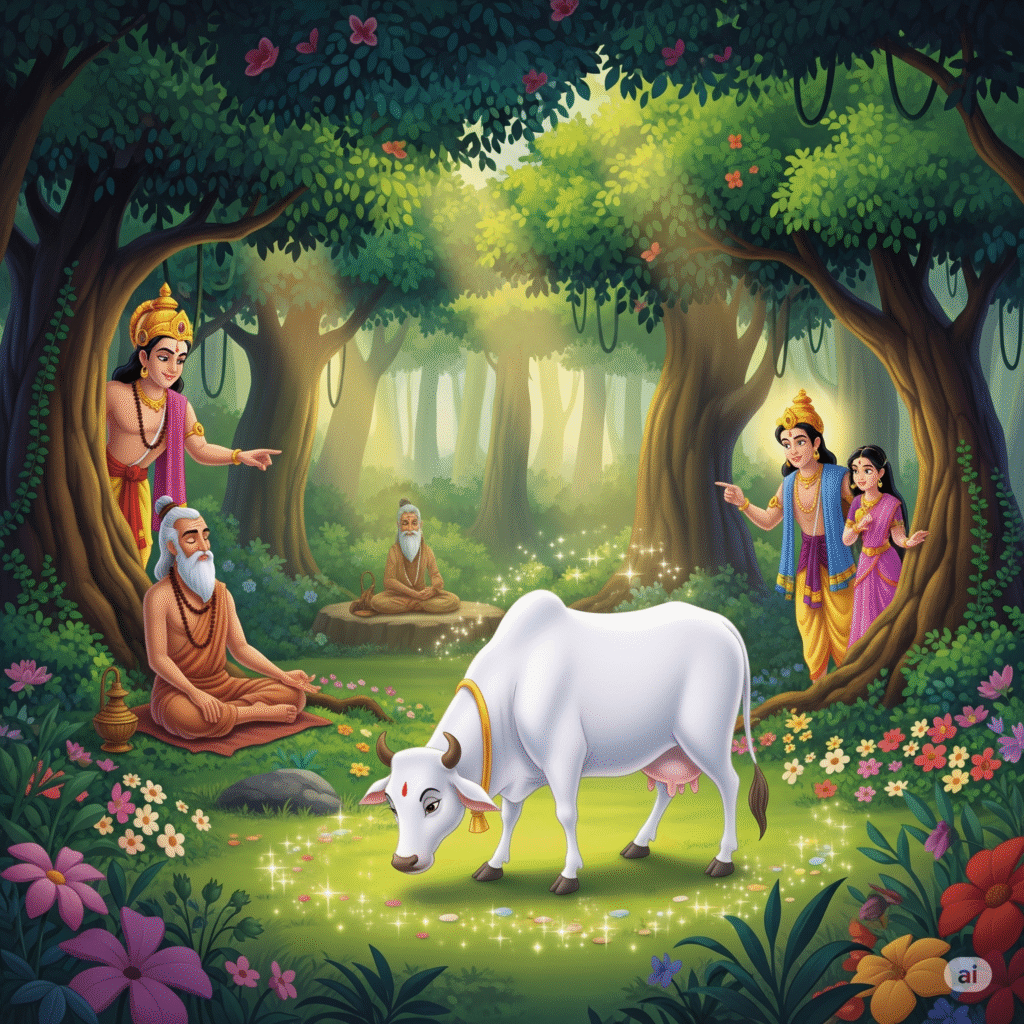
Growing up in the forest, Drona was a paradox. He had the intellect of a priest but the spirit of a thunderstorm. While other children played with clay toys, Drona studied the geometry of the leaves and the trajectory of the falling rain. He realized early on that knowledge was the only currency that never devalued. In the same ashram, another boy studied under Bharadwaj: Prince Drupada of Panchala. The two were inseparable. They shared the same mat, the same meager meals of roots and honey, and the same dreams. Drupada, swept up in the idealism of youth, often grabbed Drona by the shoulders and exclaimed: “Drona, my brother! When the crown of Panchala sits upon my head, half of my kingdom shall be yours. What is a throne if not a seat to share with a friend?” Drona, the son of a poor sage, believed him. He believed that the heart of a prince was as steady as the mountain. He did not yet know that a crown changes the shape of the head that wears it.
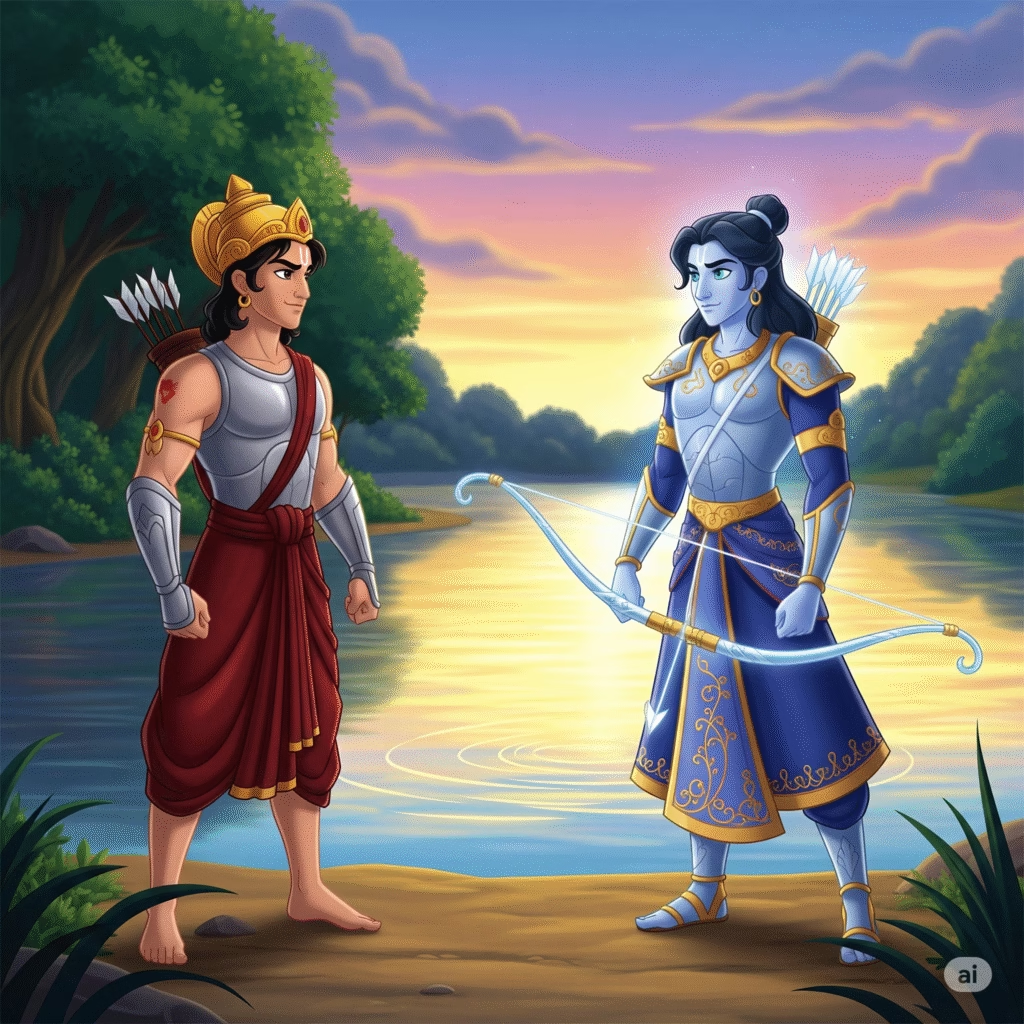
As Drupada returned to his palace, Drona turned toward the mountains. He had heard of Lord Parshurama, the Brahmin-warrior who had cleansed the earth of corrupt kings twenty-one times. Parshurama was retiring to Mount Mahendra to give away his worldly possessions. Drona arrived, dusty and exhausted, only to find the Great Sage standing empty-handed.”I am too late, aren’t I?” Drona asked. Parshurama smiled grimly. “I have given my gold to the priests and my lands to Sage Kashyapa. All I have left is this body and my collection of divine weapons. Which do you want?” Drona didn’t hesitate. “Give me the secret of the weapons. Give me the Brahmastra. Give me the power to summon the gods into a blade of grass.” For years, Drona lived in the shadow of the great axe-wielder. He learned the Agneya (fire) weapons and the Varuna (water) mantras. He became a living encyclopedia of destruction. He was now the most dangerous man on earth—but he was also a man who couldn’t afford a cup of milk for his son.
Drona married Kripi, the sister of Kripacharya. They had a son, Ashwatthama, whose first cry sounded like the neighing of a celestial horse. The poverty was soul-crushing. One day, Ashwatthama’s friends, children of wealthy sages, played a cruel joke. They mixed flour in water and gave it to the boy, telling him it was milk. The child drank it, dancing with joy, shouting, “I have tasted milk!” Drona watched from the shadows, his heart splintering. He, the master of the world’s most powerful weapons, could not provide a cow for his son. It was then he remembered the promise. Panchala. Drupada. The half-kingdom.
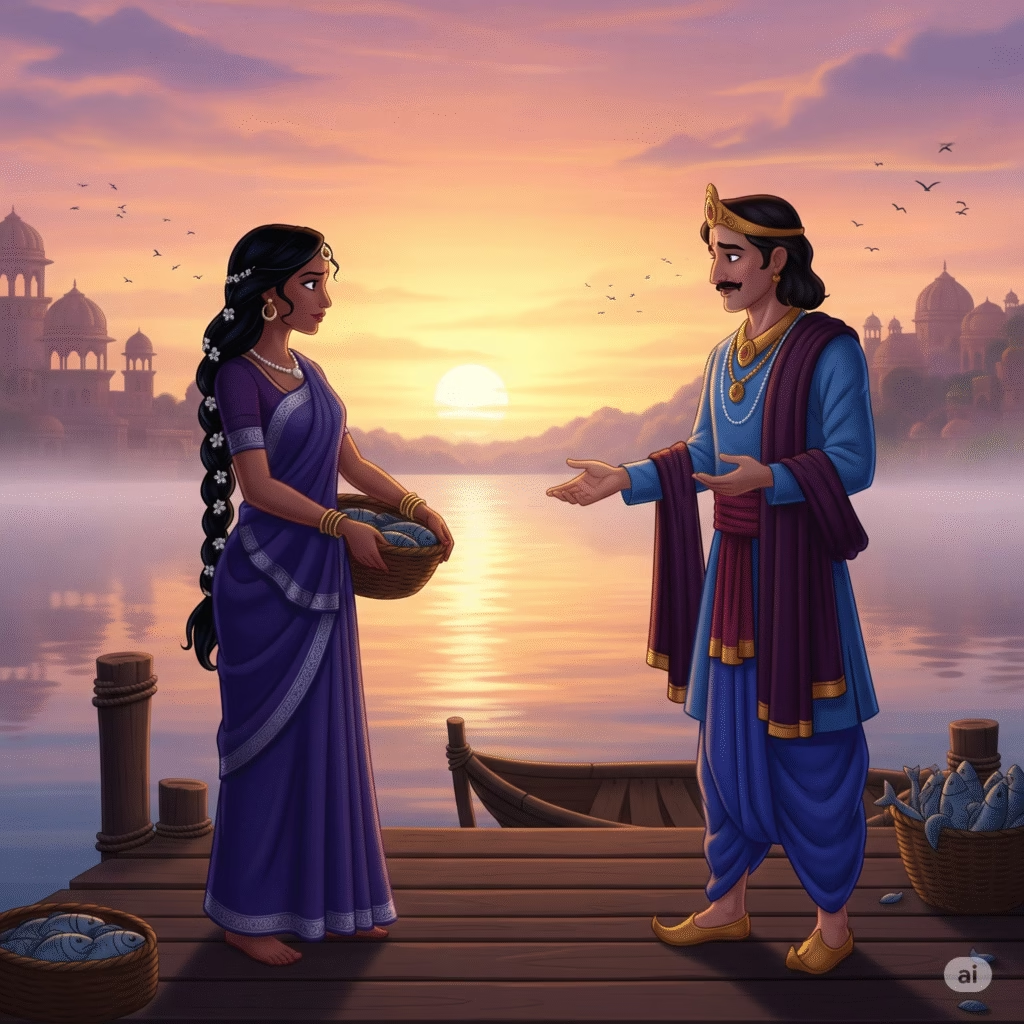
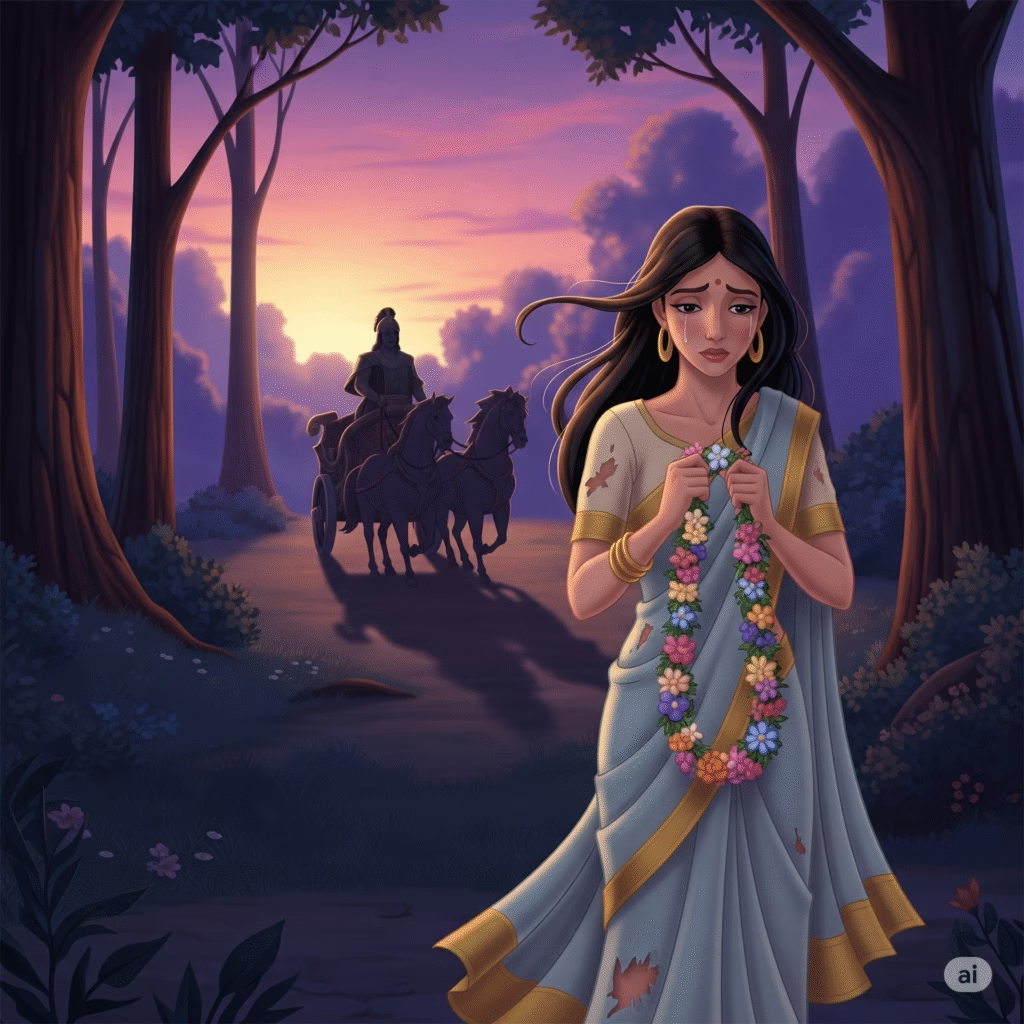
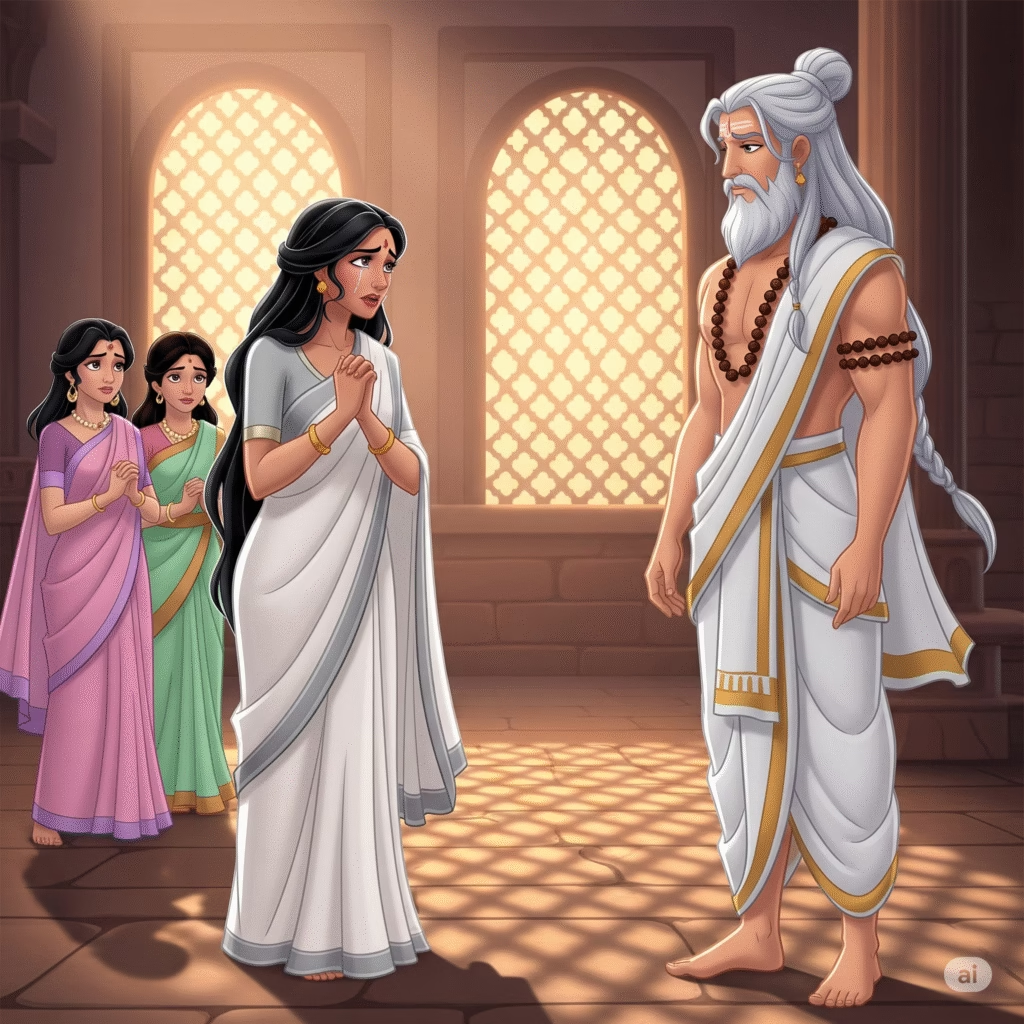
Drona entered the court of King Drupada not as a beggar, but as a long-lost brother. He bypassed the guards, walked into the center of the hall, and looked at the man sitting on the golden throne.”Drupada!” Drona called out with a warm smile. “My friend, look at how far we’ve come. Your ‘half-king’ has arrived.” The court fell silent. Drupada’s face didn’t soften. It hardened into a mask of disgust. “Who is this Brahmin who calls me by my name?” Drupada’s voice echoed like a whip. “Guards, who let this beggar in?” Drona’s smile faltered. “It is I, Drona. Have you forgotten the ashram? The promises you made under the Banyan tree?” Drupada laughed, a cold, hollow sound. “Friendship, Drona, is a luxury of equals. A king can be friends with a king. A beggar can be friends with a beggar. But a man who owns the world cannot be friends with a man who owns nothing but a begging bowl. Your ‘friendship’ died the day I was crowned. Leave, before I have you thrown out.”
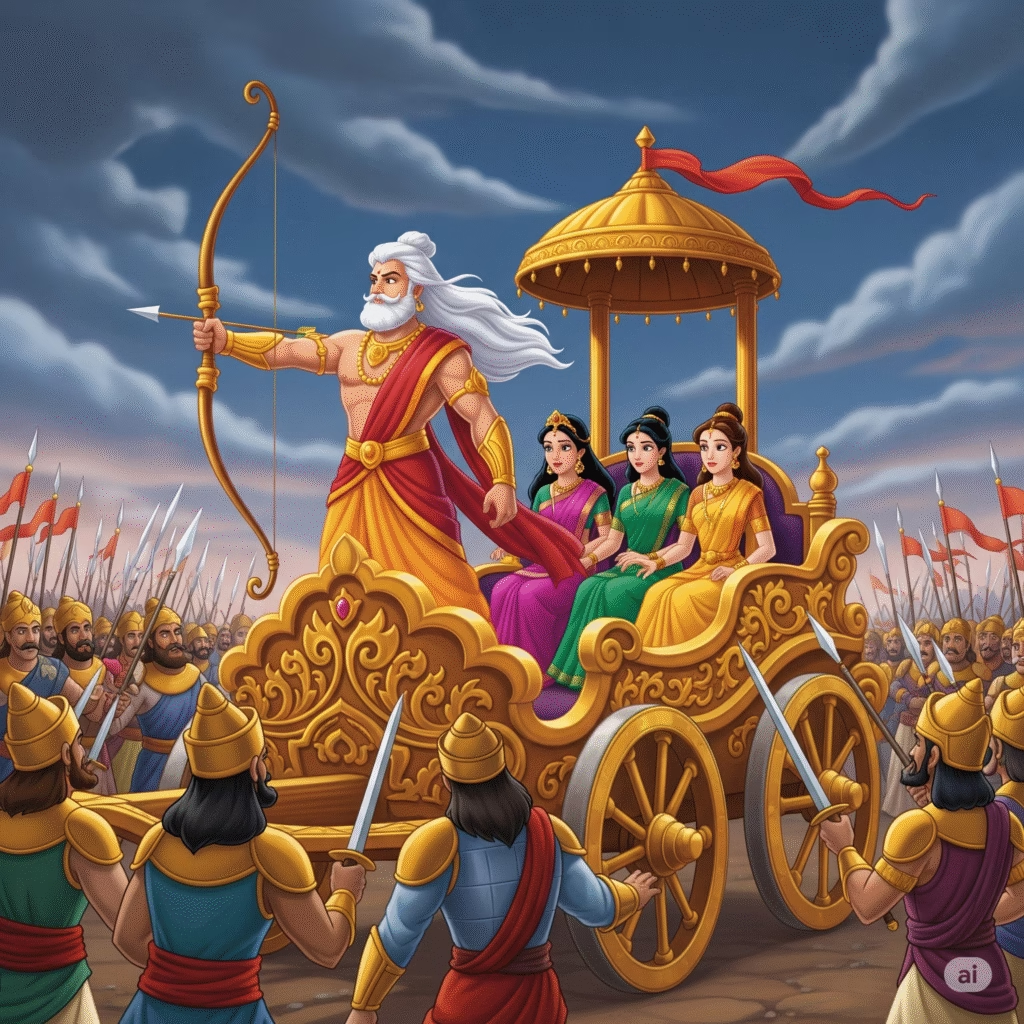
Drona did not argue. He did not scream. He simply turned around and walked out. But as he stepped out of the palace gates, the air around him seemed to hum with static. He didn’t want gold anymore. He didn’t want a kingdom. He wanted something far more expensive: A Legacy. He traveled to Hastinapur, the capital of the Kurus. He stayed in hiding at Kripacharya’s house, watching the young Kuru princes—the Pandavas and Kauravas—from afar. He saw their lack of discipline, their raw potential, and their arrogance. He knew then what he had to do. He would take these boys, the heirs to the greatest throne in the world, and turn them into the instruments of his revenge. He would teach them to be so powerful that when he finally gave the command, they would march to Panchala and drag Drupada by his hair to Drona’s feet.
Drona’s birth itself is a statement of the Mahabharata’s deepest truth: creation does not always arise from comfort or convention, but from intensity. He is born not from a mother’s womb, but from a vessel—symbolizing a life shaped by containment, restraint, and unfulfilled longing. From the very beginning, Drona carries within him both brilliance and absence. The friendship between Drona and Drupada reveals the innocence of equality before power intervenes. In the forest, stripped of crowns and titles, two boys share the same ground, the same hunger, and the same dreams. Here, friendship is real because identity is simple. But the Mahabharata warns us gently: promises made in simplicity are fragile when tested by authority. Drupada’s vow is sincere—but sincerity is not permanence. A crown does not just grant power; it reshapes perception. What once felt like brotherhood begins to feel like obligation, then burden, and finally threat. Drona, who believed in knowledge as a stable currency, learns too late that power devalues memory.
This episode exposes a painful inner truth: wisdom without recognition can turn into resentment. Drona’s later choices are not born of cruelty, but of wounded dignity. The Mahabharata does not villainize him—it humanizes him. At its core, this moment asks us to reflect: Can friendship survive inequality? Can power remember those who knew us before it? The Inner Kurukshetra begins when trust collides with ambition—and knowledge is forced to serve vengeance instead of Dharma.
Journaling Prompts
- Think of a promise someone made to you when circumstances were simple. How did that promise change when power, success, or distance entered the picture?
- When a promise breaks, do you grieve the loss—or do you turn that grief into resentment? How has that shaped your actions?