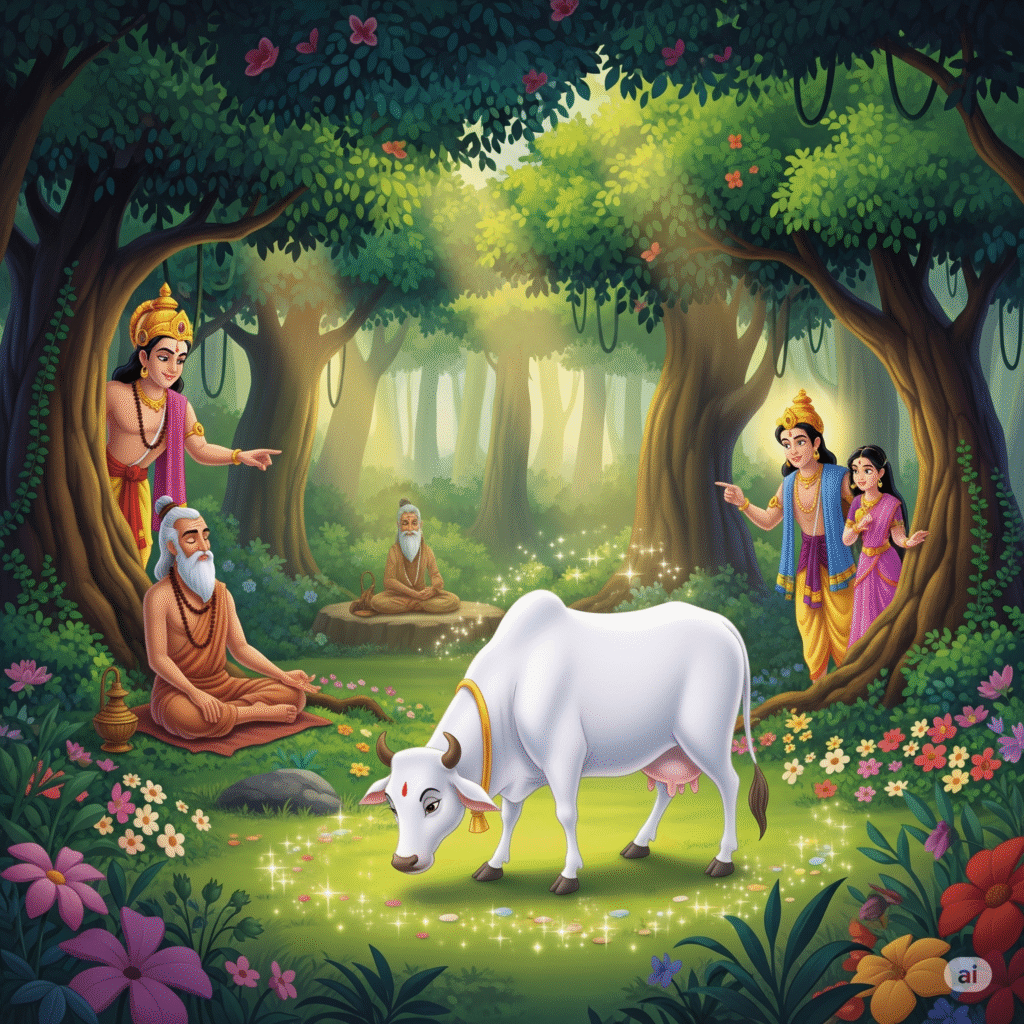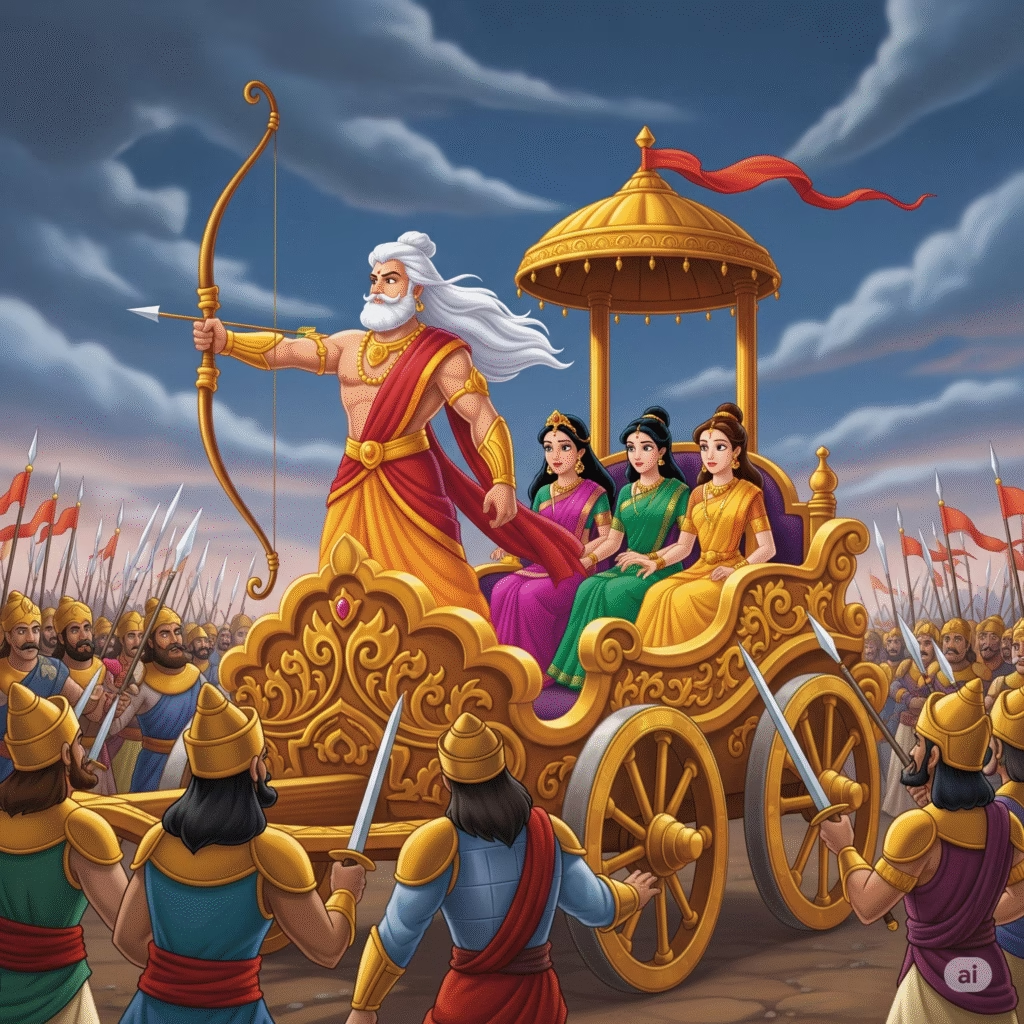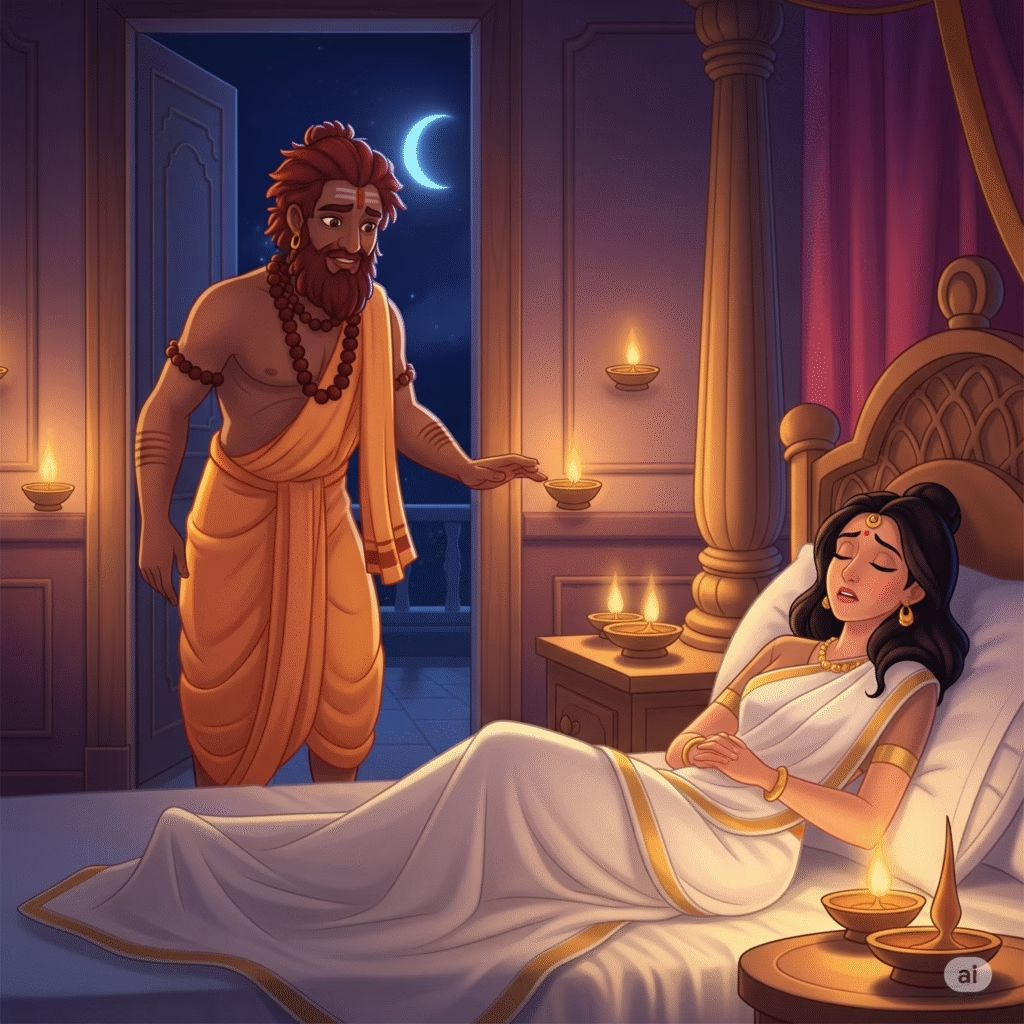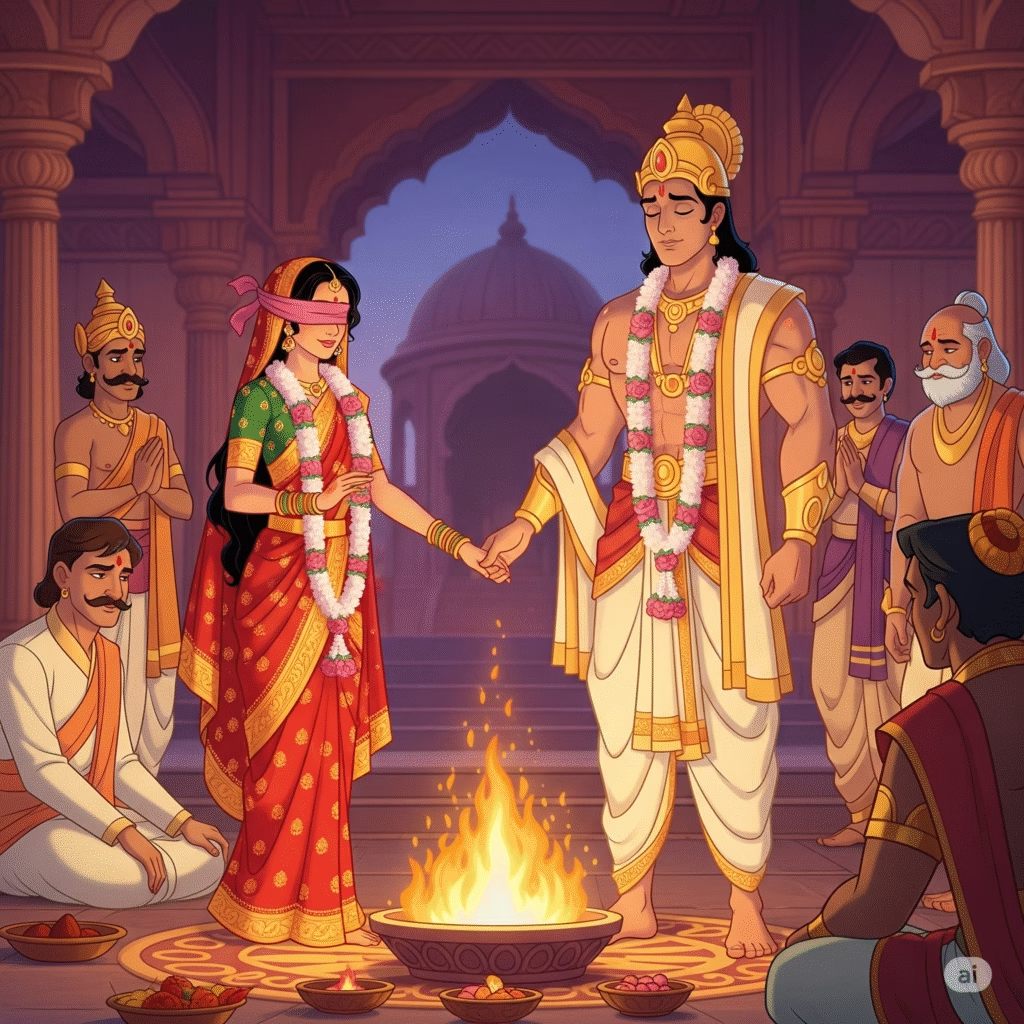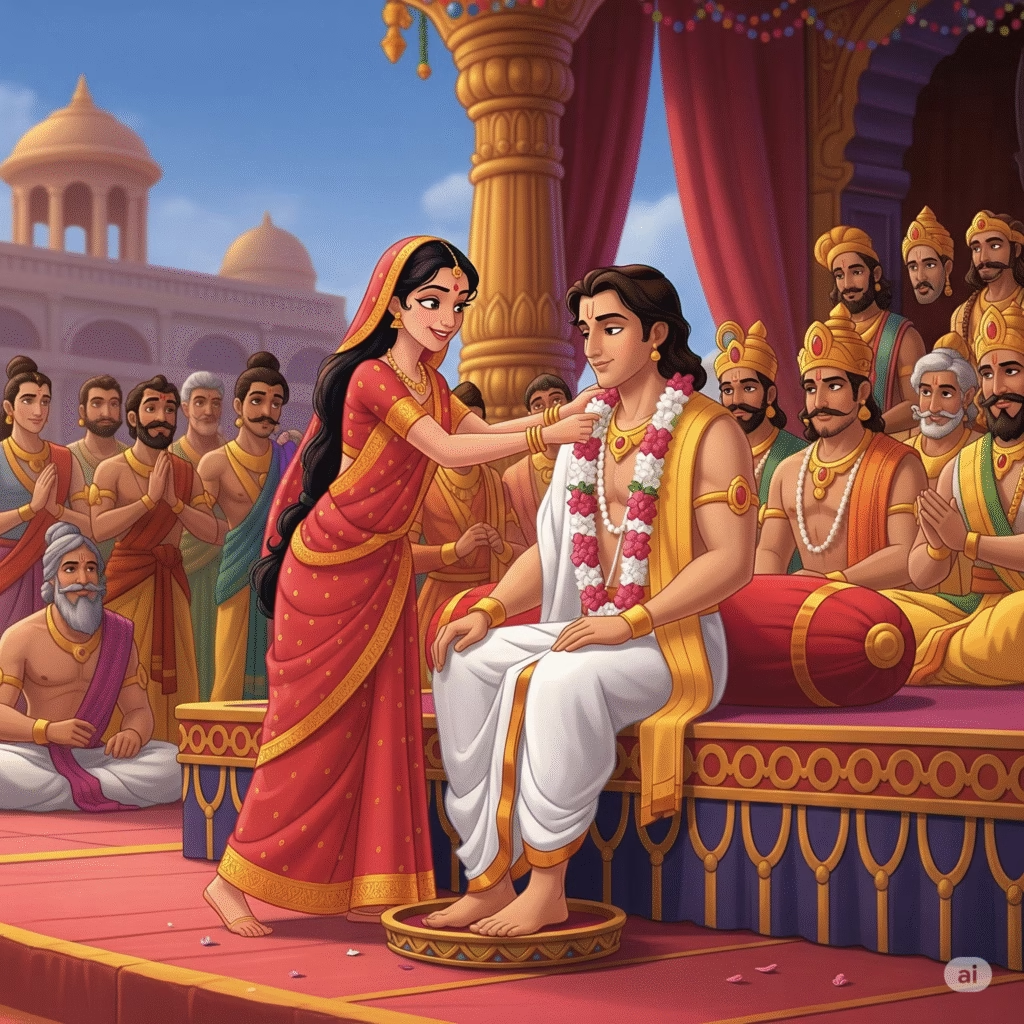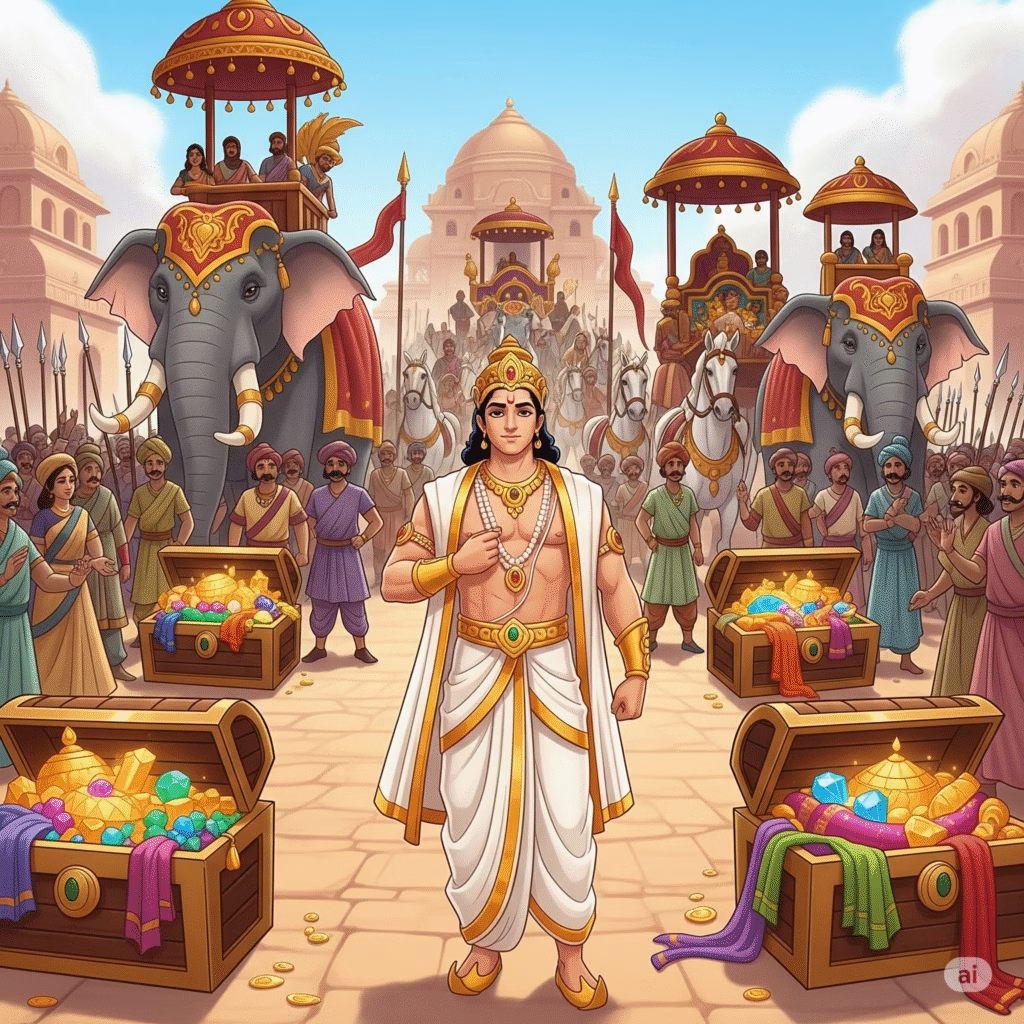
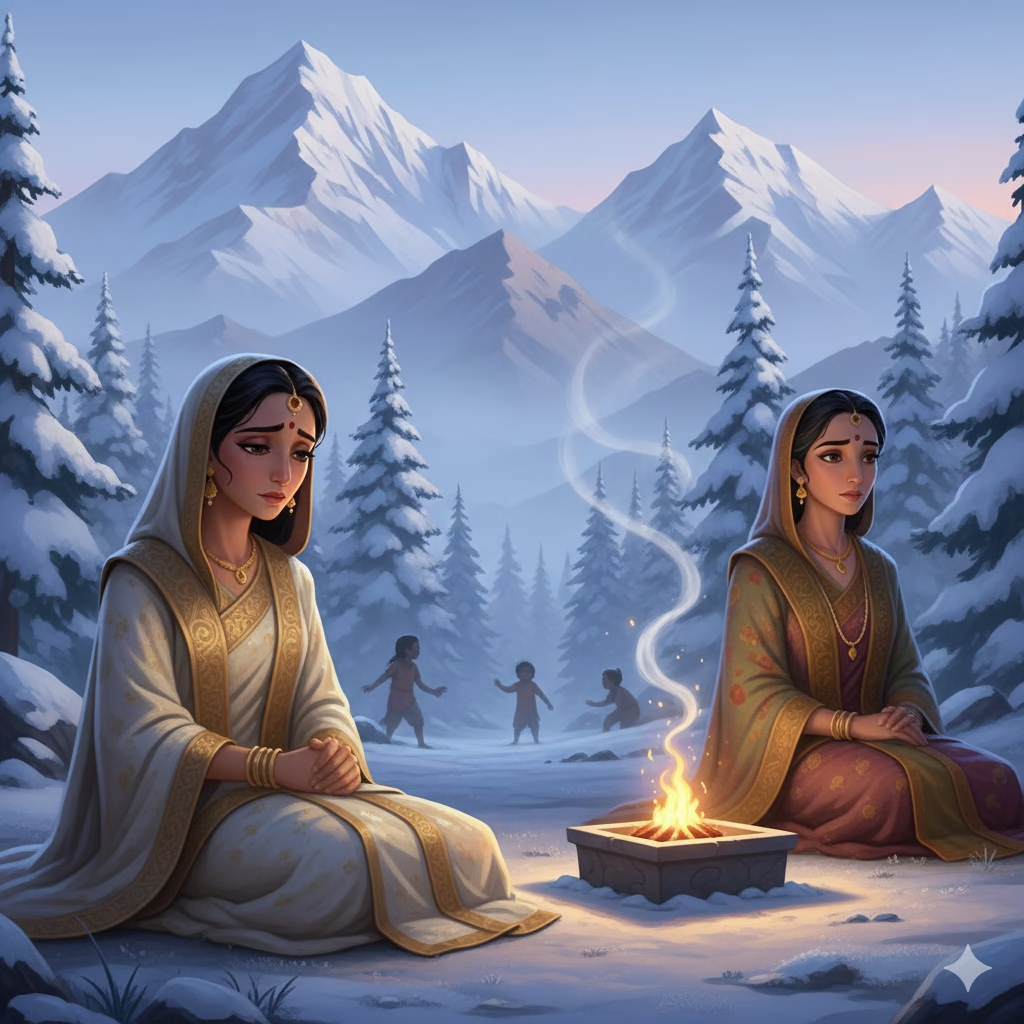
The air at the peaks of Shatashringa was thin, cold, and heavy with the scent of deodar and burnt ritual ghee. But for Madri, the second wife of the exiled King Pandu, the air felt suffocating for a different reason. In the silence of the Himalayan retreat, a different kind of noise was deafening: the laughter of children. Kunti had three. The forest echoed with the names of Yudhisthira, Bhima, and Arjuna. Far away in Hastinapur, Gandhari had a hundred. Every messenger brought news of a growing dynasty, while Madri stood in the shadows, a “Patarani” by lineage, but a hollow vessel by fate.
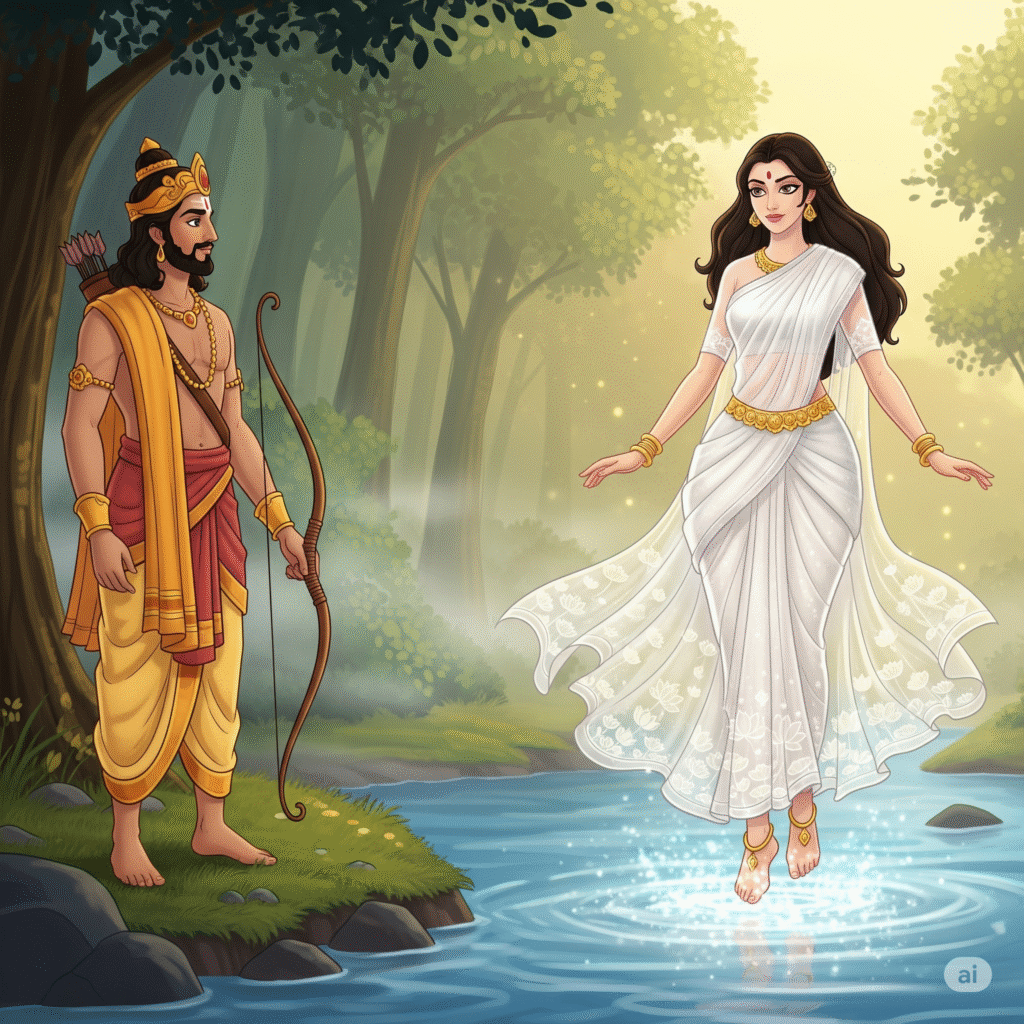
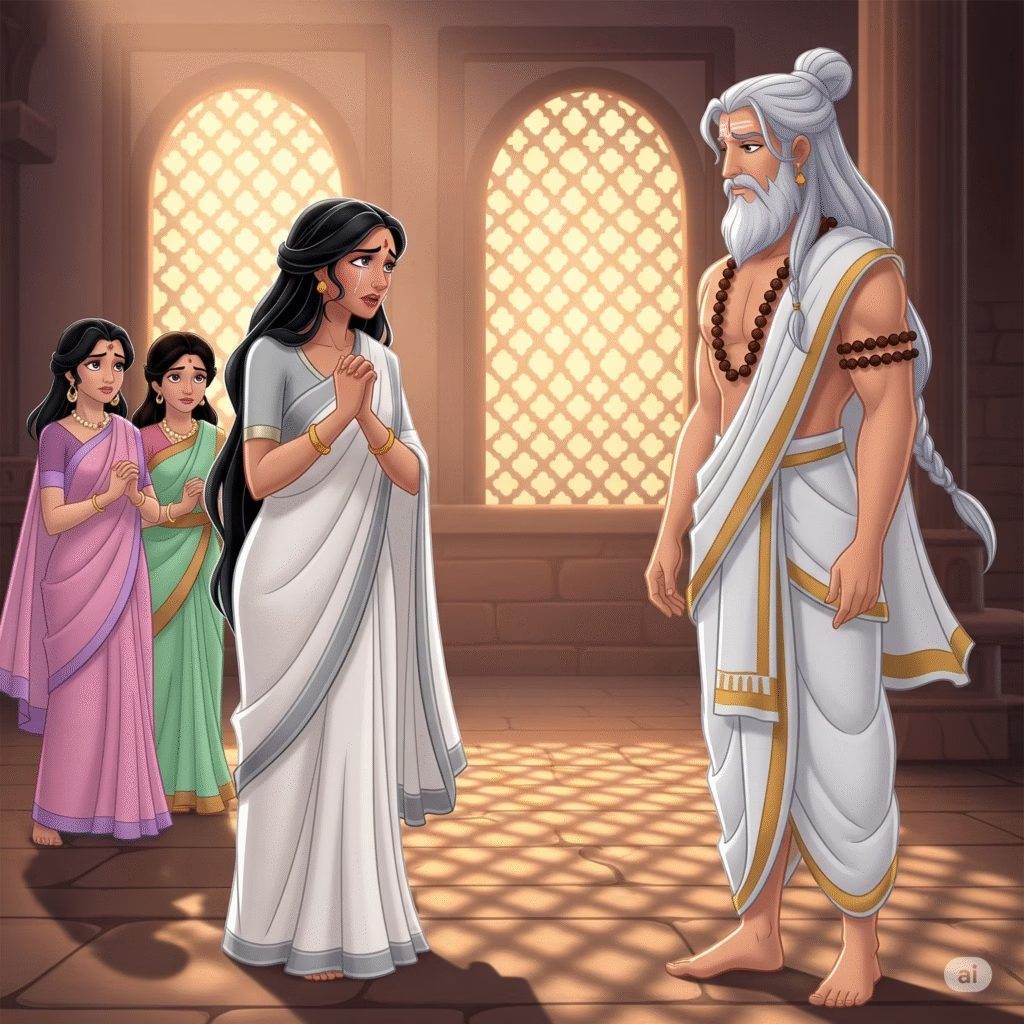
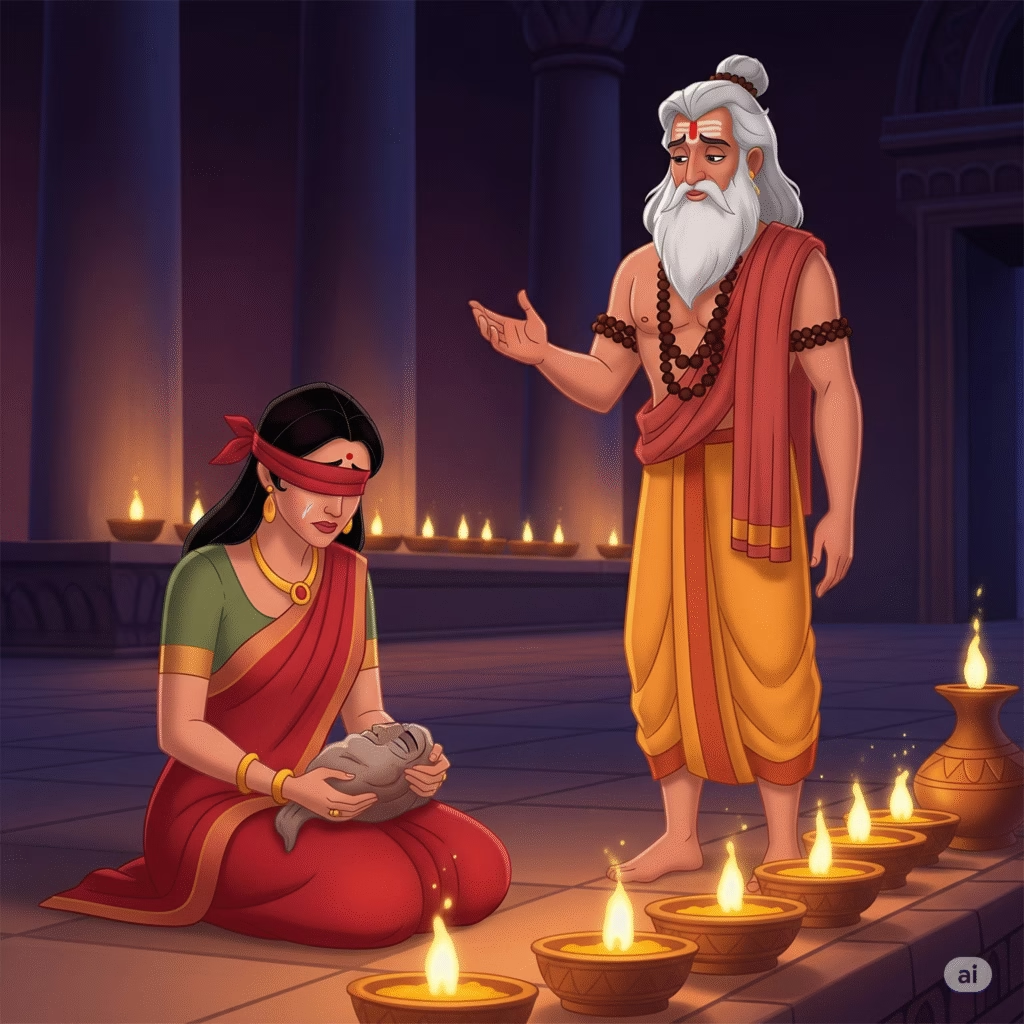
Madri sat by Pandu, her voice a mix of velvet and glass. She didn’t lead with anger; she led with a devastatingly honest confession. “I am not pained because you cannot father children,” she whispered to Pandu. “I am not pained because I must play the role of the younger sister to Kunti, though my birth entitles me to the highest seat. I wasn’t even pained when I heard Gandhari had a hundred sons.” She paused, the firelight dancing in her eyes. “But I am pained by this: Kunti and I are equal in our devotion to you, yet she is a mother, and I am barren. It is a beautiful thing that my Lord has found sons through her… but what of me?” Then, she revealed the true barrier. It wasn’t Kunti’s refusal—it was Madri’s own ego. “I have the pride of a co-wife ,” she admitted. “My heart prevents me from begging Kunti for help. If you love me, if you wish for my welfare, you must ask her. You must be the bridge.“
Pandu’s reaction was one many of us recognize. He had been thinking the exact same thing for months, perhaps years. He saw Madri’s longing every time she looked at Kunti’s boys. But he was paralyzed by a very modern fear: The fear of the “wrong” reaction. “Madri,” Pandu replied, “this thought has been a constant ghost in my mind. But I lacked the courage to speak. I didn’t know if the suggestion would please you or insult you. I was trapped in doubt.” Silence born of “assumed” offense is the graveyard of solutions. Once the communication broke the dam of pride, the path to a solution appeared instantly.
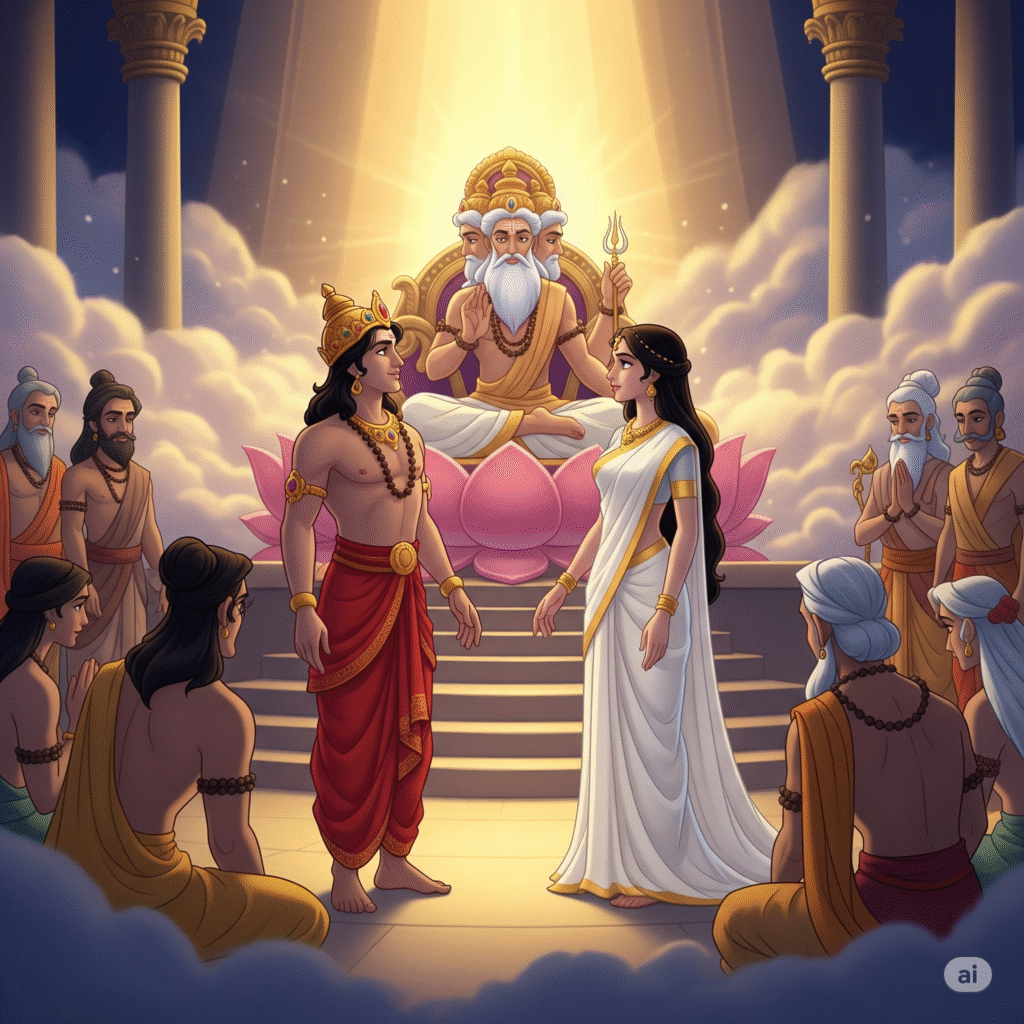
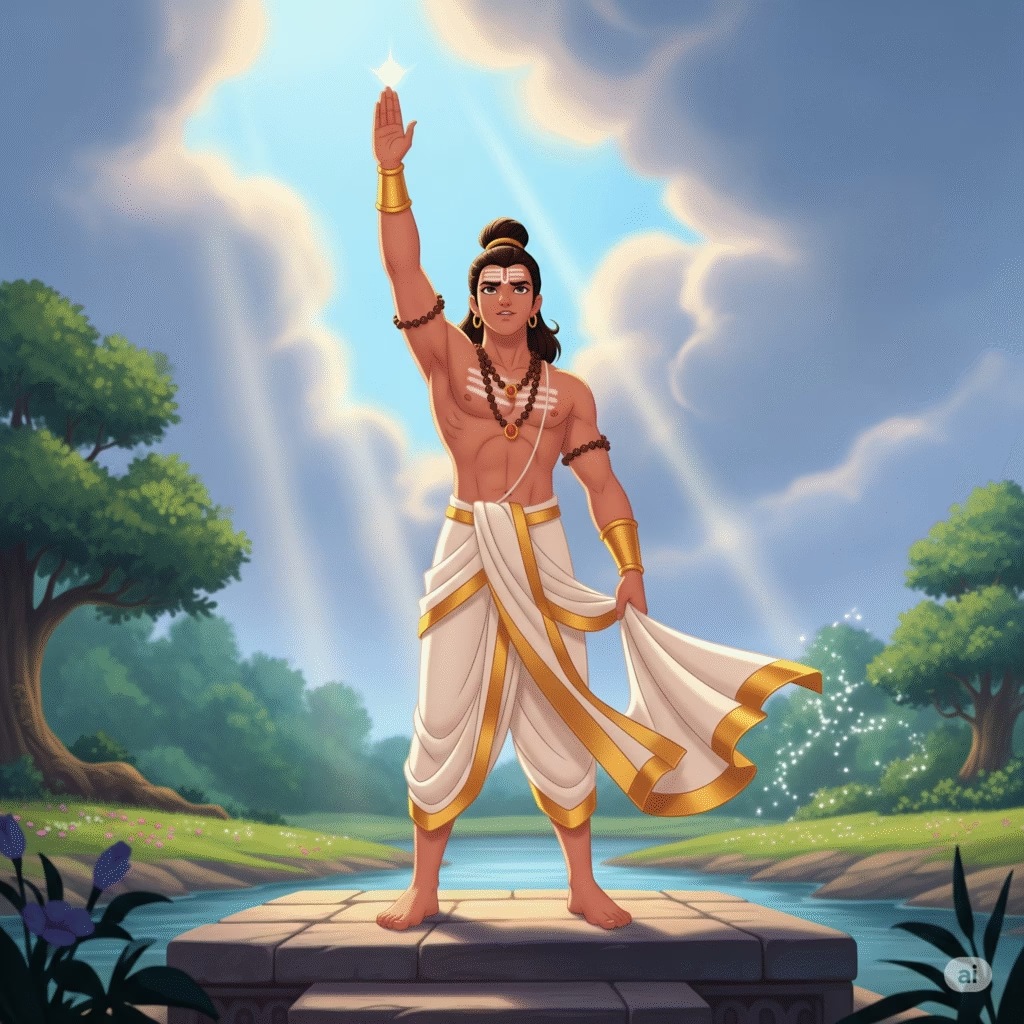
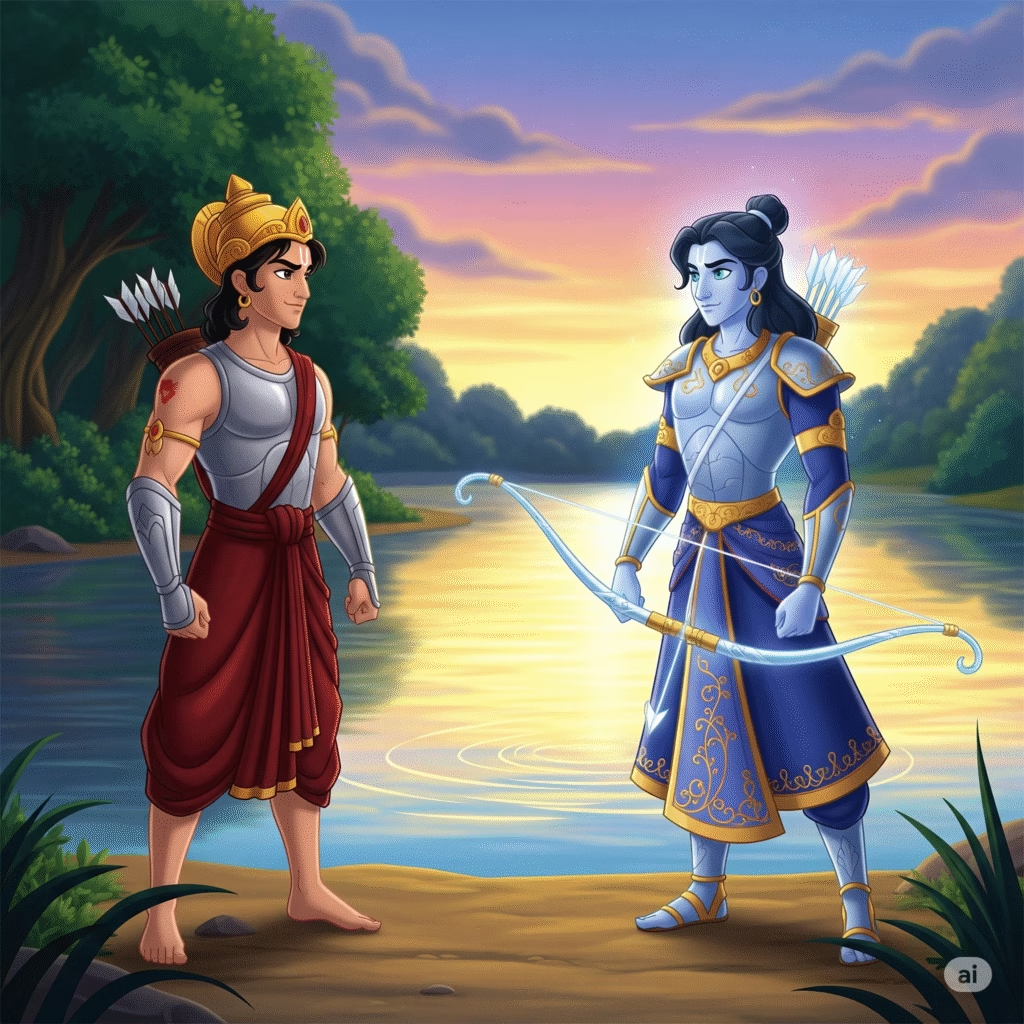
Pandu went to Kunti. He didn’t demand; he didn’t use his authority as a husband to command her. Instead, he appealed to a higher purpose. He told her, “Kunti, do a deed that will be loved by the whole world. Ensure the lineage of my ancestors does not vanish. Just as Indra performed countless Yajnas not for power, but for the sake of ‘Yash,’ you must perform a difficult act of grace.” He asked her to be the “boat” that carries Madri across the river of sorrow. Kunti, ever the embodiment of duty, agreed. She approached Madri and told her to meditate on a deity. “You will receive a child worthy of you,” Kunti promised. Madri was strategic. She knew Kunti might only give her this chance once. Instead of calling upon a single god, she called upon the Ashwini Kumars—the twin physicians of the gods. In one stroke of divine invocation, she gave birth to twins: Nakula and Sahadeva. The sky erupted in a voice of prophecy: “These two will surpass even the Ashwini Kumars in beauty, intelligence, and virtue.” The hermits of Shatashringa rejoiced. The five Pandavas were complete. They grew together—five “lions” in the Himalayan snow, their necks thick, their chests broad, their eyes reflecting the celestial light of their fathers.
But then, the human element returned. Pandu, thrilled by the sight of five sons, went back to Kunti. “Give her the mantra again,” he urged. “Let us have more.” Kunti’s response was sharp, sudden, and deeply relatable. It reminds us that even the most “Sati” characters in the Mahabharata are not cardboard cutouts of perfection. “No,” Kunti said firmly. “I gave her the mantra for one invocation, and she outsmarted me. She got two children from one call. I feel cheated. If I give it to her again, she might surpass me in the number of sons. I fear being looked down upon by her.” She looked Pandu in the eye and asked for a boon: “Do not ask me to do this again.”
And so, the number was fixed at five. The family was whole, but the subtle tension between the two mothers remained—a reminder that even in the pursuit of Dharma, the “I” (the ego) is never entirely silent.
At its core, this episode reveals a central Mahabharata truth: Dharma is rarely fought in public. It is fought within, Madri’s suffering is not caused by barrenness alone. It arises from a deeper wound—the belief that worth is proven through visible roles. Motherhood becomes the symbol, not the source, of her pain. What she longs for is not just children, but recognition, equality, and self-validity. When society measures value through outcomes, those without outcomes feel invisible, even when their devotion is equal. Her greatest prison is not fate—it is abhiman. The Mahabharata does not condemn pride outright; it shows how subtle it is. Madri is honest, gentle, and self-aware—yet even she cannot cross the final threshold of asking. The ego here does not roar; it whispers: “I should not have to beg.” This is the most dangerous form of ego because it masquerades as self-respect.
Pandu represents another inner conflict: fear disguised as sensitivity. He does not speak, not out of ignorance, but out of assumption. He fears hurting Madri, so he chooses silence. The text quietly exposes a timeless truth: avoiding discomfort in the name of care often prolongs suffering. Silence, when born of imagined offense, becomes a subtle form of neglect.
Kunti’s role introduces an uncomfortable but deeply human insight: Dharma does not erase insecurity. Even the most dutiful individuals carry fear—fear of being surpassed, diminished, or forgotten. Kunti’s refusal is not cruelty; it is vulnerability. The Mahabharata refuses to flatten its women into ideals. It allows them to be virtuous and afraid, generous and competitive. In doing so, it honors truth over moral performance.
The fixed number of five Pandavas is philosophically significant. It tells us that life is not optimized for fairness, but for balance. More sons were possible. More solutions existed. But harmony demanded a stopping point. Dharma, here, is not about maximizing outcomes—it is about containing desire before it consumes relationships.
Finally, the lingering tension between Kunti and Madri teaches a profound lesson: Resolution is not the same as inner peace. Problems can be solved while ego remains. Duties can be fulfilled while comparison survives. The Mahabharata does not promise emotional closure—it promises awareness.
Journaling Prompts
- Have you ever chosen silence to avoid “hurting someone,” when the real reason was fear of their reaction?
- In what ways do you compare my life’s progress with others, even when our journeys are fundamentally different?
- If you were in Kunti’s place, what would you fear losing by being generous again? Is your reluctance rooted in fairness—or in fear of being overshadowed?