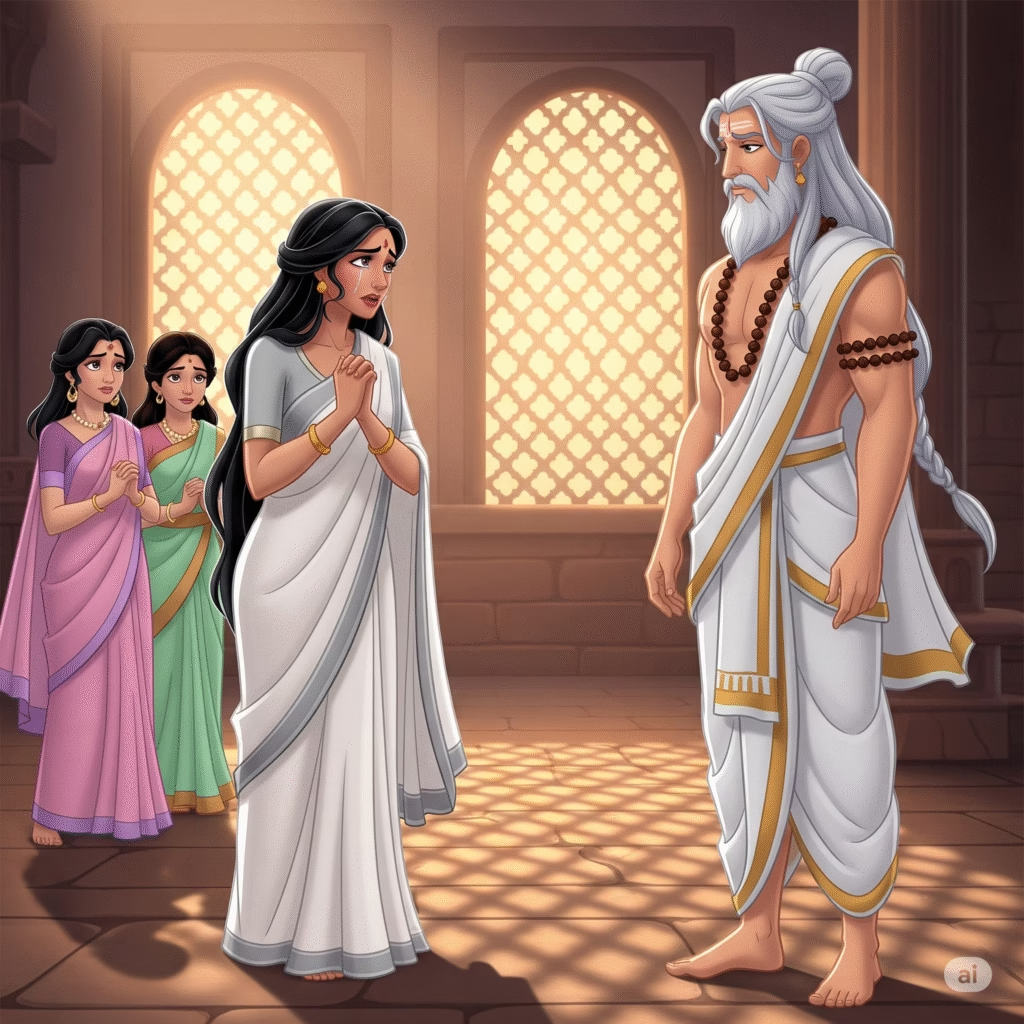

After hearing the powerful legend of Queen Bhadra, Kunti had made her stand: Her husband’s spiritual power was enough to grant them a son, circumventing the curse of the Rishi. But King Pandu, was not yet satisfied. He agreed that the story was true, and that the ancients often adopted non-conventional means to secure an heir. But he insisted on the letter of the law: “O Kunti, what the husband commands, whether it is agreeable or disagreeable, the wife must fulfill. Especially when the husband is sterile and desperate for a son, his word is paramount. I hold this lotus-like hand (Anjali) to my head in supplication for the prosperity of my lineage. By my command, go to a superior being, a Brahmin elevated by Tapas, and conceive a virtuous son for me!”
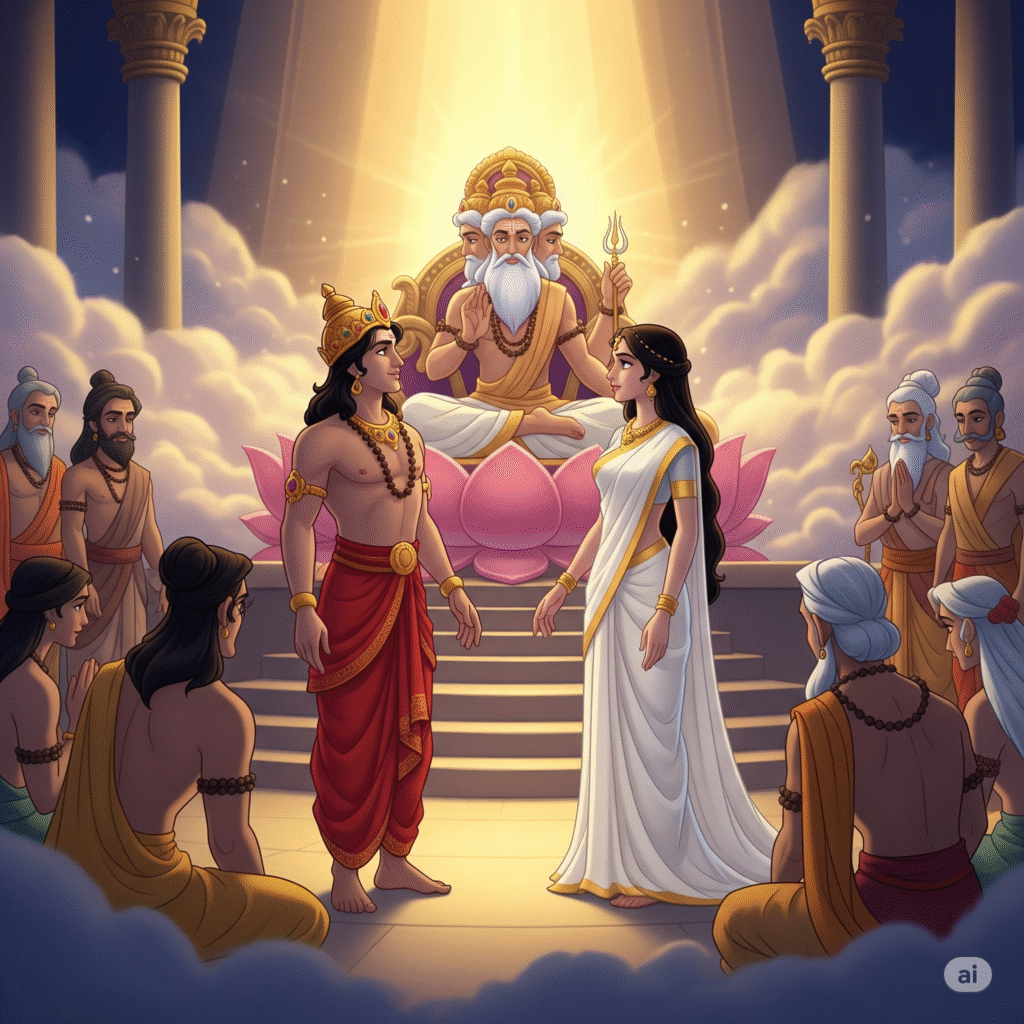
The tension between Pandu’s role as the King (focused on Ancestral Duty) and Kunti’s role as the Wife (focused on Marital Fidelity) reached its peak. Kunti, the noble queen, finally understood that the Dharma of the Lineage was demanding that she set aside her personal Dharma of Fidelity. Kunti, accepting her husband’s command as her ultimate destiny, smiled. She offered a profound, philosophical justification for her submission: “O Bharata-Shreshtha (Best of Bharatas)! It is the duty of the wife to please the husband, not for the husband to beg for the wife’s compliance! But since you have insisted, I will share with you a matter of great joy.“
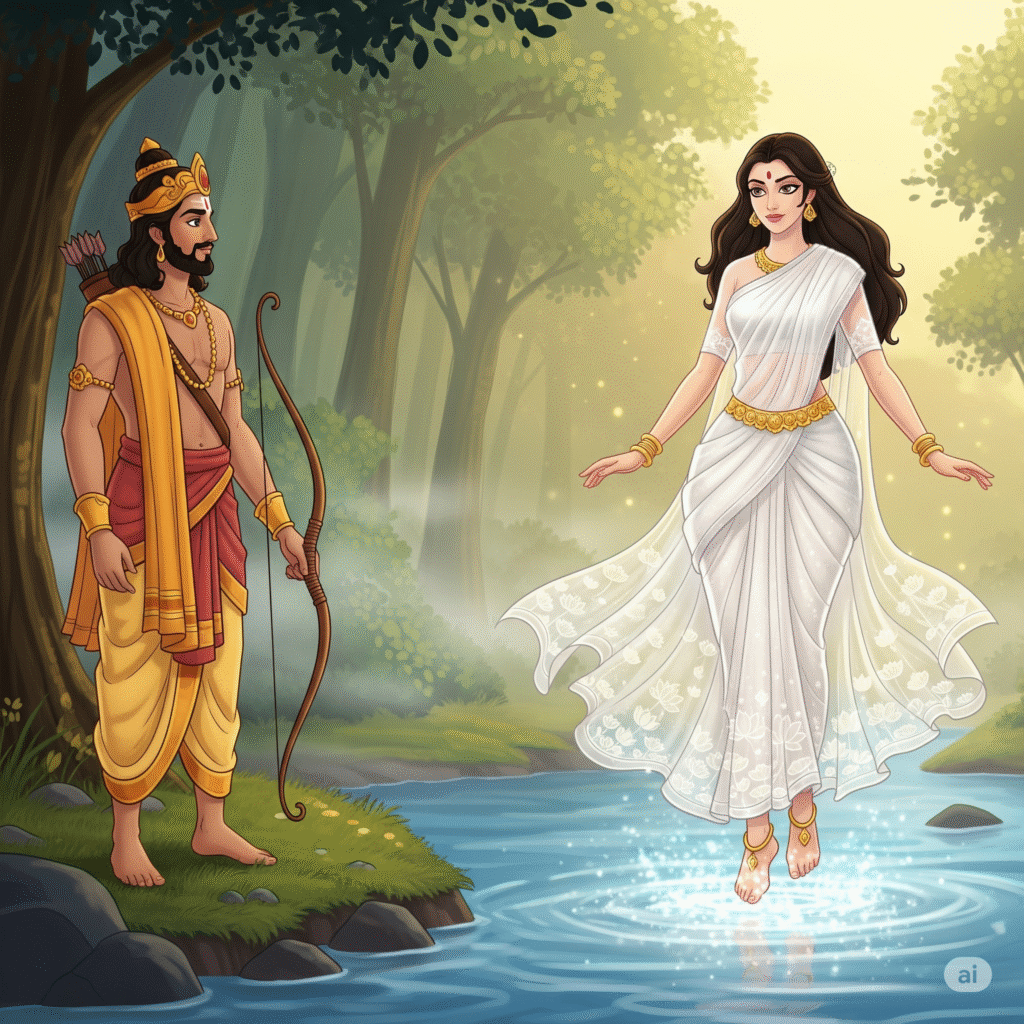
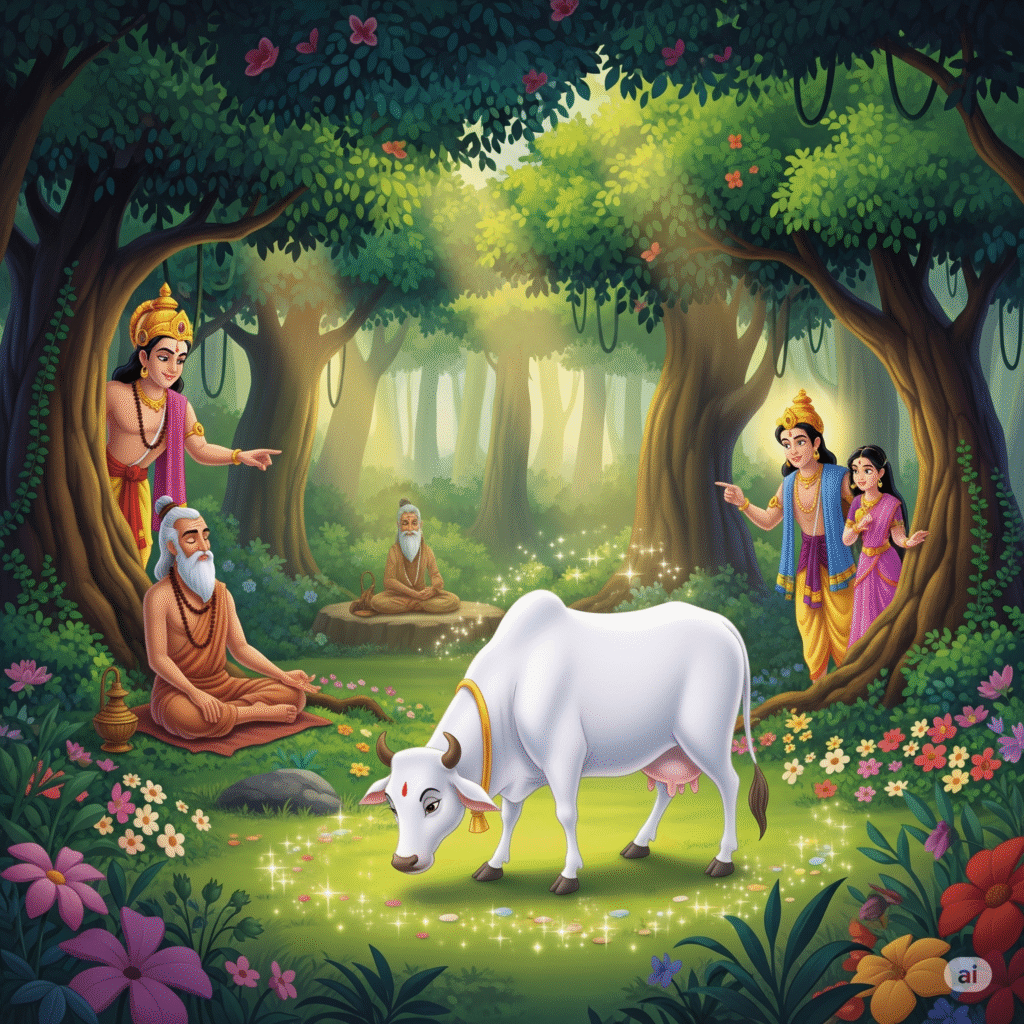
She then revealed the sacred secret: During her childhood, while serving guests at her father’s house, she had tirelessly served the short-tempered, harsh ascetic, Durvasa Rishi. Pleased with her unflagging devotion, Durvasa granted her a boon—a Mantra that would compel any God she called upon to grant her a son. “O King! The word of that Brahmin must be true, and the time to use this knowledge has come. Tell me, which Deva should I invoke to obtain a son who will be beneficial to us both and save our lineage from extinction?”
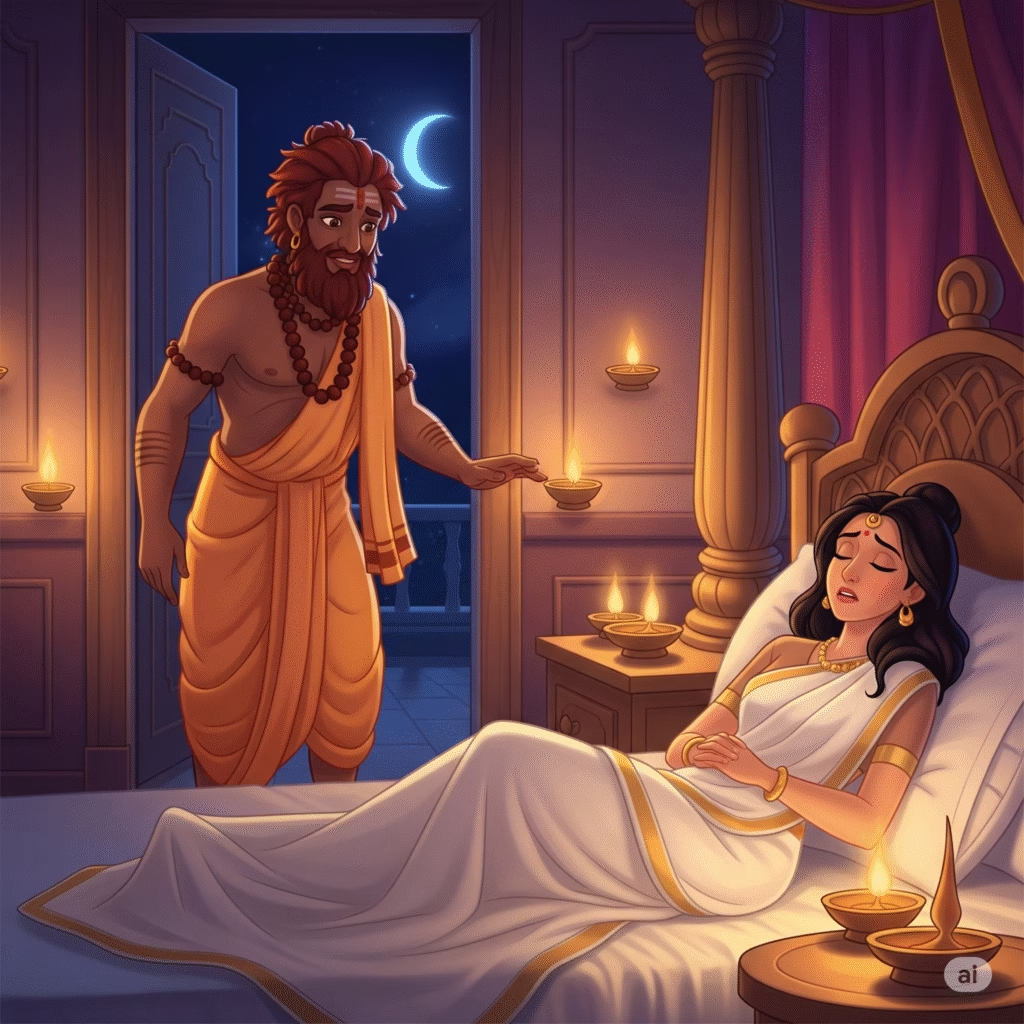
Pandu, ecstatic and relieved, praised Kunti and the Rishi who granted the boon. He immediately guided her choice, emphasizing the paramount importance of their son’s character: “O Beloved! The raising of a family cannot be done through Adharma. Therefore, I command you: Invoke Dharma the God. The son born from Dharma will be supremely virtuous, his mind will never turn to sin, and he will be the most righteous among the Kurus, bringing glory to all the worlds!”
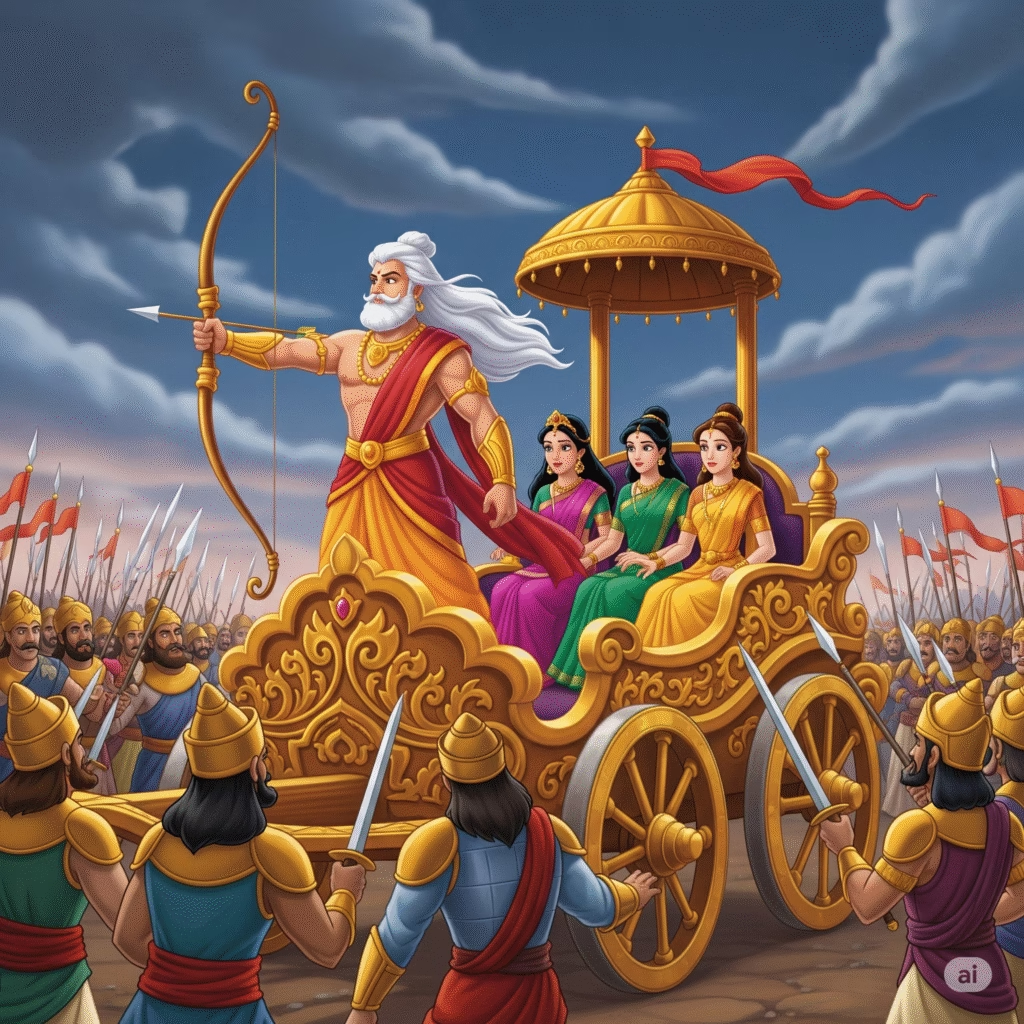
Kunti, accepting her husband’s counsel as divine law, prepared for the invocation. While in Hastinapura, the blind Queen Gandhari had already been pregnant for one year, Kunti focused her mind, purified her senses, and properly invoked the God Dharma. The radiant God, seated on a celestial chariot, appeared before her. He asked her, smiling: “What shall I grant you?” Kunti asked for a son. In that auspicious hour—when the moon was in the Jyeshtha Nakshatra, the Sun in Libra, and the eighth Muhurta (called Abhijit) was present—Kunti gave birth to a luminous, glorious son.
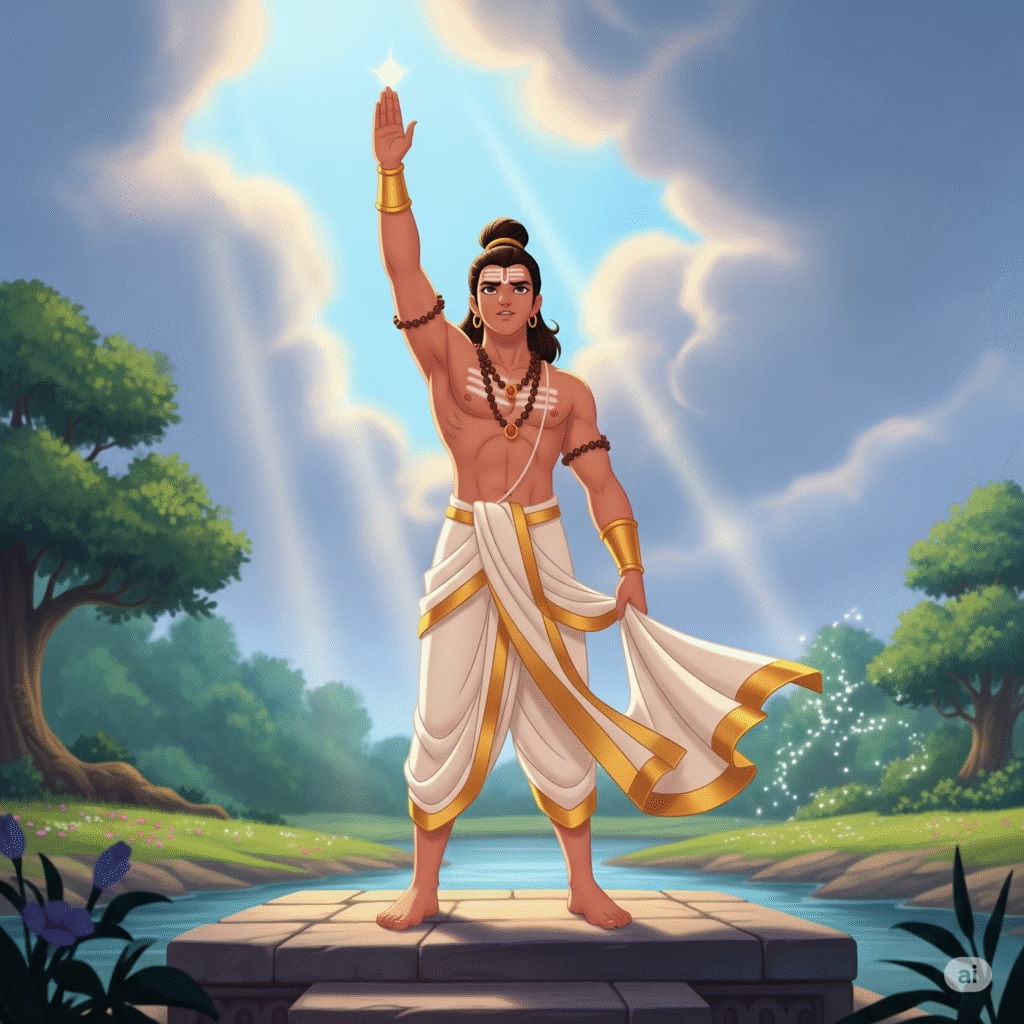
An Akashvani rang out across the forest, proclaiming the child’s destiny: “This supreme man shall be foremost among the righteous! He will be a King, brave and truthful upon this Earth. The first son of Pandu, named Yudhishthira, shall be renowned and celebrated across the three worlds for his fame, brilliance, and impeccable conduct.”
Thus, in the deep wilderness, the first Pandava—the son of Dharma, the righteous standard-bearer—was miraculously born, lifting the crushing burden of childlessness from King Pandu’s heart.
When we look carefully, Pandu’s story becomes more than a biological workaround or a divine miracle—it becomes a metaphor for how the universe responds to pure, righteous intention. Pandu cannot act. His body is bound by a curse—a karmic boundary he cannot cross. Yet his Sankalpa, his inner resolve, remains unbroken. This is where the essence of Nishkama Karma appears : Doing what must be done, without claiming authorship, without clinging to outcome, but leaving the result in the hands of the Divine.
Pandu cannot perform the action of fatherhood, but he carries the seed of fatherhood within him—his yearning aligned with Dharma. Kunti and the Devas become the soil that nurtures that seed into reality. Pandu does not act out of: lust, ego, possession, or desperation. He acts from responsibility. His desire is not personal pleasure—it is ancestral continuity, moral obligation, Dharmic alignment. This purity of motive becomes the very soul of Yudhishthira. The universe truly conspires to fulfill his wish because his intention is pure.
Pandu’s role is spiritual, not physical. He contributes Dharma, not flesh. He offers purity of intention, not force of action. This is why Yudhishthira becomes Dharma-Putra, not merely Pandu-Putra.
Journaling Prompts
- If you remove the pressure for results, what is the purest intention behind your desire?
- What would your life look like if you trusted that intention itself can create movement in the universe?
- What recent experience showed you that results can come from unexpected places?
- Which longing in my heart feels Dharmic—aligned with your soul’s path?