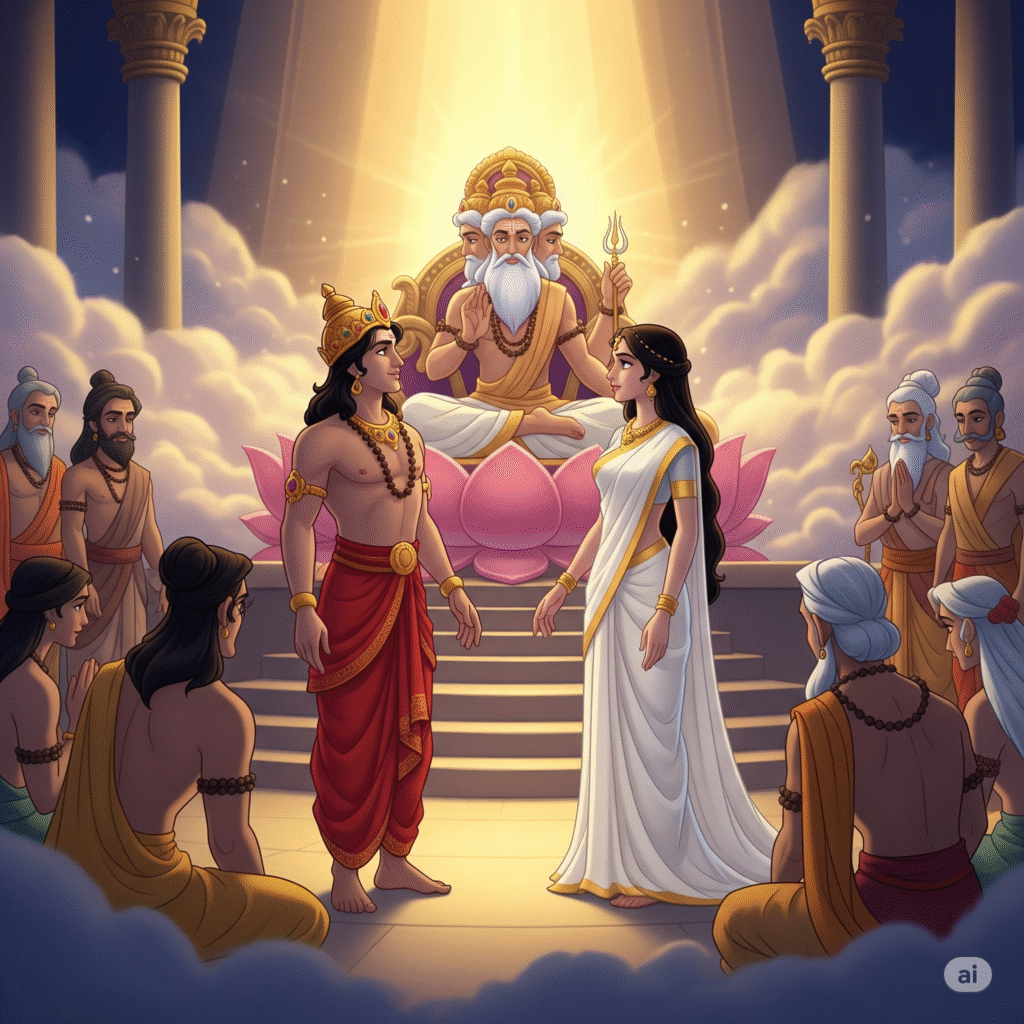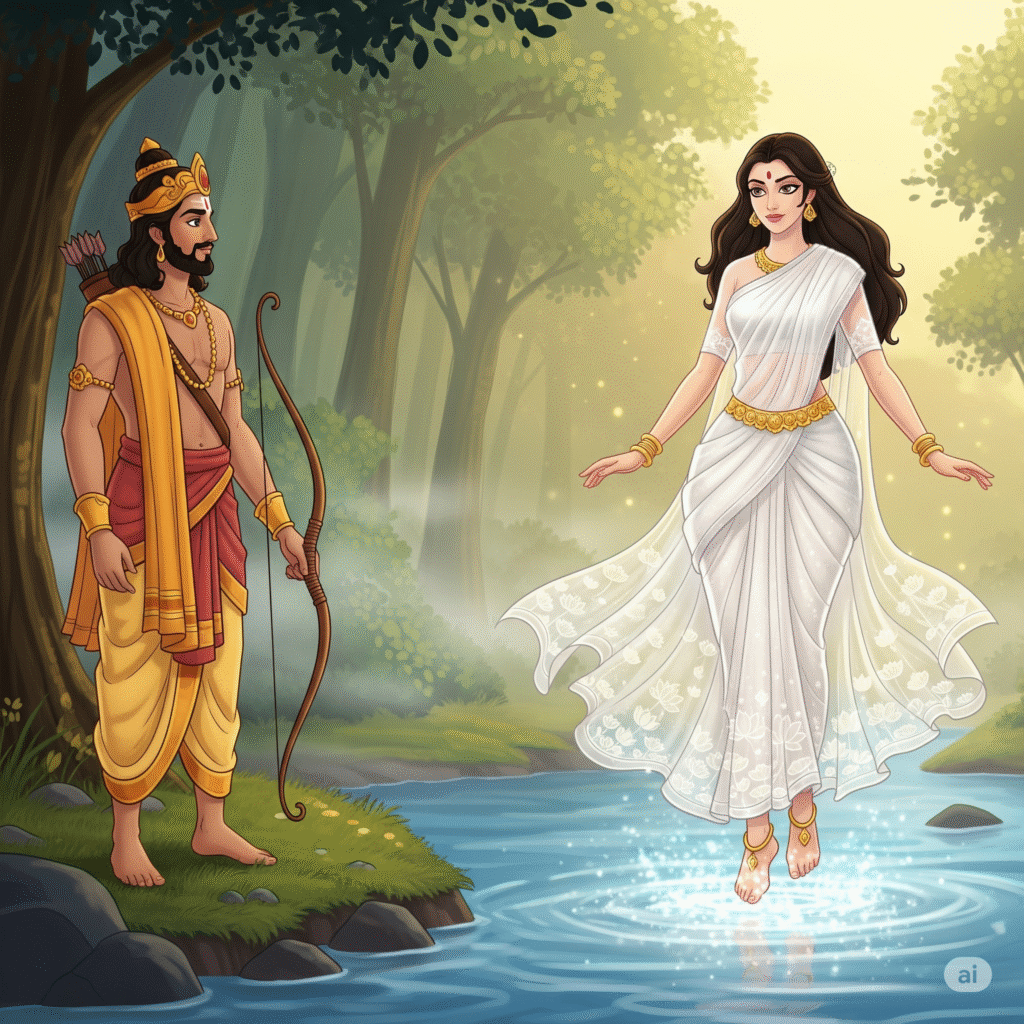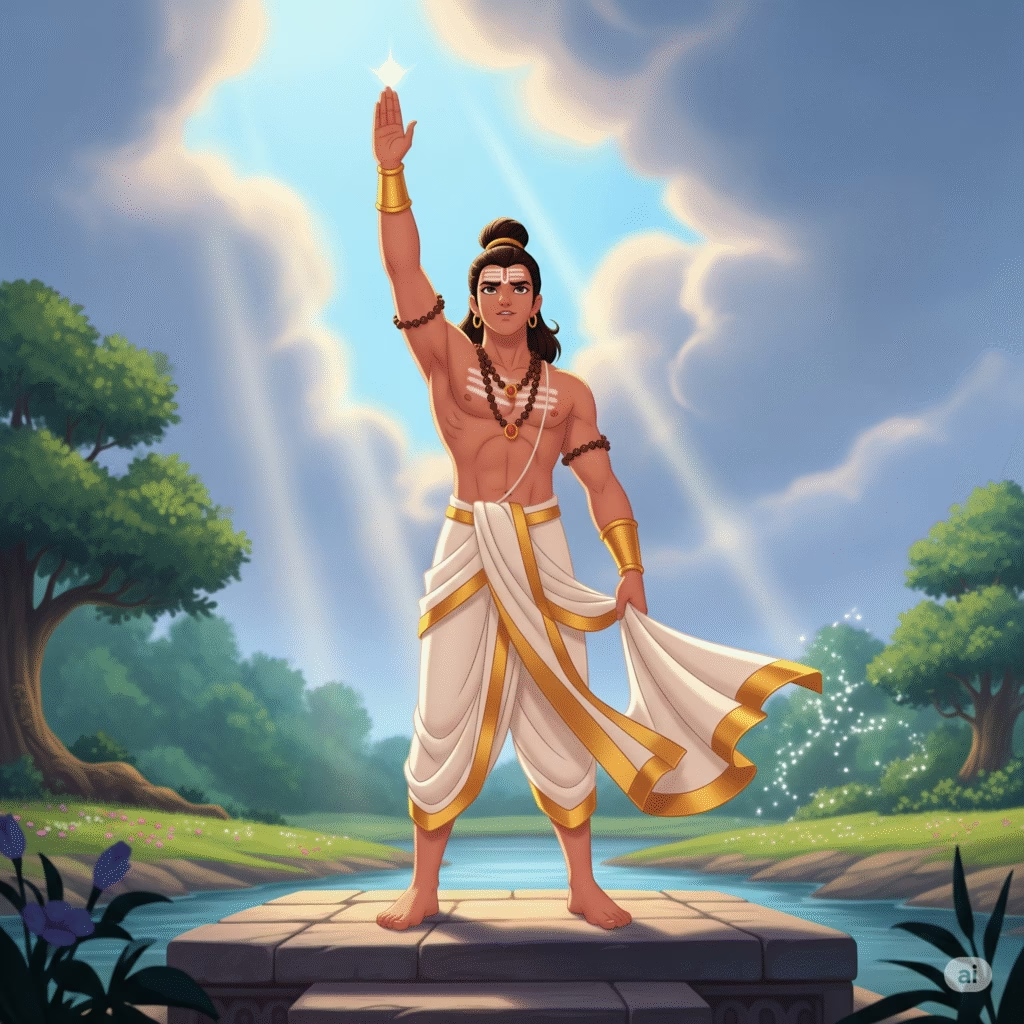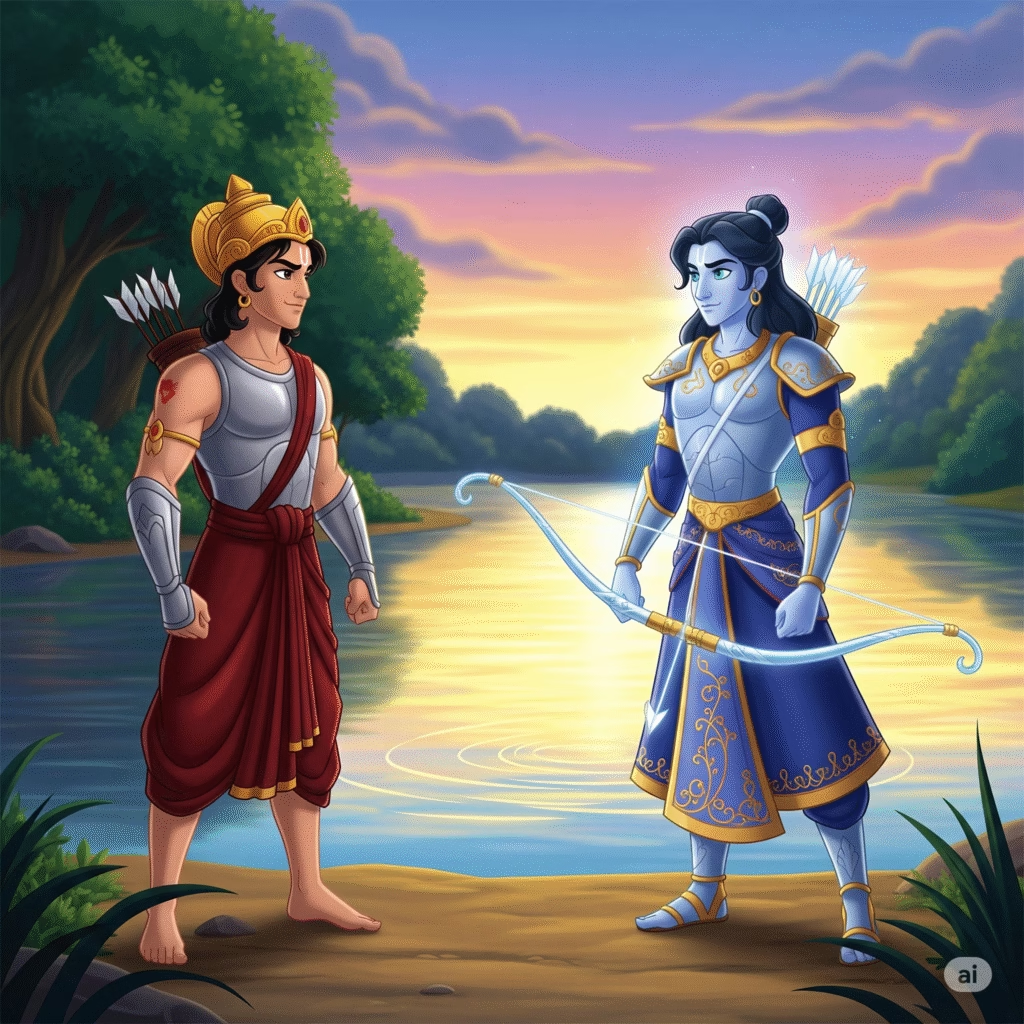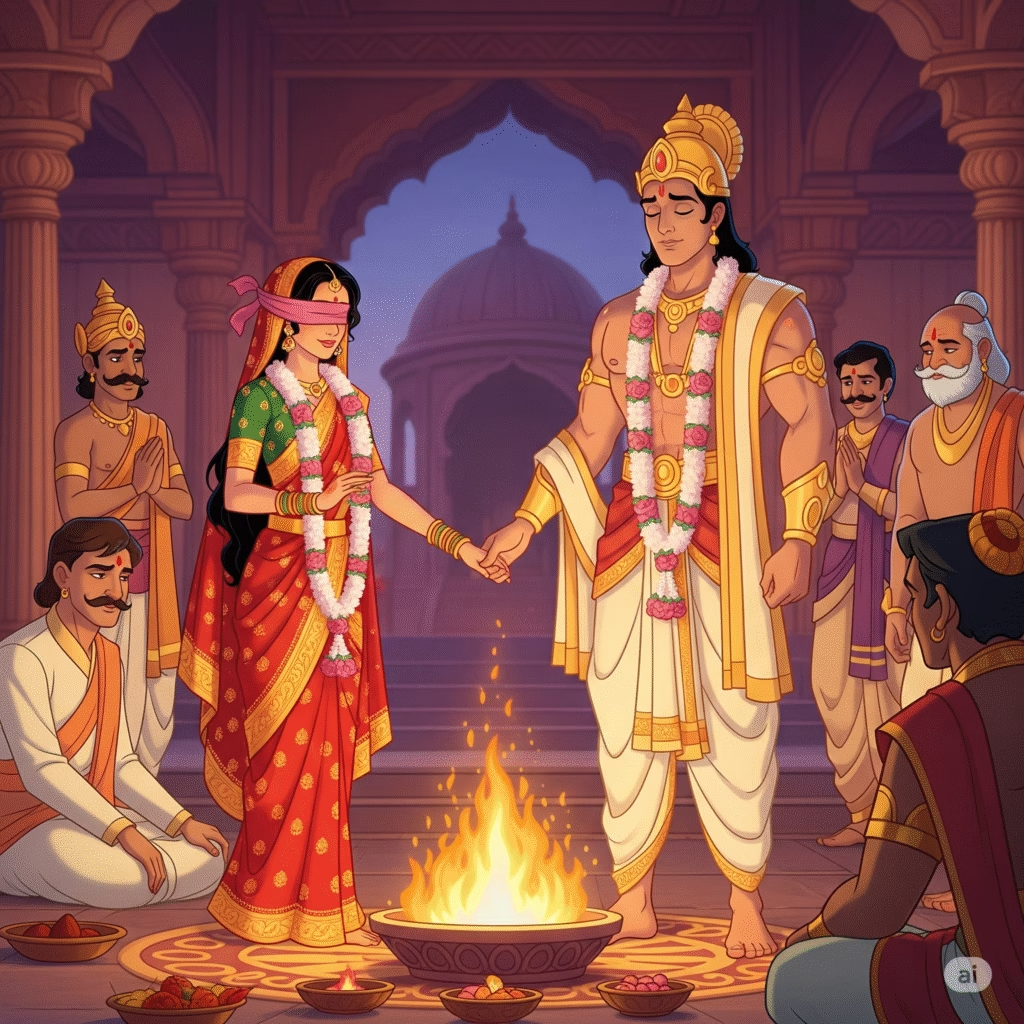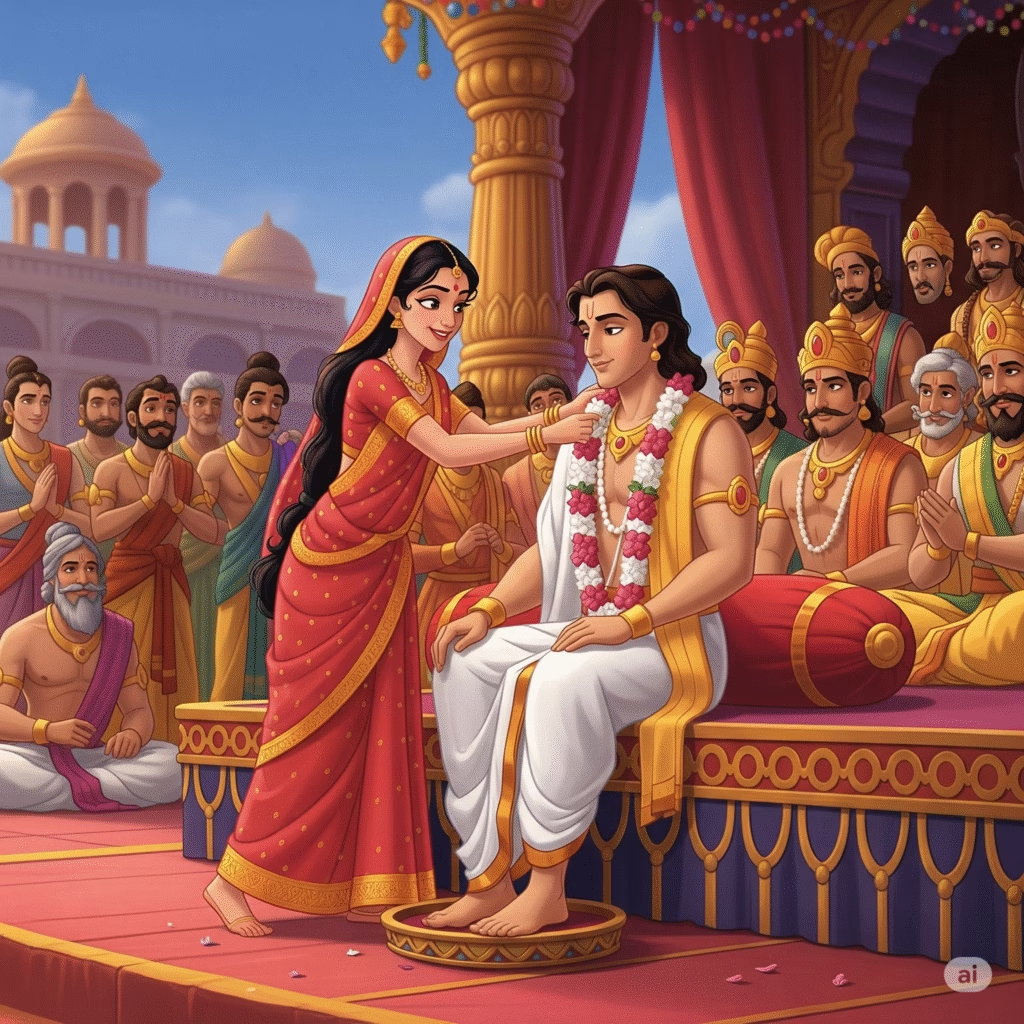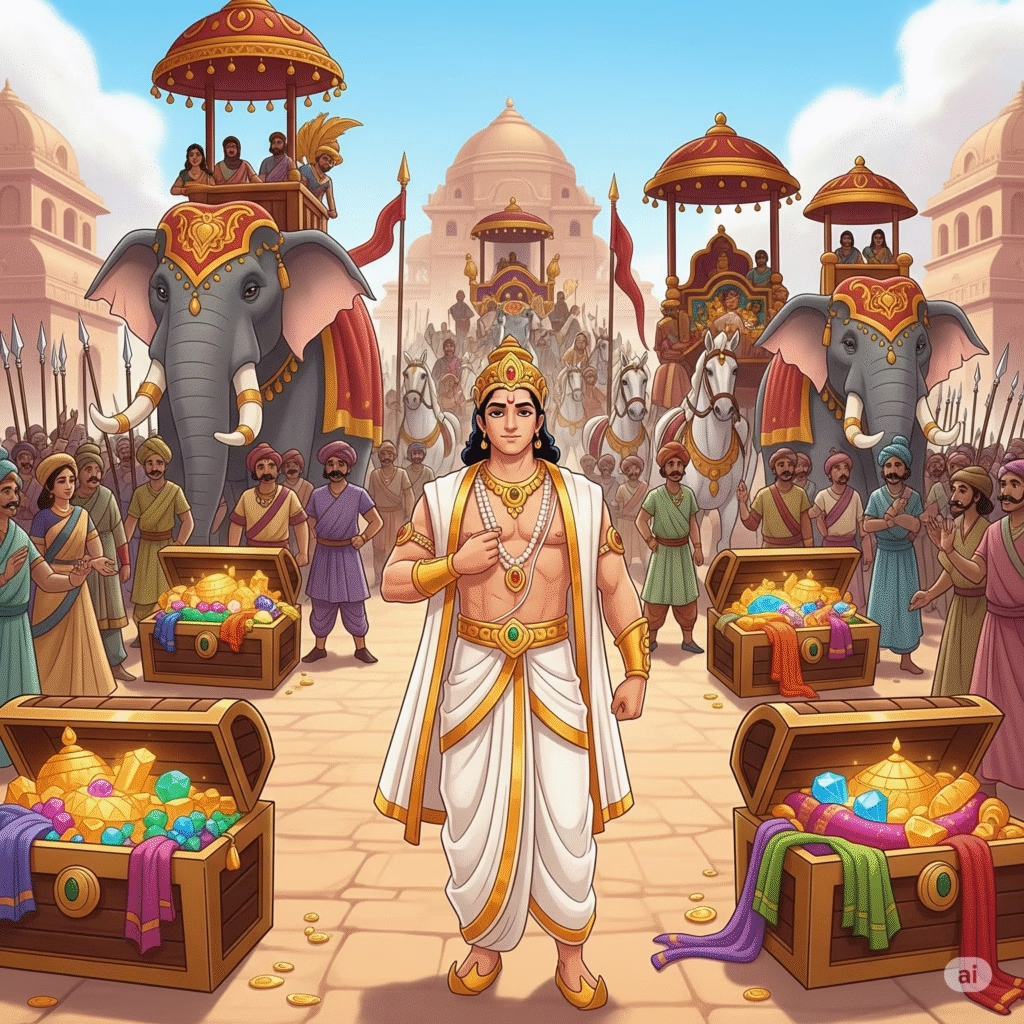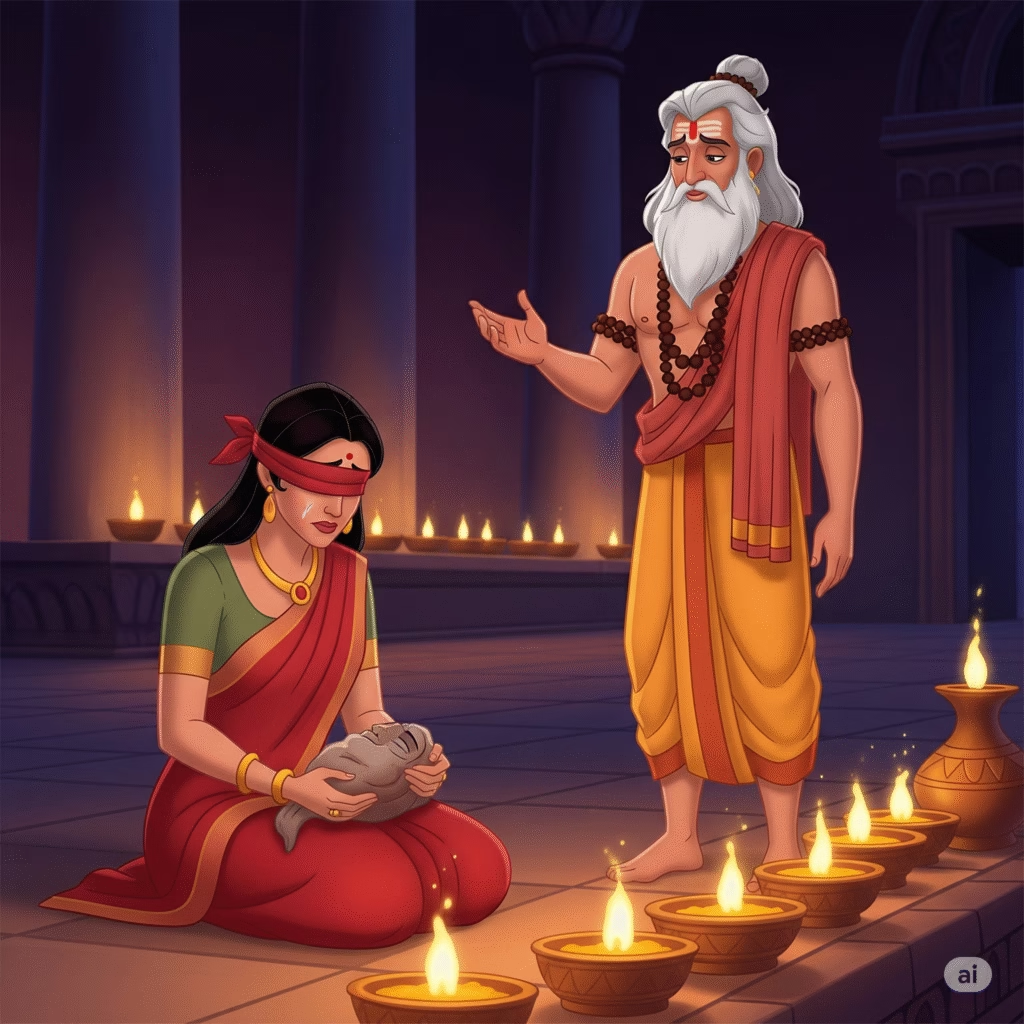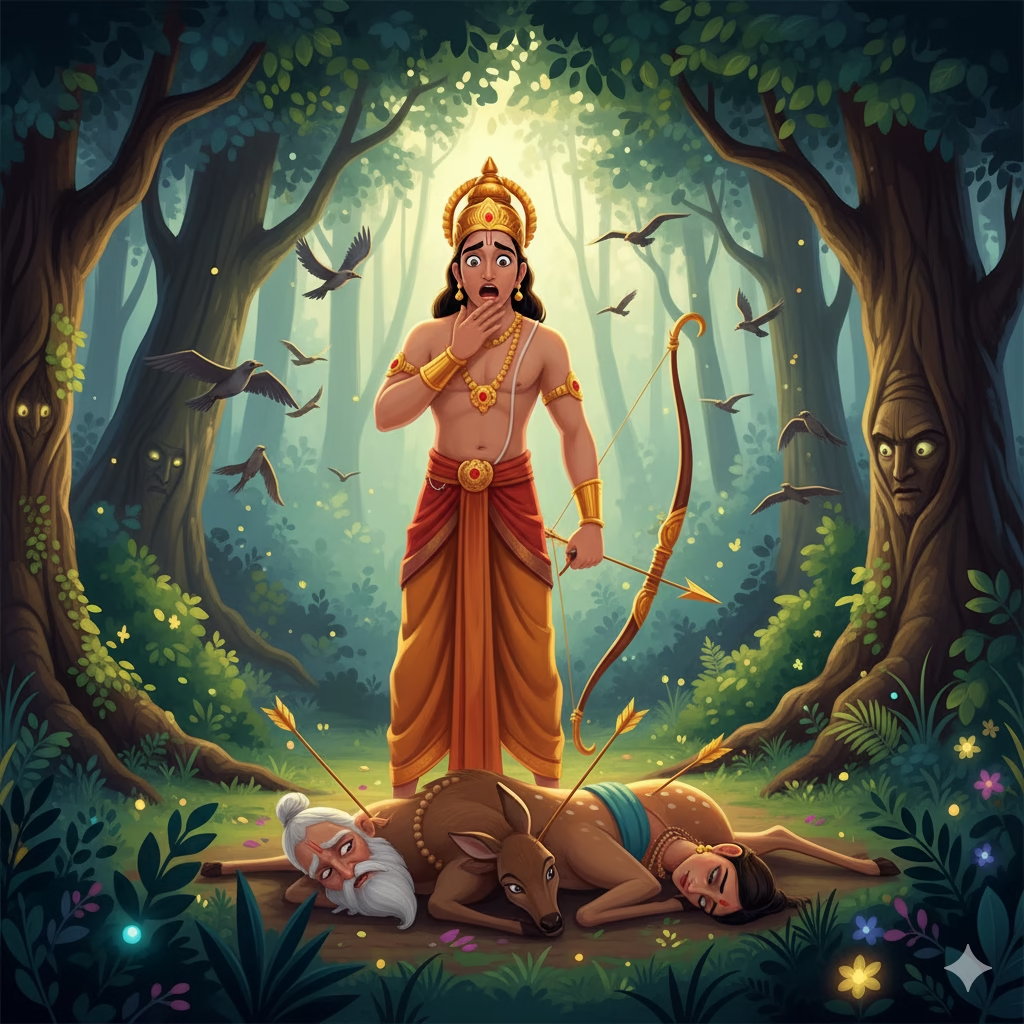
In the annals of the Gautama lineage, there lived a man named Sharadvan. He was a Brahmin by birth, but his soul vibrated with the frequency of war. While his peers spent their days chanting the rhythmic hymns of the Vedas, Sharadvan spent his in the rhythmic release of the bowstring. To him, the Dhanurveda (the science of archery) was not just a skill—it was his meditation. Sharadvan’s focus was so singular, his penance so intense, that the cosmic balance began to shift. High above in Amaravati, Indra, the King of the Devas, felt a familiar tremor of anxiety. Indra’s throne was always sensitive to the heat of mortal penance. He feared that if Sharadvan mastered both the spiritual and the martial, he would become a power that even the gods could not contain. Indra did what he often did when faced with a formidable sage: he weaponized beauty. He summoned the Apsara Janapadi, a woman whose grace could melt mountains, and sent her to the forest of Sharadvan.
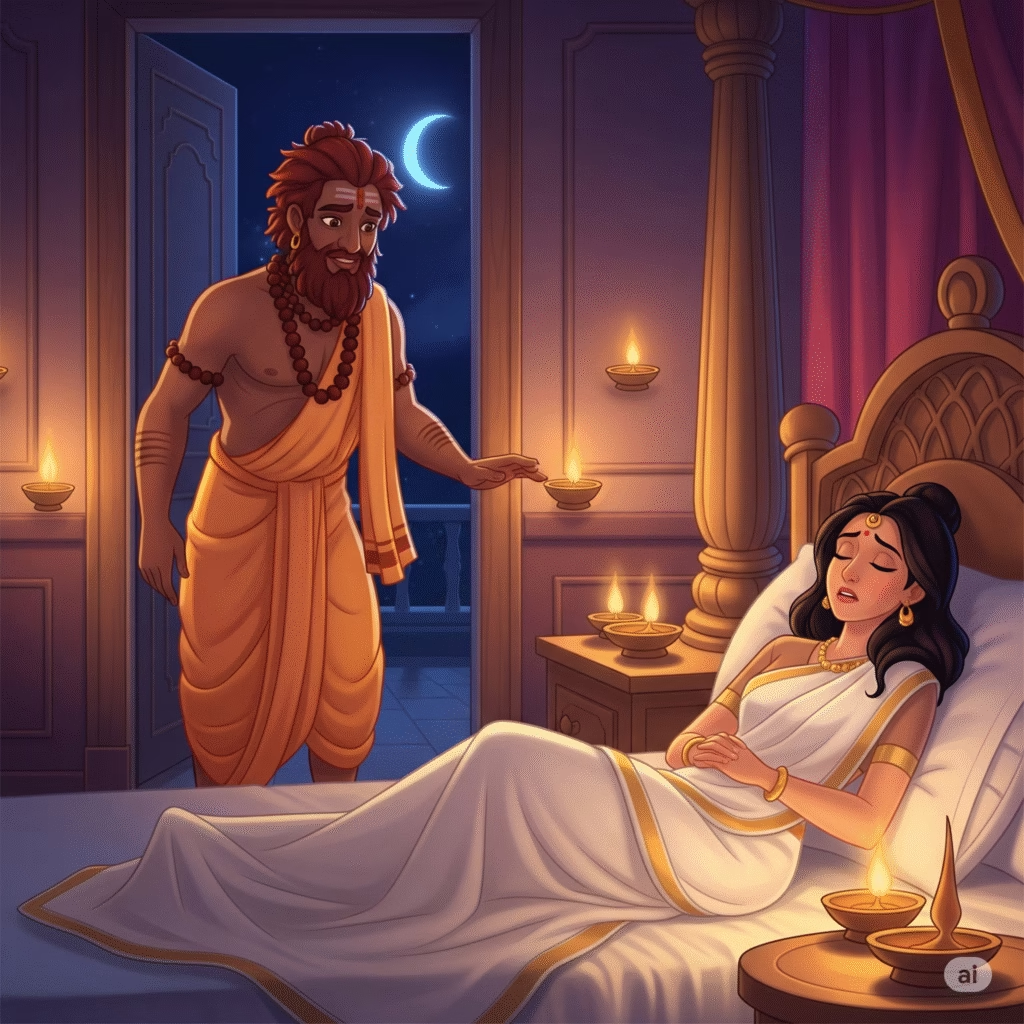
Janapadi found the sage in a lush grove. She did not need to speak; her presence was a symphony of distraction. Sharadvan, a man of iron discipline, opened his eyes and for the first time in his life, his gaze was captured by something other than the bullseye. It was a fraction of a second—a heartbeat of desire. In that moment of overwhelming emotion, his physical body reacted even as his mind fought for control. His grip loosened. The great bow, which had never failed him, slipped from his fingers and clattered onto the dry leaves. Ashamed and terrified of losing his spiritual merit, Sharadvan did not surrender to the temptation. Instead, he turned and fled deeper into the thickets, abandoning his bow, his deerskin, and the woman. But the seed of his lineage had already fallen upon a clump of Shar (reeds).
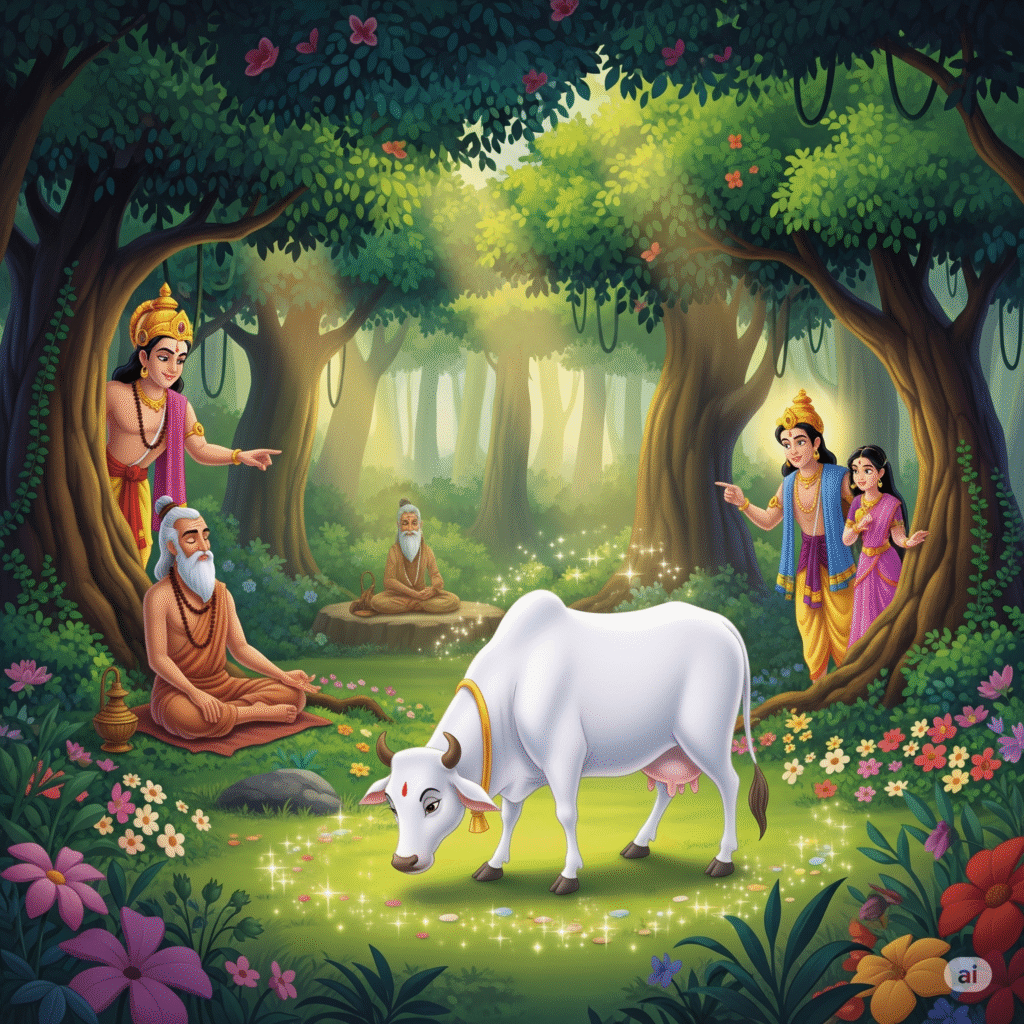
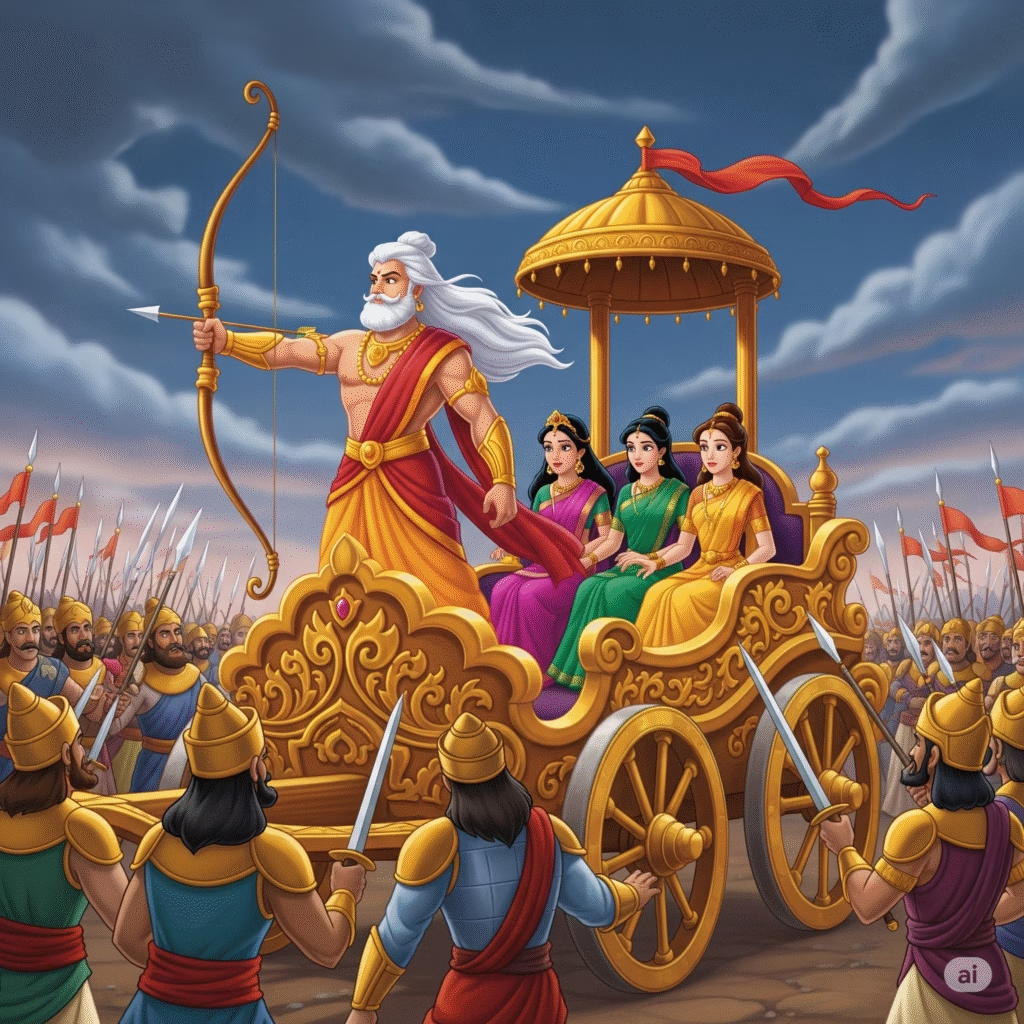
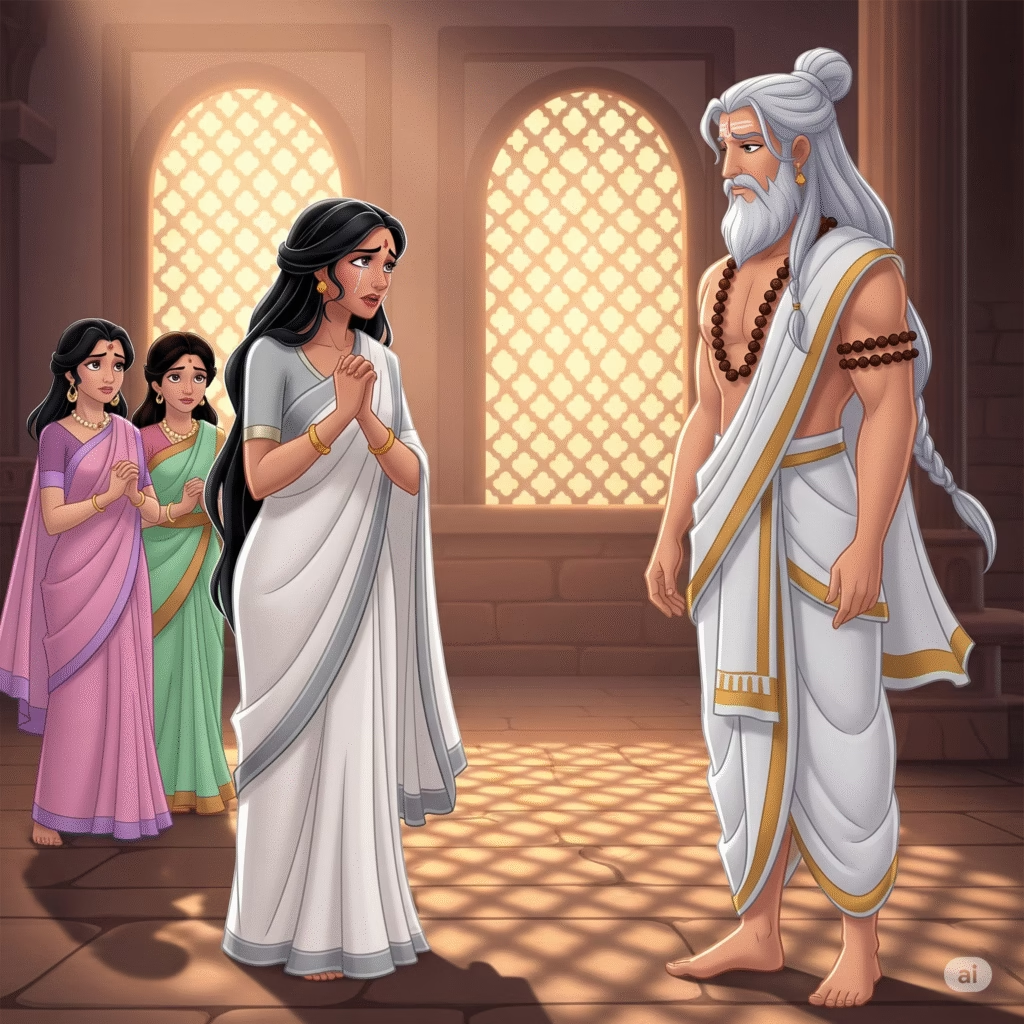
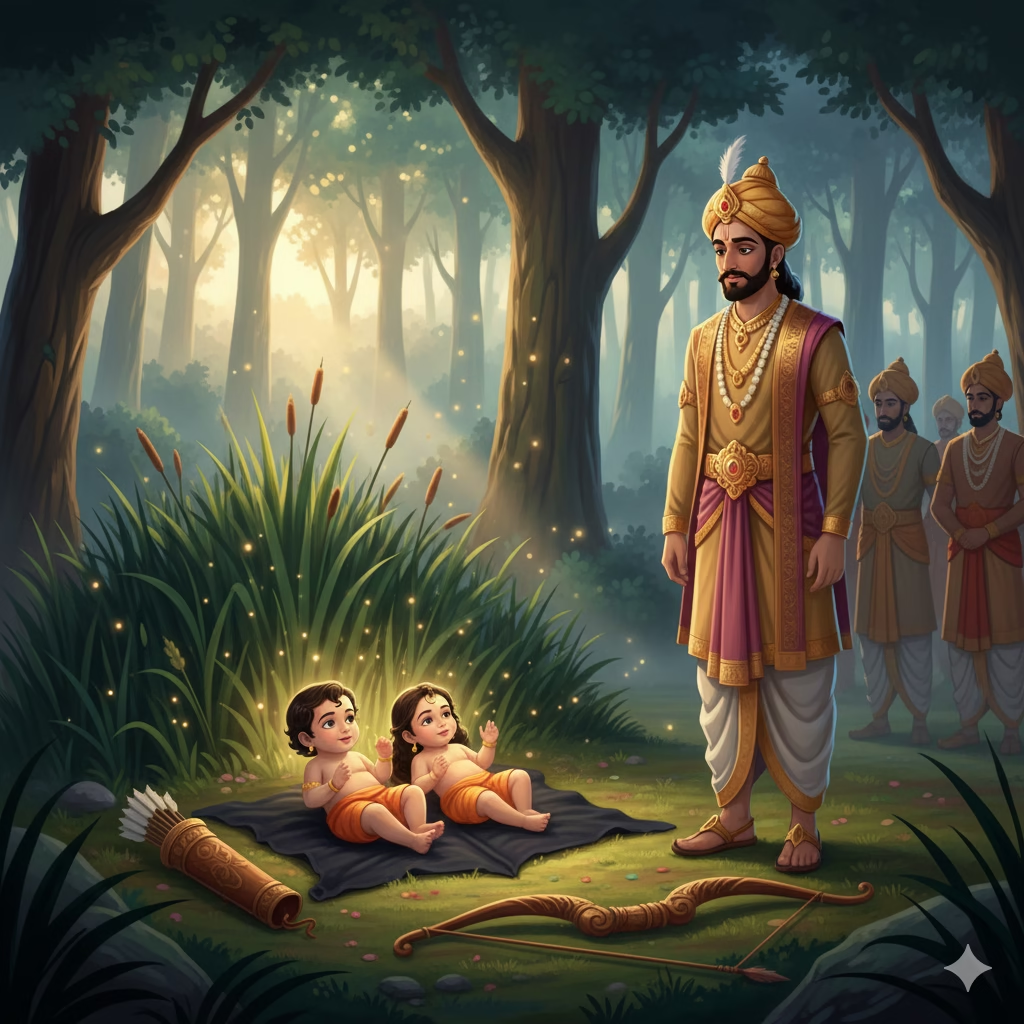
Sometime later, King Shantanu was passing through the forest on a hunting expedition. His scouts discovered a strange, divine sight among the tall grass: two infants, a boy and a girl, perfectly formed and radiating a quiet brilliance. Beside them lay a black deerskin and a bow, the only clues to their high-born, martial father. Shantanu, a man whose life was often defined by the pains of fatherhood and loss, felt a surge of Kripa (compassion). “These are children of a great soul,” he declared. He took them to the palace of Hastinapur, naming them Kripa and Kripi, raising them with the love usually reserved for royal heirs. Sharadvan, through his yogic vision, eventually realized that his children were being raised in the lap of luxury. He did not claim them publicly, for he was a hermit, but he could not let his son remain ignorant of his heritage. He visited the palace in secret and imparted to Kripa the Gudh Rahasya—the hidden secrets of the four branches of archery.
Kripa grew to be a master so profound that he was appointed as the official Acharya (Teacher) of the Kuru household. He taught the young Pandavas and Kauravas the basics of stance, the grip of the bow, and the ethics of war. But as the princes grew, the veteran Bhishma realized that the world was changing. The rivalry between the cousins was no longer a childhood squabble; it was becoming a cold war. They needed a teacher who wasn’t just a master of weapons, but a master of the soul of warfare—someone who had tasted the bitterness of the world. It was then that Bhishma invited Dronacharya, the legendary warrior-Brahmin, to take over the education of the princes. In a formal ceremony, the future of the Kuru dynasty was placed in Drona’s hands. The era of the “Children of the Reeds” had laid the foundation, but the era of the “Master of the Pot” was about to forge them into legends.
Sharadvan’s story is not about failure—it is about the fragile humanity hidden inside even the most disciplined pursuit. His life reminds us that mastery, no matter how intense, does not make one invincible to emotion. Desire does not always arrive as temptation; sometimes it arrives as a moment. A heartbeat long. And that is enough to alter the course of history. Indra’s fear reveals a deeper cosmic truth: power that unites inner stillness with outer skill threatens established hierarchies. When a human being begins to master both the soul and the sword, the universe itself responds—sometimes by testing, sometimes by sabotaging. Not all obstacles are accidents; some are designed to measure readiness. Sharadvan does not fall because he desires—he falls because he believes a single moment defines his worth. In fleeing, he preserves his austerity but abandons responsibility. Yet destiny is mercifully ironic: even from an unfinished act, greatness is born. Kripa and Kripi emerge not from a palace or a womb, but from reeds—symbols of flexibility. They bend, but they do not break.
Kripa’s rise as a teacher shows that lineage is not only blood, but transmission. Wisdom often reaches the world indirectly, through students rather than sons. Sharadvan could not become what he was destined to be—but through Kripa, his essence shaped the warriors who would decide the fate of the age. This episode teaches a subtle truth of the Inner Kurukshetra: perfection is not required for purpose. A life may be incomplete, interrupted, even shaken—yet still serve Dharma in ways the ego cannot predict. Sometimes, destiny is not fulfilled by standing firm, but by what is quietly left behind
Journaling Prompts
- What is my “Sharadvan moment”—a time when years of discipline wavered in a single heartbeat? How did I judge myself for it?
- Do I believe one mistake cancels a lifetime of effort? Where did this belief come from?
- Am I overly attached to purity and afraid of responsibility, or overly attached to desire and afraid of discipline?