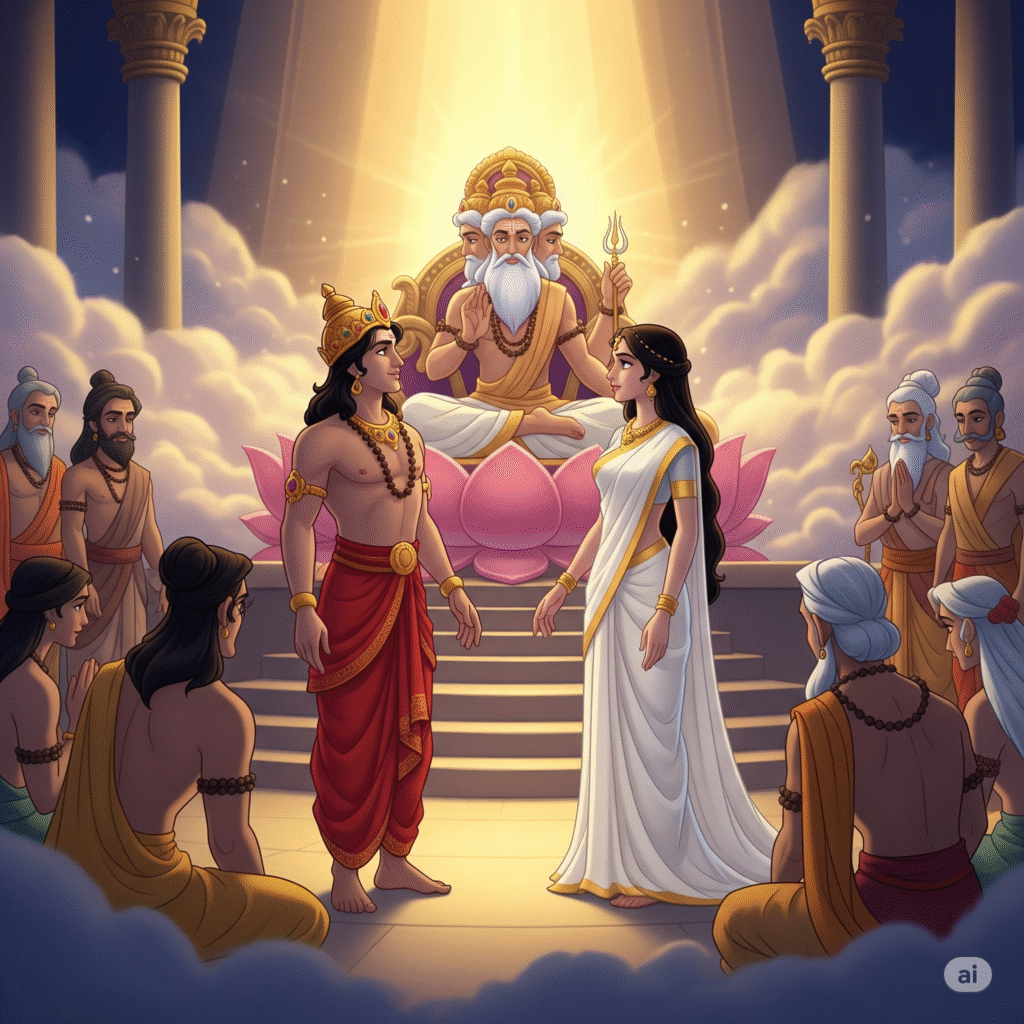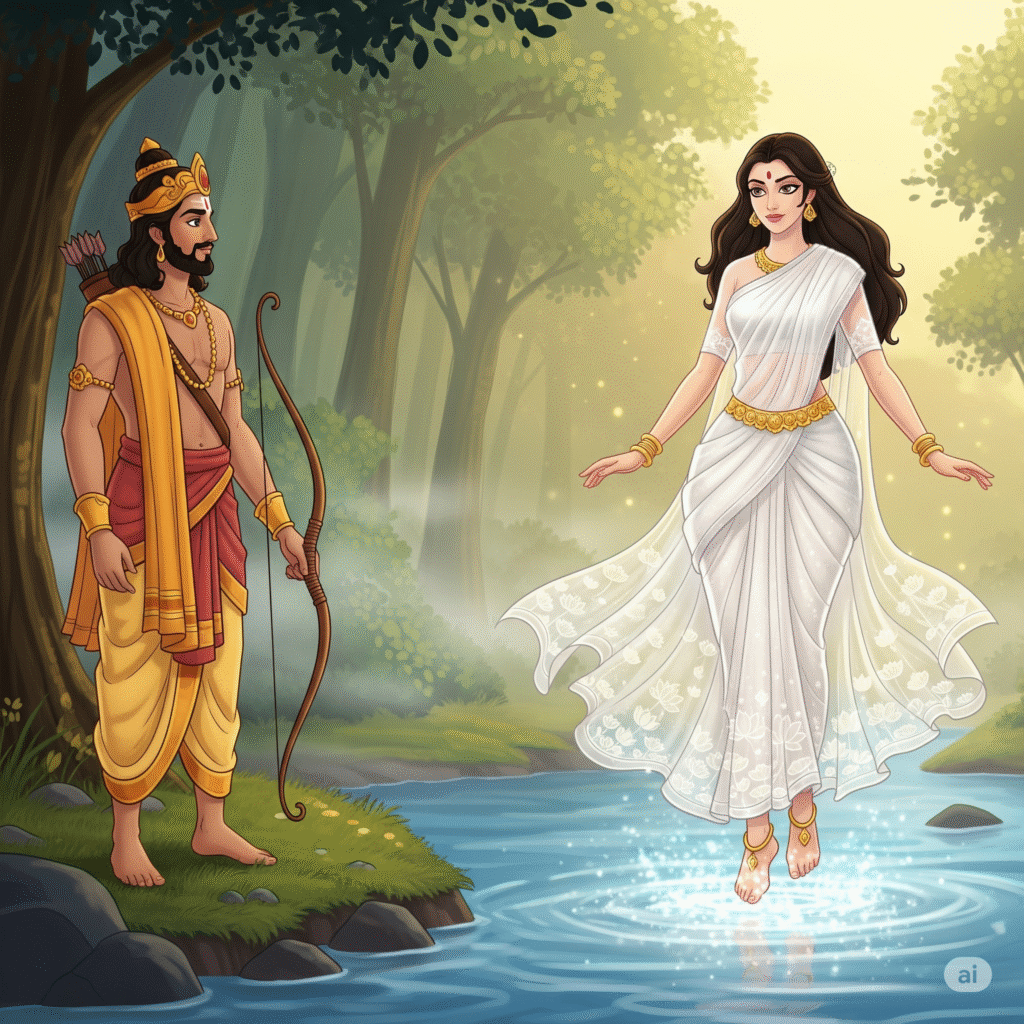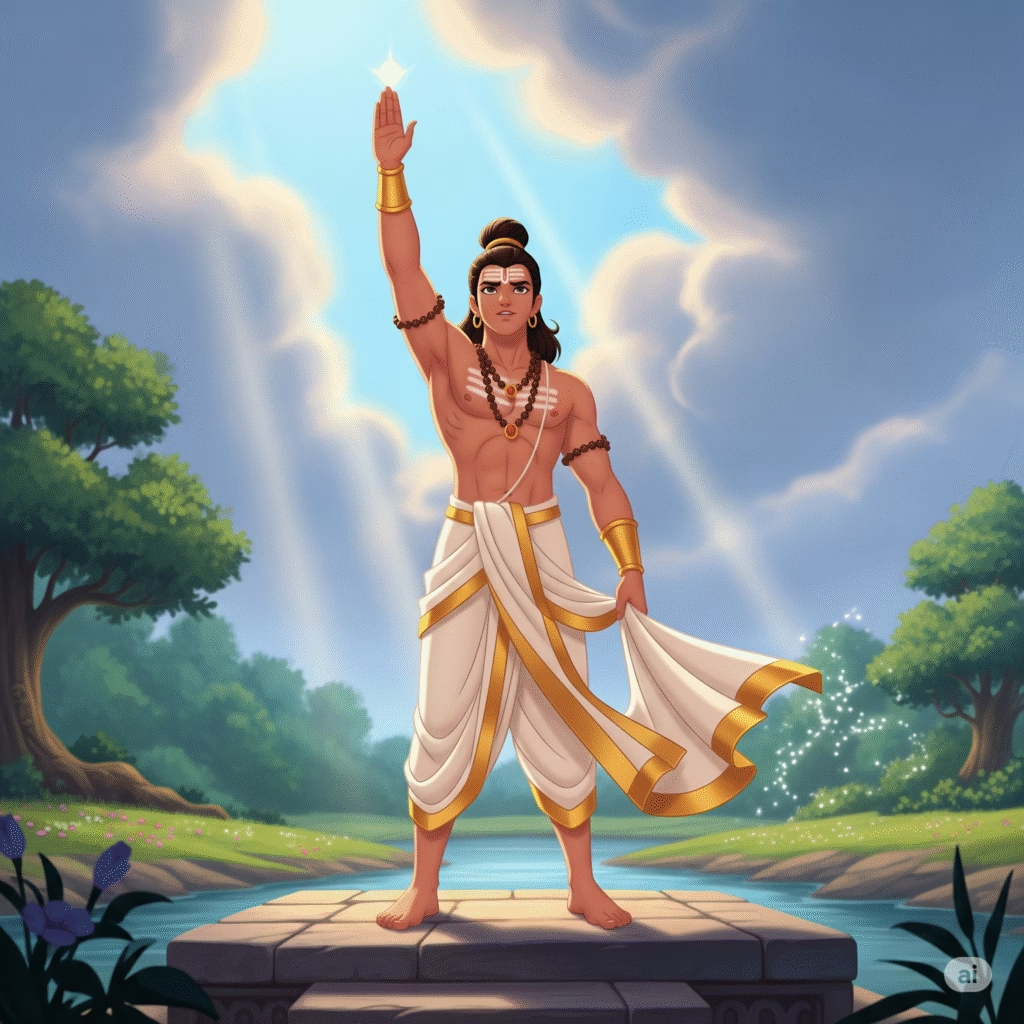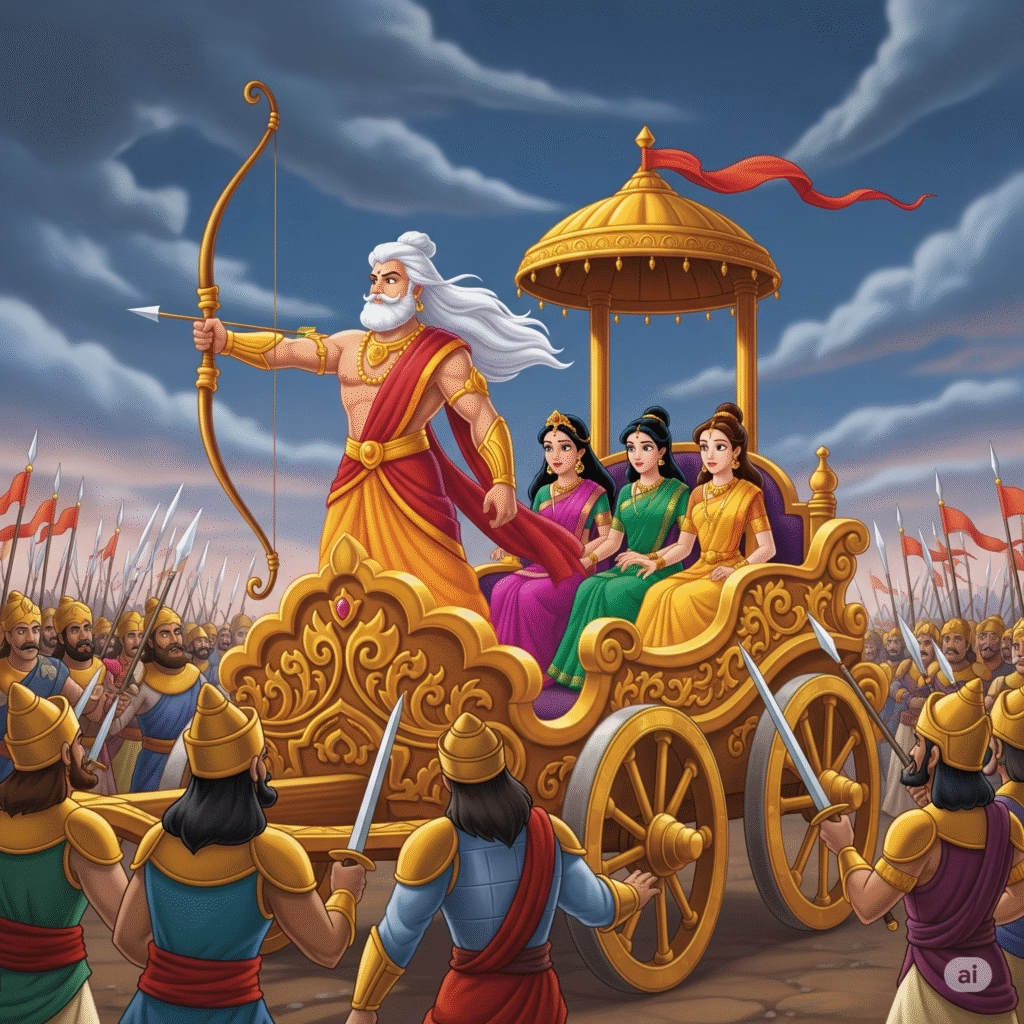
The dust of the Pramanakoti picnic had settled, but the air in the chariots returning to Hastinapur was thick with an unspoken dread. As the wheels rhythmically hit the stone paths, the eldest Pandava, Yudhishthira, felt a cold void in the seat beside him.The “playful” outing organized by their cousin Duryodhana had ended. But the strongest among them—the boy who breathed fire and moved mountains, Bhima—was missing. Duryodhana sat in his chariot, his heart light with a dark triumph. He had watched Bhima’s body go limp after consuming the poison. He had watched the boy tumble into the depths of the Ganga, bound by heavy vines. To Duryodhana, the throne was now a step closer. He entered the gates of Hastinapur not as a grieving cousin, but as a predator who had finally cleared his path. When he didn’t see Bhima at the gates, he celebrated in the silence of his mind, surrounded by his brothers who shared his wicked delight.
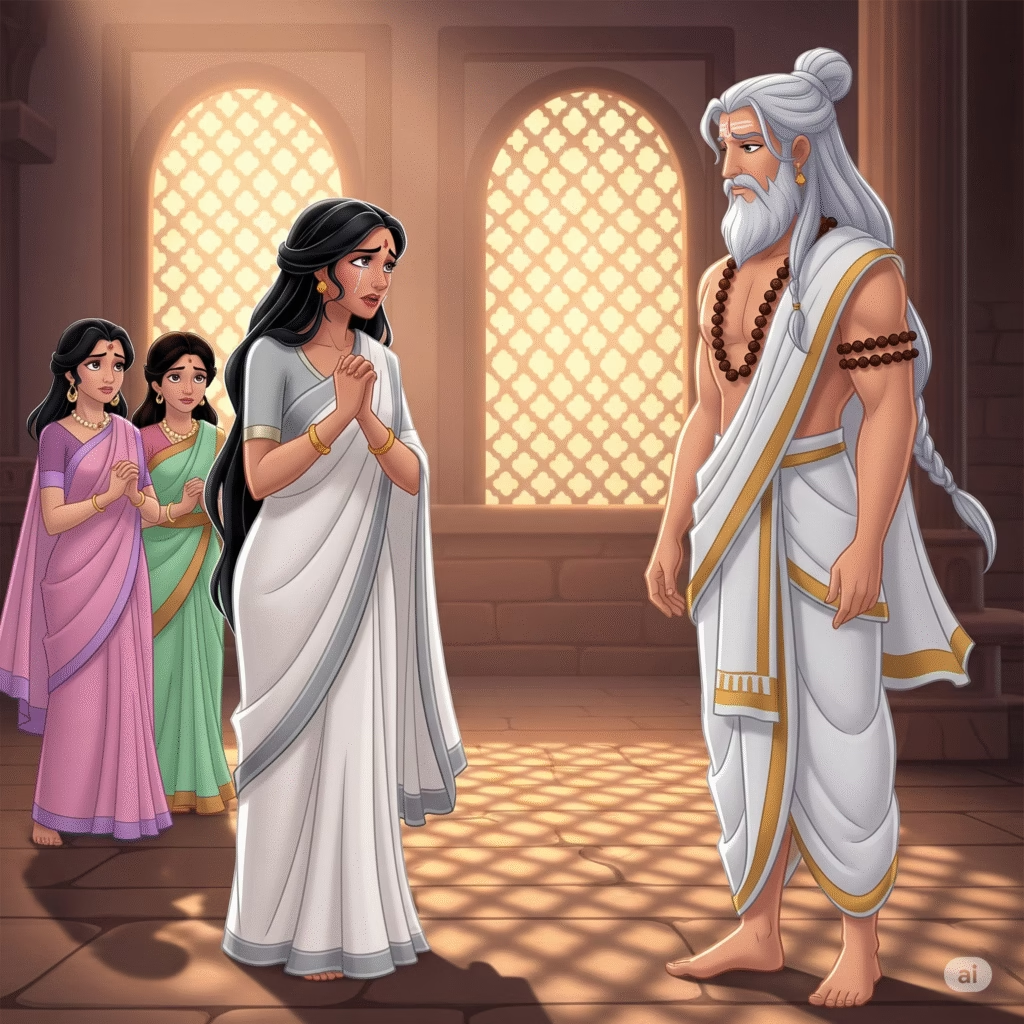
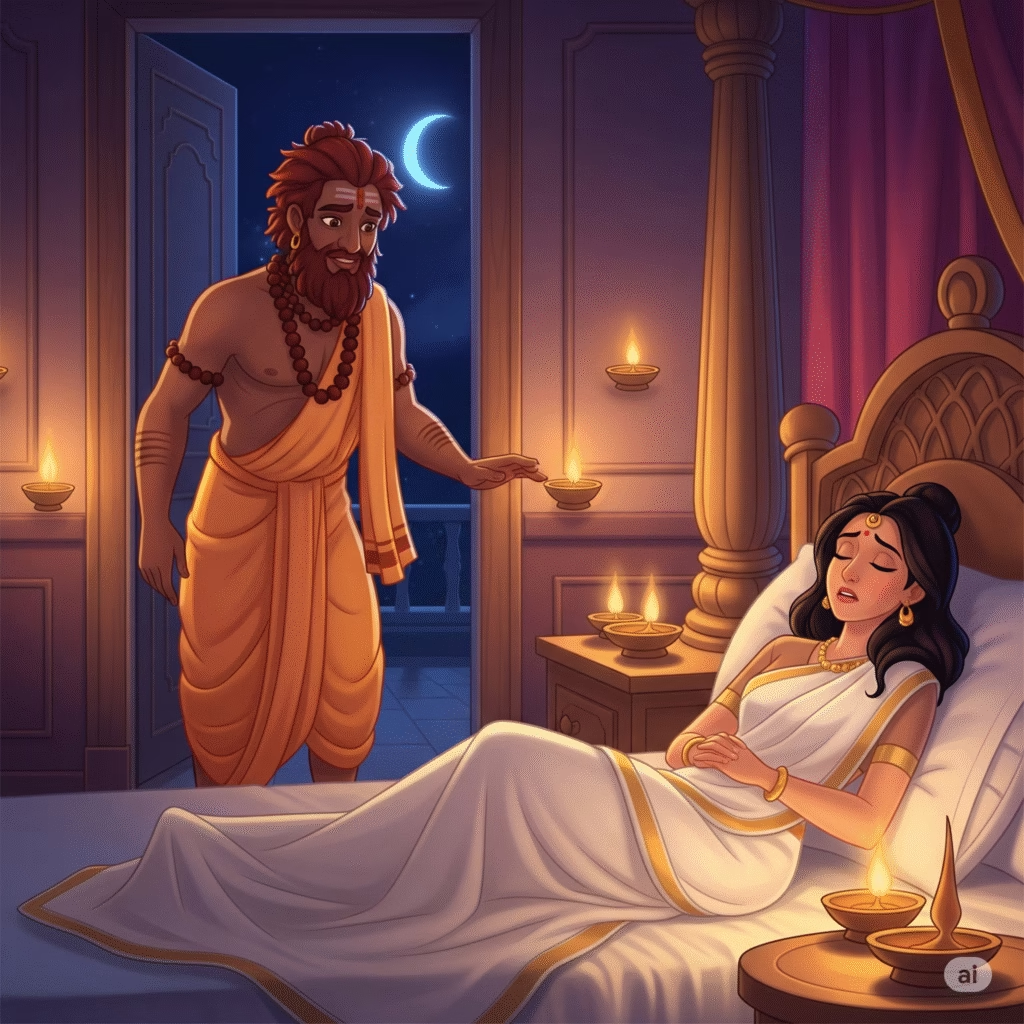
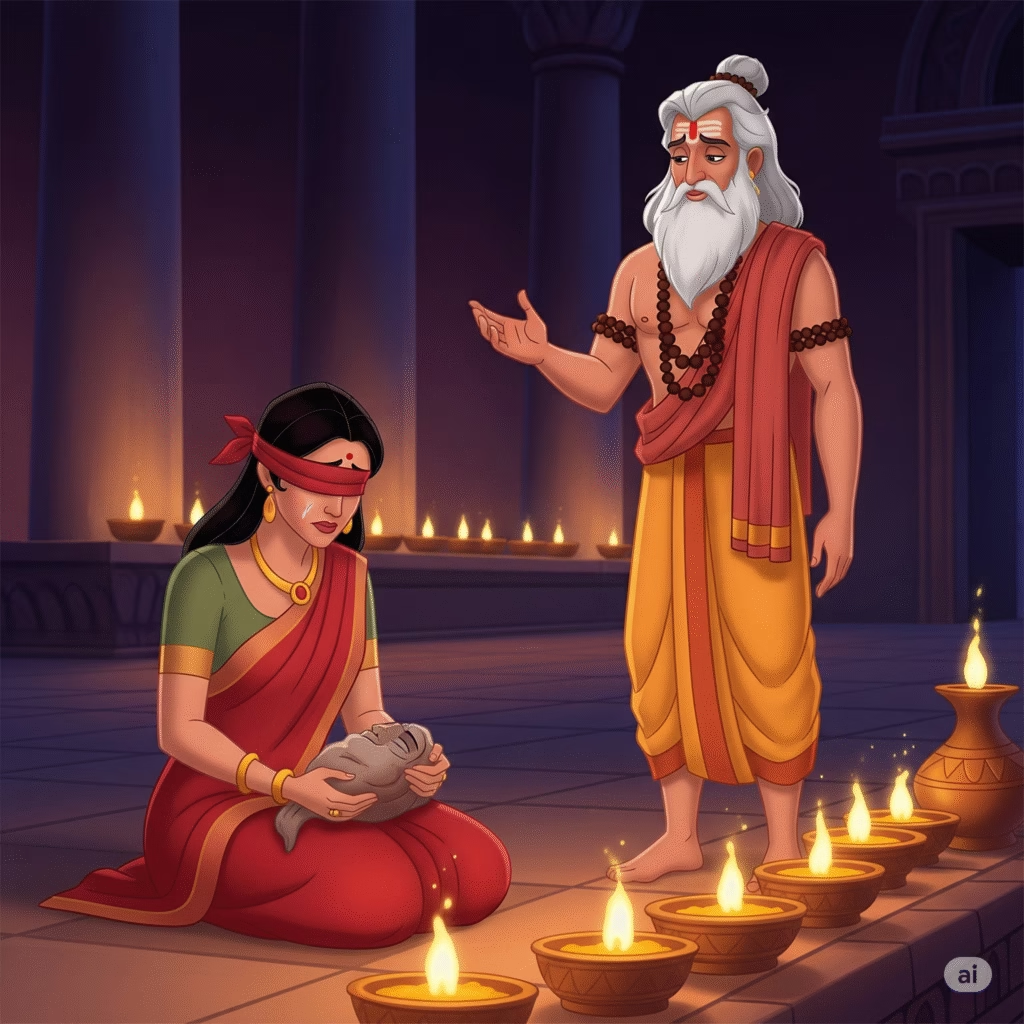
In the inner chambers of the palace, Mata Kunti waited. A mother’s heart is a prophetic instrument; it feels the severance of a bond long before the news arrives. When Yudhishthira rushed in, his face pale and voice trembling, her worst fears took root. “Ma, is Bhima here?” Yudhishthira’s voice cracked. “We searched the woods until the sun bled into the horizon. We scoured every grove of the garden. We thought he might have raced ahead in his usual exuberance. But he is nowhere.” Kunti’s world tilted. She knew the venom that lived in the hearts of Dhritarashtra’s sons. In her desperation, she sought the one man whose soul was anchored in truth: Vidura. “Vidura, my son is gone!” she cried, her voice echoing through the cold stone hallways. “Duryodhana is cruel, he is shameless, and he is drunk on the greed for the kingdom. I fear he has struck my Bhima while he was vulnerable. My heart is burning like a pyre.”
Vidura, the Prime Minister of morals, looked at the trembling Queen. He knew she was right. But he also knew the chess board of Hastinapur.“Kalyani,” Vidura whispered, his voice steady yet urgent. “Do not let these accusations leave your lips. If you point a finger at Duryodhana now, you do not bring Bhima back—you only put a target on your remaining four sons. A cornered snake strikes with more venom. Trust in the prophecy of the Great Sage Vyasa; your sons are meant for greatness. They are destined for long lives. Silence is your shield today.”
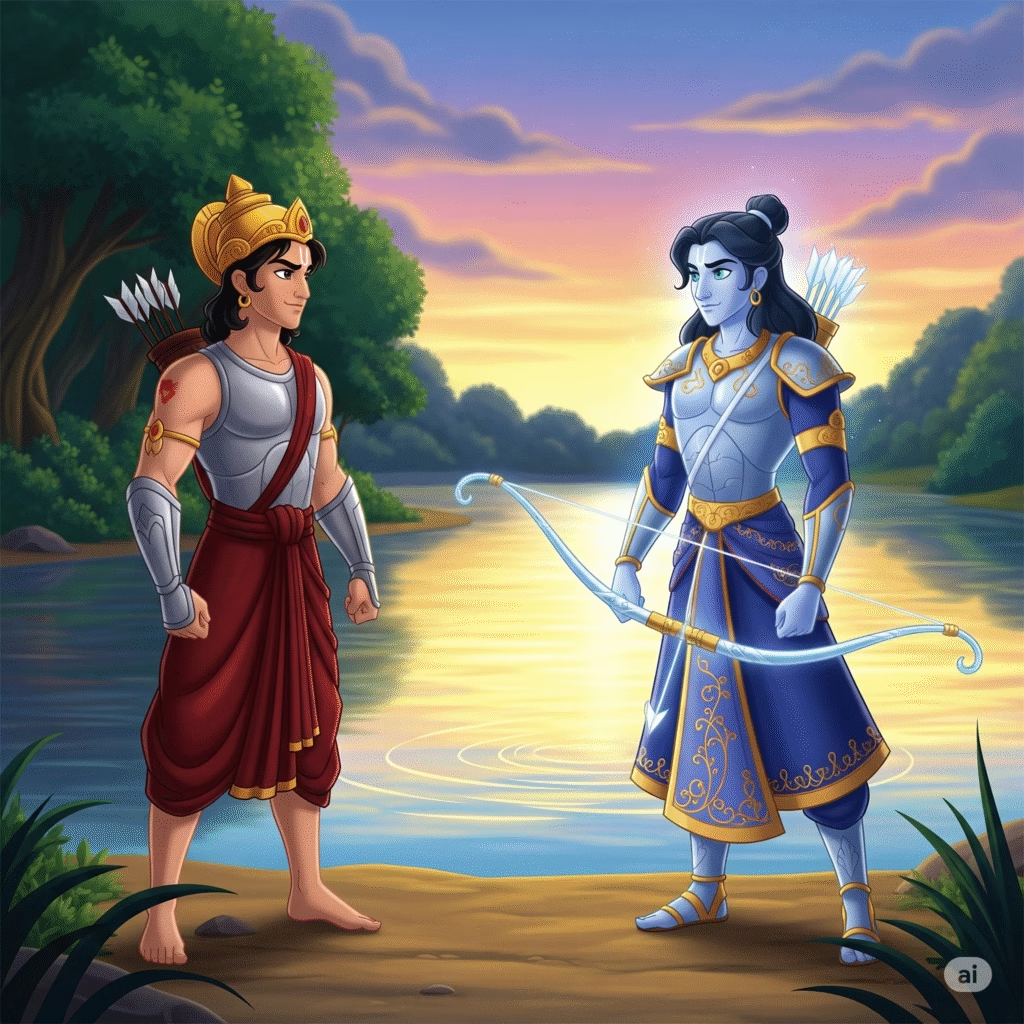
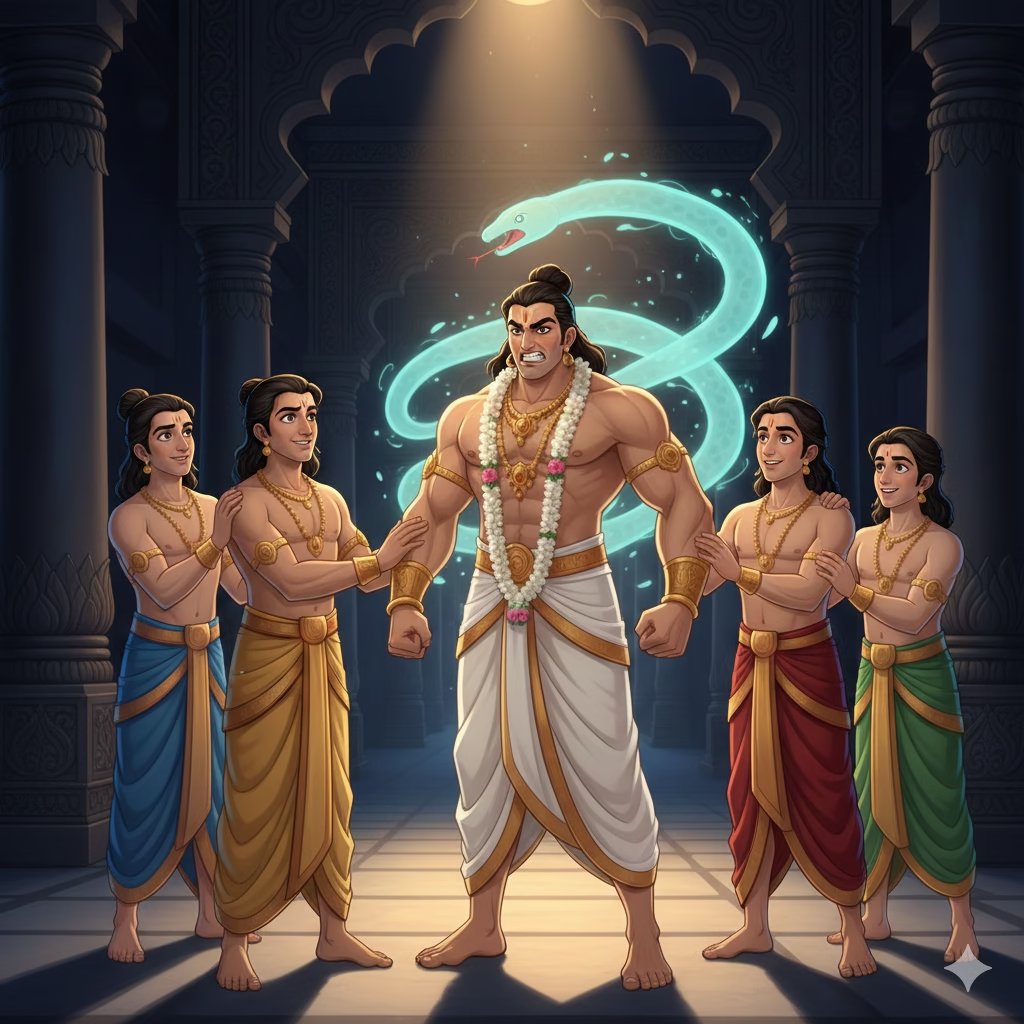
For eight agonizing days, the Pandavas lived in a house of mourning disguised as a house of waiting. Meanwhile, at the bottom of the Ganga, a miracle was unfolding. The Nagas (serpents) had initially bitten the unconscious Bhima, but their venom acted as an antivenom to the Kaalkoot poison Duryodhana had fed him. Led to the presence of the Naga King, Bhima was offered the Divine Nectar. For eight days, Bhima slept a transformative sleep. As the nectar digested, his cells were rewritten. When he finally opened his eyes, he didn’t just wake up; he ascended. He now possessed the strength of ten thousand elephants. After being bathed in celestial waters and adorned with white garlands, the Nagas carried him back to the surface. Bhima emerged from the Ganga not as a boy who had been bullied, but as a force of nature. When Bhima stormed into the palace, the joy of the Pandavas was like a thunderstorm after a drought. They embraced him, smelling the divine fragrance of the Nagas on his skin. But as Bhima began to roar, ready to march to Duryodhana’s chambers and settle the score with his bare hands, Yudhishthira stopped him. “Brother, listen to me,” the Dharma-Raja said, his eyes reflecting a new, cold maturity. “From this moment, we are silent. We know the poison they fed you. We know the vines they bound you with. But the world must think we are oblivious. We will digest this betrayal just as you digested the Naga nectar. We will grow strong in the shadows.”
The Pandavas began their training under Guru Kripacharya. Even when Duryodhana tried to poison Bhima a second time—this time with the lethal Kaalkoot—Bhima ate it as if it were a common meal, his “Vrika” (wolf-like) digestive fire consuming the malice of his cousins without a flinch. They were no longer just princes; they were survivors waiting for their time.
This moment in the Mahabharata marks a quiet but decisive shift—from reactive strength to conscious restraint. Bhima embodies raw power, the instinct to answer violence with violence. Yet Yudhishthira introduces a higher discipline: the courage to wait. Dharma, here, is not softness; it is strategy rooted in moral clarity. The poison that failed to kill Bhima becomes a metaphor. Betrayal, when confronted too early, can destroy the bearer as much as the betrayer. But when digested, it transforms. Just as Bhima’s body converts venom into strength, the Pandavas convert injustice into preparation. Silence becomes their shield, patience their weapon. This episode teaches that true mastery is not the absence of anger, but the ability to govern it. Immediate revenge may satisfy the ego, but delayed justice shapes destiny. Yudhishthira understands something timeless: power revealed too soon invites annihilation; power conserved becomes inevitable. In life, we are often “poisoned” by those closest to us—through deceit, envy, or quiet sabotage. The Mahabharata does not always ask us to confront immediately. Sometimes, it asks us to grow stronger in secrecy, to let time expose what words cannot. The inner Kurukshetra begins here—not when weapons are raised, but when restraint overrules rage. Those who survive their poison do not merely live on; they return transformed, carrying a strength the world can no longer ignore.
Journaling Prompts
- Who in your life has “fed” you something harmful—betrayal, envy, or deception—while appearing friendly? What did you feel when you realized it?
- What does “Yudhishthira’s silence” mean in your own life right now? Where are you being asked to wait instead of confront?